
Managing Cabin Condensation: Practical Moisture Control for Shoulder-Season Cruising
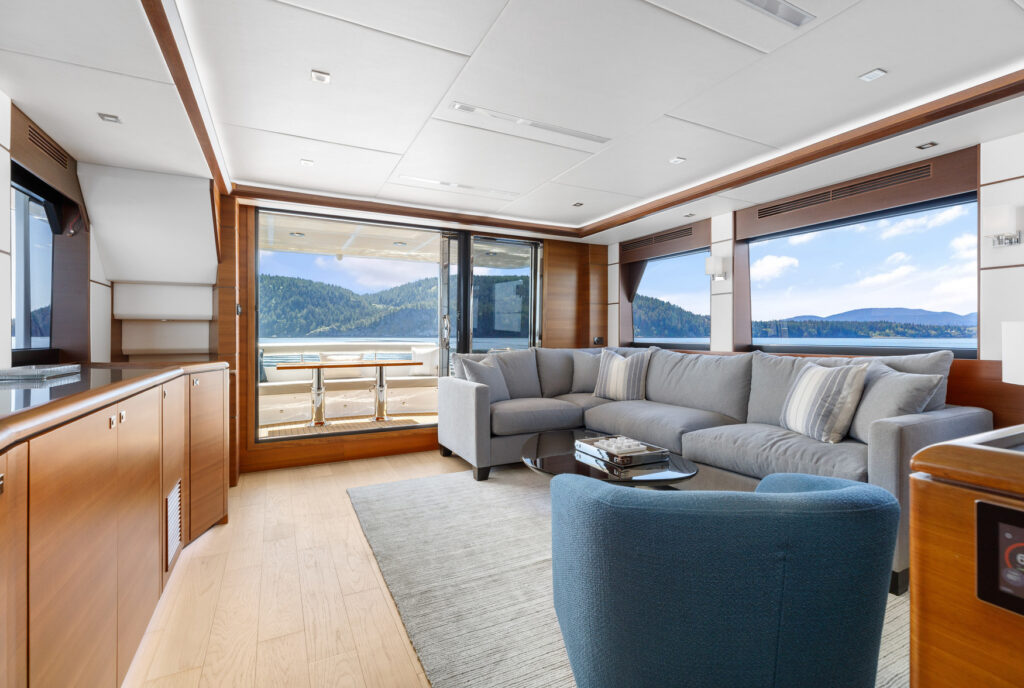
Cold seawater on the outside of a hull and warm human activity on the inside create an inevitable physics problem: condensation. When surface temperatures drop below the dew point of cabin air, airborne water vapor returns to liquid form on your windshields, hull sides, and locker bulkheads. Managing that moisture requires understanding where it originates, […]
Testing a Cruising Galley: Layout and Meal Workflow at the Dock
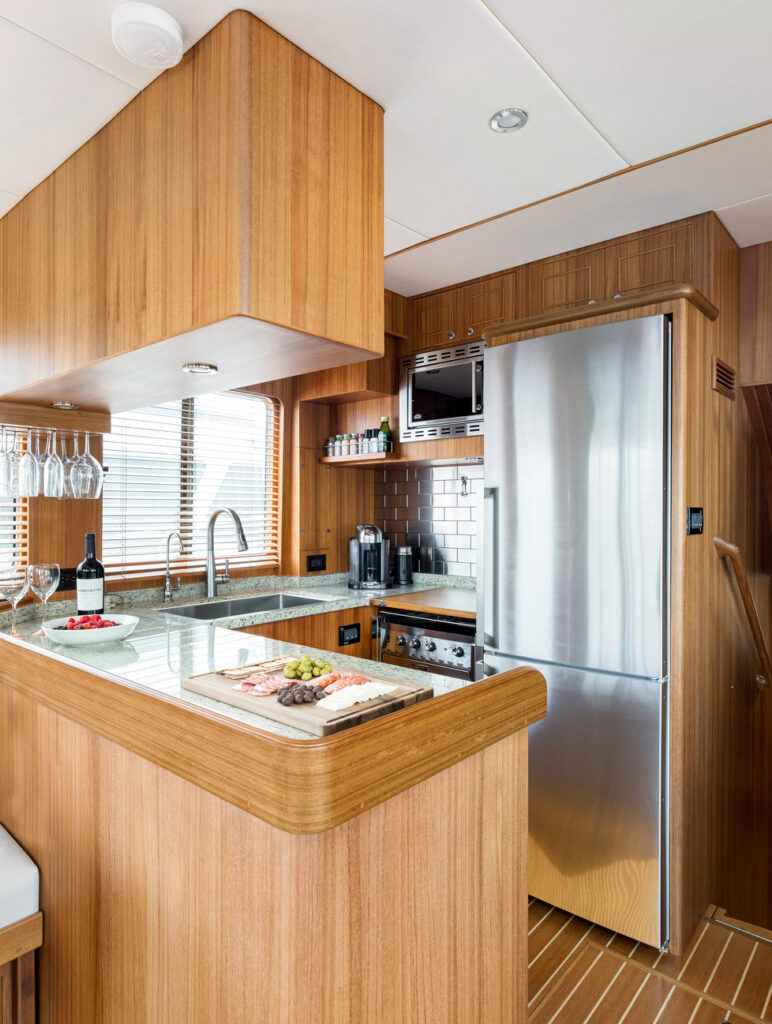
The easiest time to identify a frustrating galley layout is before committing to it. Counter finish and refrigerator size deserve attention, but they do not show how a cook retrieves food, prepares a meal, moves cookware, and cleans up while other people use the boat. A stationary visit can reveal those relationships without operating appliances […]
Two-Person Watchkeeping: Maintaining a Proper Lookout, Managing Sleep, and Executing Clean Handoffs
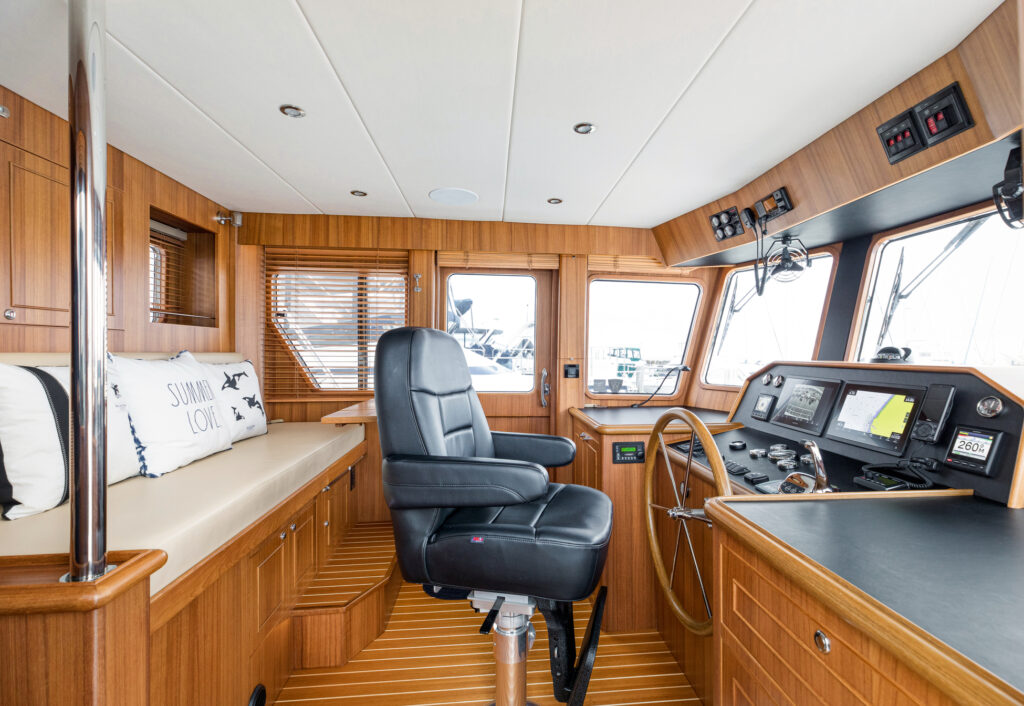
Two-person watchkeeping depends on attentive lookout, useful handoffs and an honest assessment of rest. The crew’s size alone does not establish whether a passage is manageable. A practical routine makes responsibility clear and gives both people permission to raise concerns early. It also recognizes when the route or crew arrangements need to change. What a […]
Docking a Single-Screw Trawler: Preparation for Wind, Current, and Berth Assessment
Calm docking begins with understanding the exact yacht, the berth and the conditions. A single-screw boat’s response depends on its installed propulsion, rudder, hull and equipment; memorizing one maneuver does not establish how it will behave. Preparation is useful because it makes the unknowns visible before close quarters. Hands-on instruction remains the place to learn […]
Fuel Planning for Long-Range Trawler Cruising: Build a Passage Budget
Nameplate fuel capacity will betray you if you treat it as a passage budget. A long run across open water—whether down the Pacific Coast, across the Gulf of Maine, or through the Exumas—demands an arithmetic budget built on running time, auxiliary burn, and environmental drag rather than a simple division of tank gallons by engine […]
Storage Volume and Usable Payload: A Cruising Yacht Buying Test
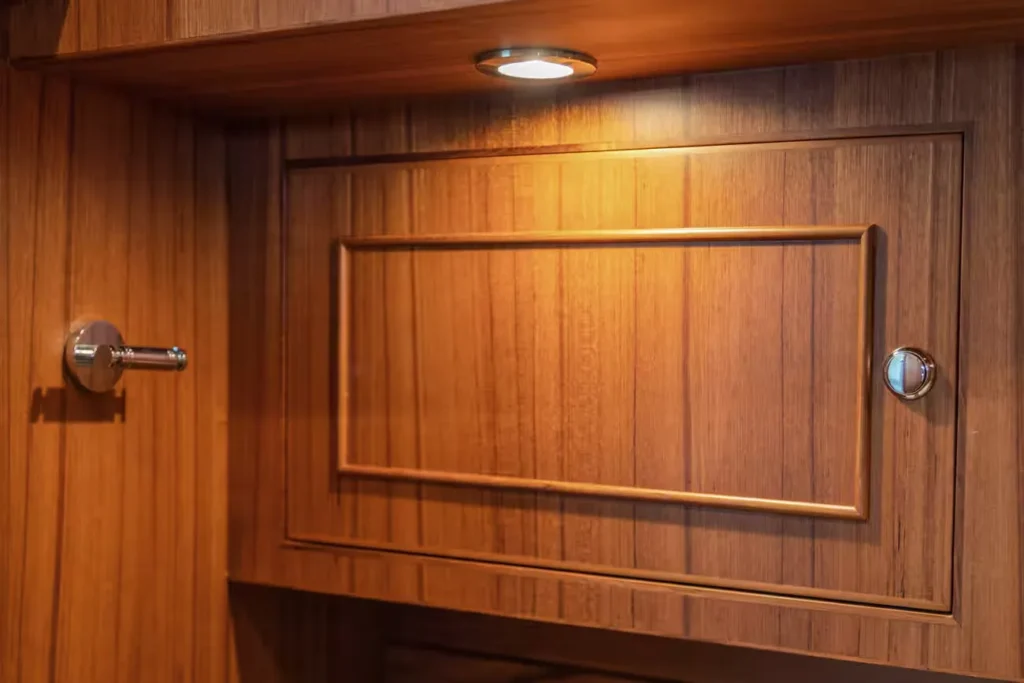
Locker volume tells you where items may fit. It does not establish whether the boat should carry their combined weight in those locations. Treat storage access and loading suitability as connected questions when evaluating a cruising yacht. An inventory gives the discussion substance: what you carry, where it lives, how it is secured, and which […]
Sedan vs. Pilothouse: Choosing the Right Helm and Living Layout for Your Crew
A sedan and a pilothouse layout can both have an interior helm. The useful comparison is how the operating station relates to the galley, salon, accommodation spaces and exterior routes—not a weather or passage-capability verdict based on the profile. Think about the people who regularly cruise with you. Do they want to sit near the […]
Planning the Great Loop in a Trawler: Dimensions, Route Timing, and Daily Routine
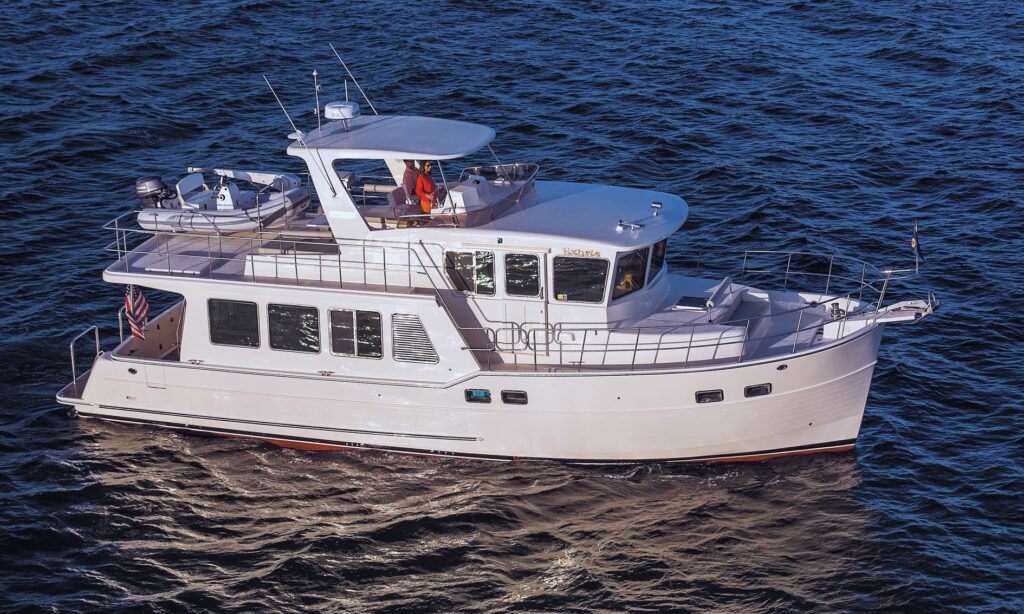
North Pacific 49 Pilothouse underway on open water. Great Loop planning begins with the waterways you want to include and the boat you will actually use. Bridge clearances, water depth, locks, operating seasons and resupply arrangements can influence the choices long before you select overnight stops. Build the plan around measured dimensions, current waterway information […]
Seawater Strainers and Raw-Water Flow: Preventing Overheating on Cruising Yachts
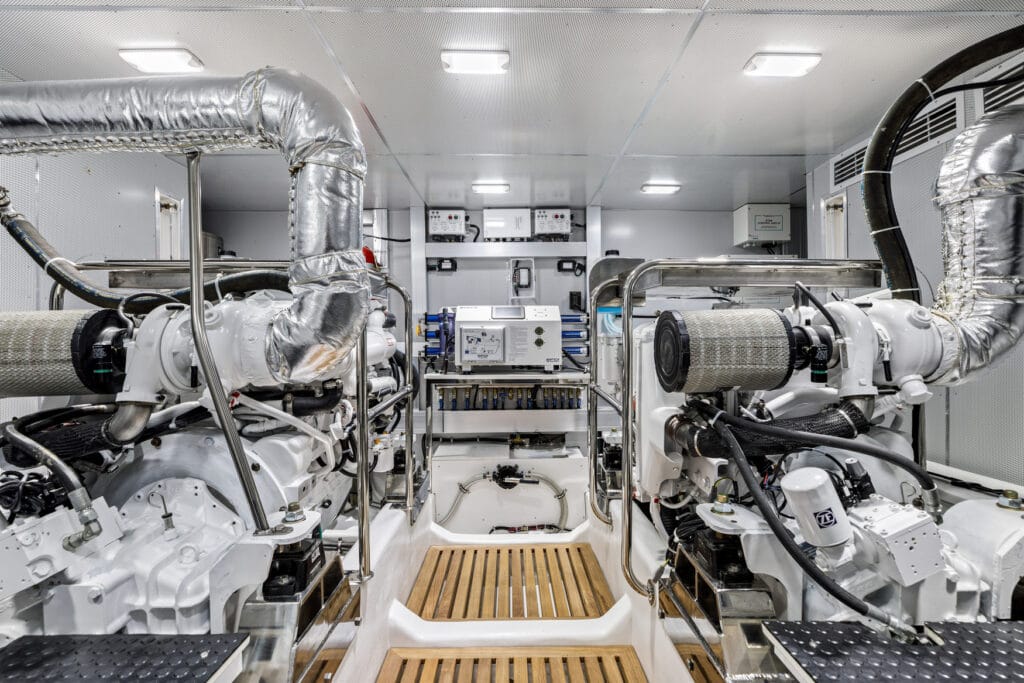
A seawater strainer intercepts debris in part of a cooling-water circuit. A clear basket is useful to observe, but it does not prove that the intake, hoses, pump, heat-transfer components, and discharge path are all working correctly. Owners benefit from understanding that wider relationship and recognizing changes from normal. Strainer care should follow the installed […]
Windshield Clarity: Evaluating Wipers, Washers, and Demisters
Large windows and a comfortable helm do not settle every visibility question. Rain and spray affect the outside glass, residue can remain after the water dries, and condensation can form inside. These are different problems to identify before judging the equipment meant to address them. The useful inspection starts with the view the operator needs […]