
Wing Stations, Aft Controls, and Docking Visibility on Pilothouse Yachts
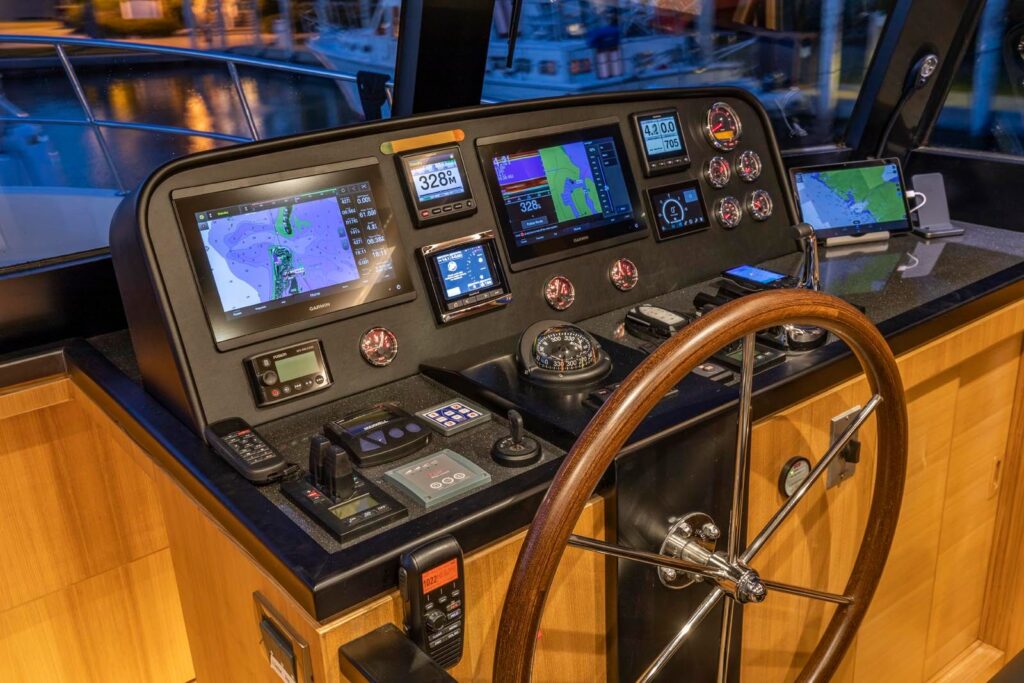
An alternate control station changes where the operator can stand. It may improve a particular view while changing access to other references. Before selecting hardware, identify the visibility question, examine the actual position, and understand how that installation takes and retains command. Compare the view from each position A wing or side station places controls […]
Night Running From a Pilothouse: Managing Glare, Reflections, and Electronics
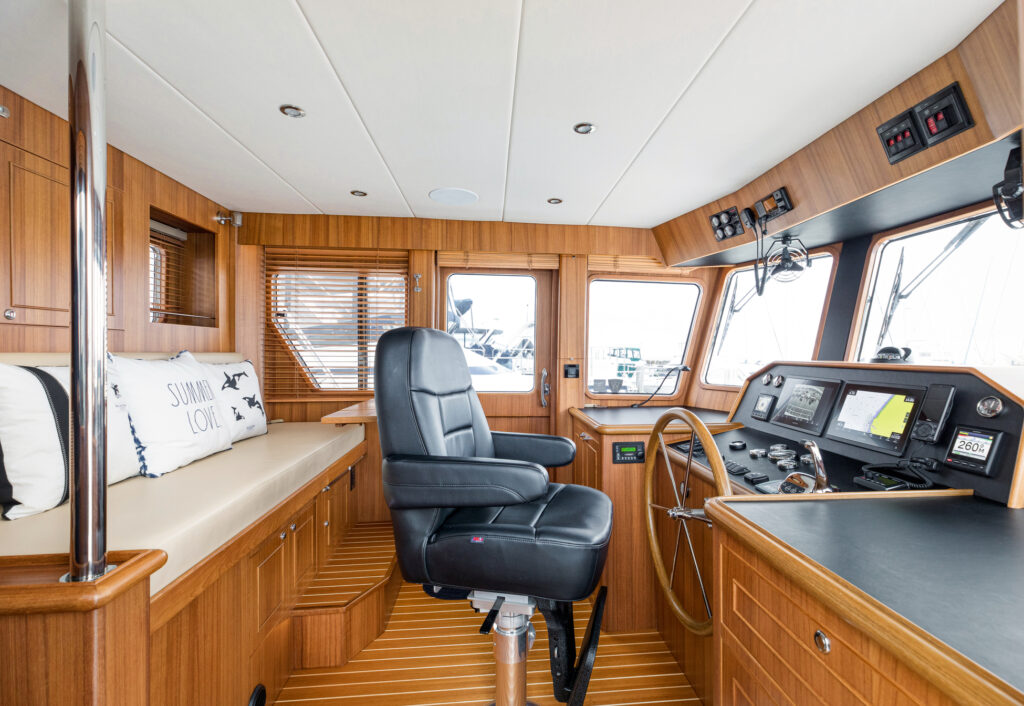
A nighttime helm needs readable information and a usable outside view. Screens, cabin spill, small indicators, and reflected light can compete with that view. Managing the visual environment means checking the actual boat and operator position, then establishing a routine the crew can maintain. Find light sources from the helm At a permitted stationary dusk […]
Sizing a Trawler Generator: Balancing Air Conditioning, Charging, and Life Aboard
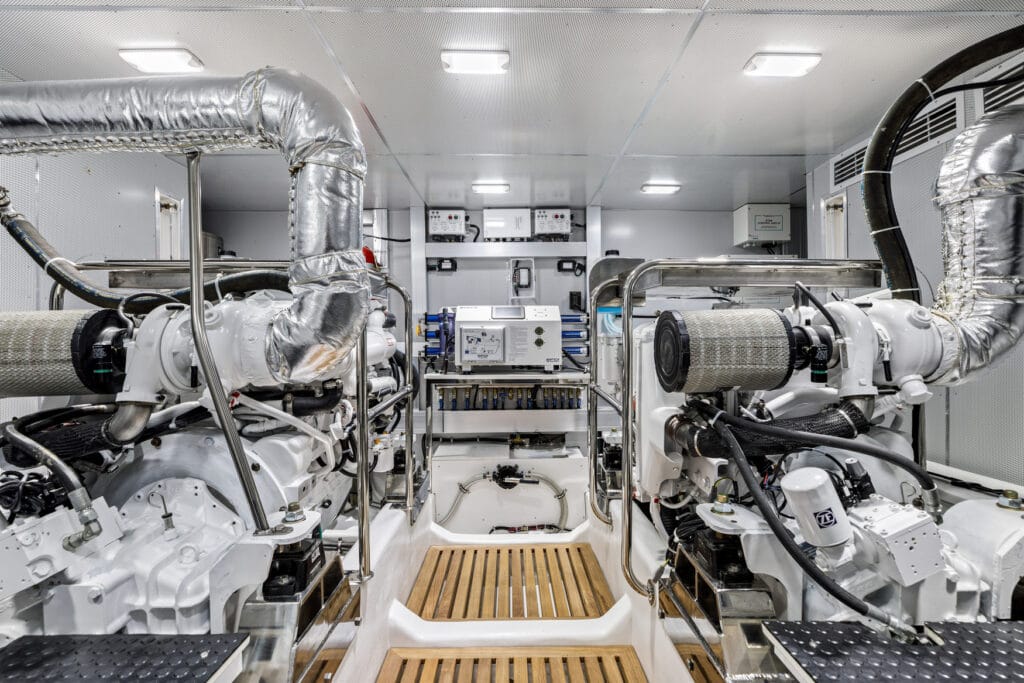
Breaker ratings identify circuit limits, rather than the actual running and starting demand of the connected equipment. Use nameplate data, manufacturer starting requirements and representative measurements when sizing a generator. Sizing an auxiliary power package requires analyzing how loads actually overlap in real operating environments. A generator must supply both the sustained thermal demand of […]
Tender and Davit Planning: Matching Weight, Reach, and Crew
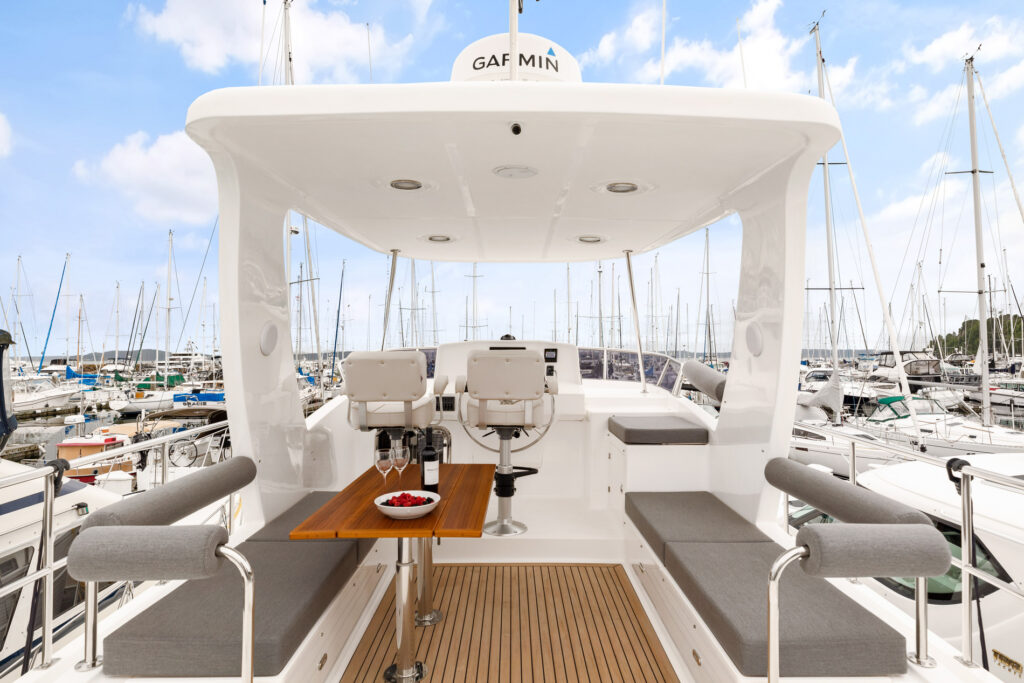
A tender should expand your cruising range, not complicate your time at anchor. Too often, owners buy a tender based strictly on how many people it seats, only to find it overloads their crane or monopolizes usable deck space. Others choose a featherweight package that fits the boat deck easily but leaves the crew soaked […]
Selecting Ground Tackle for a Long-Range Trawler: Anchor, Rode, and Windlass Compatibility
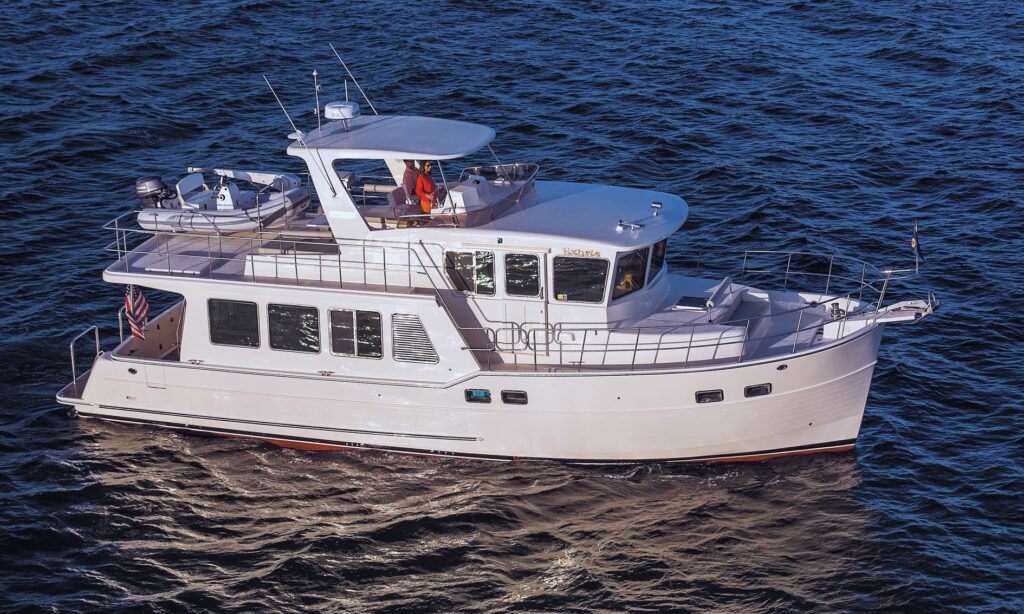
Ground tackle selection begins with your vessel’s fully loaded displacement and superstructure windage, not bare factory weights or generic length-based formulas. A semi-displacement trawler carries high forward freeboard, pilothouse volume, and extended bridges that act as a sail in heavy gusts. Sizing an anchor simply by “one pound per foot of boat” ignores the massive […]
Fin Stabilizers vs. Gyro Stabilization: Comparing Real Operating Modes on Trawlers
Stabilizers transform open-water comfort on a trawler, but choosing between external fins and an internal gyroscope is not a simple pick between running offshore and resting at anchor. Modern roll control has outgrown the old rule of thumb that fins only work when moving and gyros only work at rest. Both systems now operate across […]
How to Commission and Use a Pre-Purchase Survey on a Used Trawler
A pre-purchase survey helps you move beyond listing photographs and a walkthrough to an independent assessment of a used trawler. It can identify condition concerns, limitations and questions that need further work before you decide whether the purchase fits your cruising plans. The useful result is clarity about the boat, not a simple pass-or-fail label. […]
Choosing a Trawler Watermaker Around Your Actual Water Use
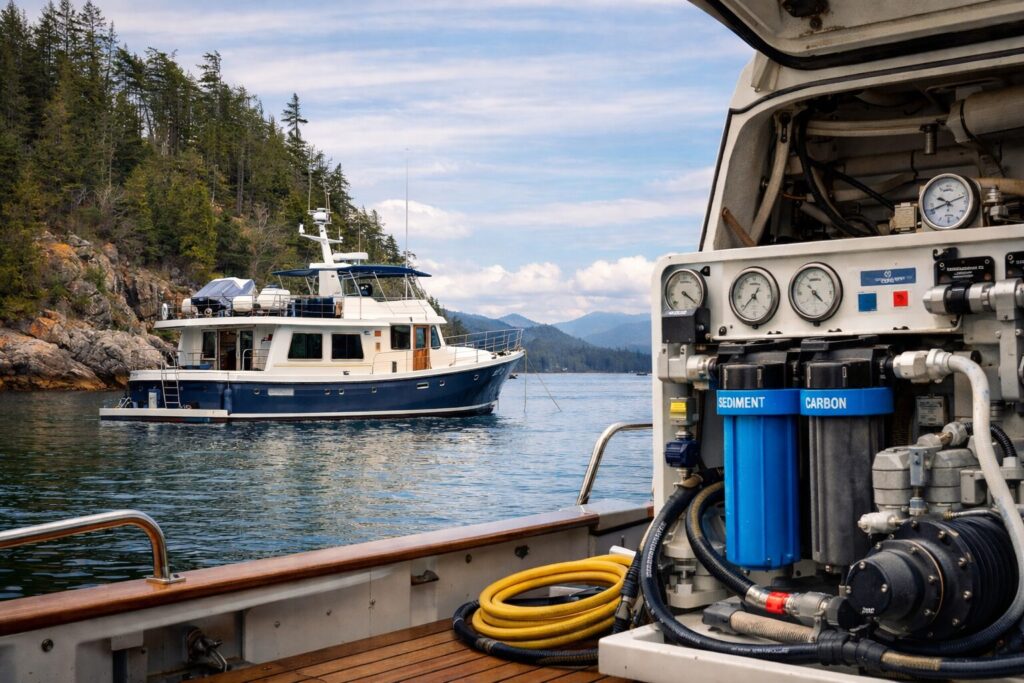
Freshwater limits can quietly control how far and how long you cruise. This guide explains when a watermaker is actually worth it on a trawler, especially for remote North Pacific routes. Learn how to estimate daily water use, compare alternatives, and choose a setup that fits your boat.
Trawler Motion Comfort: What to Observe Before You Buy
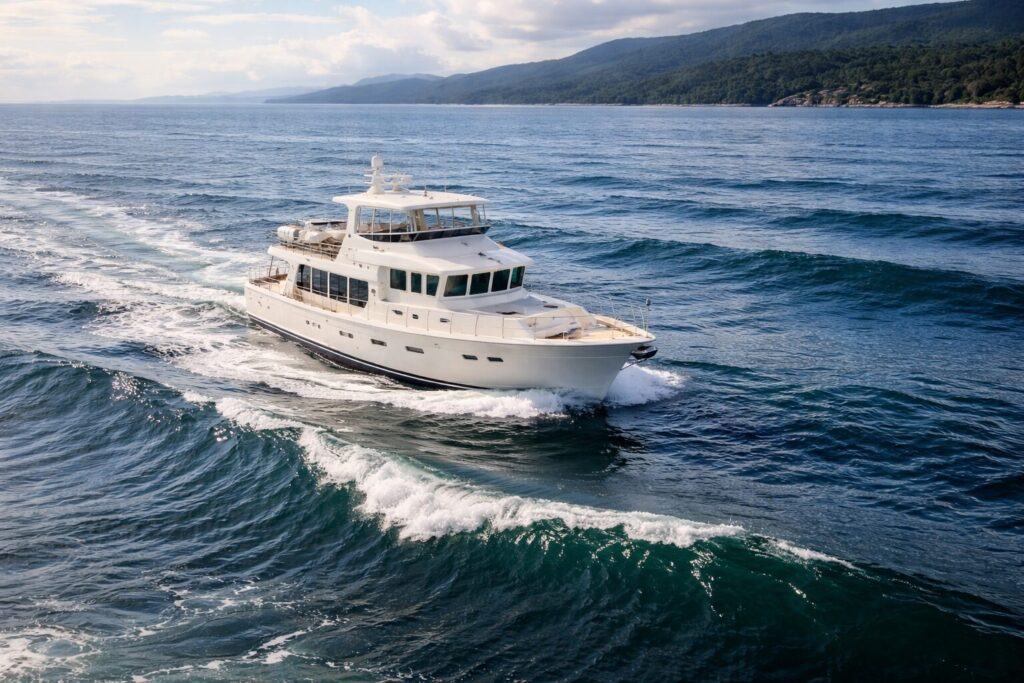
Trawlers are built for steady, confidence inspiring travel, especially in changing sea states. Their cruising speed, hull shape, and stability focused design help reduce pounding and roll. Here’s why they often feel calmer than faster yachts, particularly in North Pacific waters.
Does Your Trawler Need Fuel Polishing?
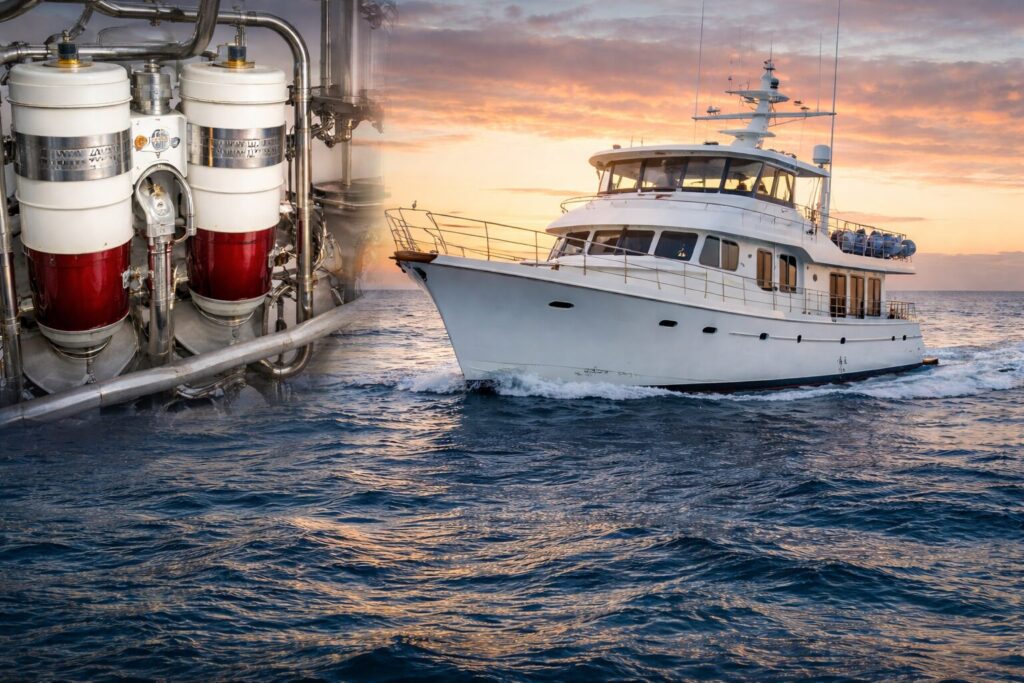
Fuel quality plays a critical role in the reliability of long range trawlers. Fuel polishing systems help keep diesel clean, protect engines, and reduce the risk of breakdowns at sea. For serious trawlers, they are an essential part of safe and confident cruising.