

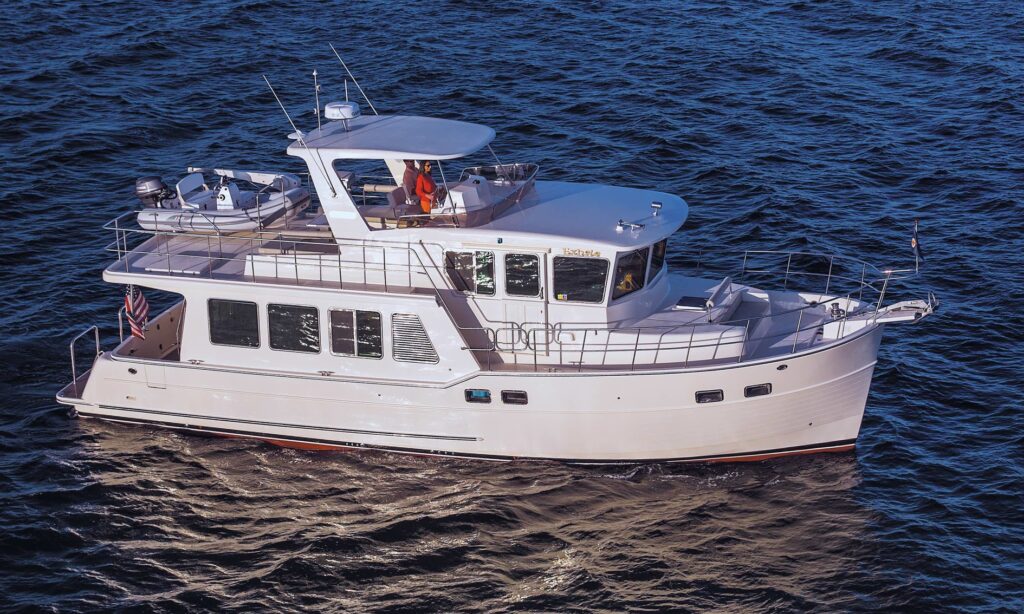
Great Loop planning begins with the waterways you want to include and the boat you will actually use. Bridge clearances, water depth, locks, operating seasons and resupply arrangements can influence the choices long before you select overnight stops.
Build the plan around measured dimensions, current waterway information and the crew’s preferred routine. The trawler label can suggest a cruising style, but it cannot establish that a particular yacht fits every branch of the journey.
Start With the Route Choices
Identify which waterways and optional canal branches interest you. Compare their requirements with the actual yacht, and record alternatives where a preferred branch does not fit. A route choice may affect overhead clearance, draft, season, administrative preparation and the time available for a visit.
Great Loop route guidance from America’s Great Loop Cruisers’ Association provides a useful starting point. Its current FAQ describes the lowest unavoidable fixed bridge as charted at 19.6 feet at Illinois River mile 300.6, and explains that other waterway options depend on air draft.
Treat that figure as a planning reference. Available clearance requires current information about the actual obstruction and water level, while the boat’s height depends on its configuration and loading. Check official charts, notices and controlling-authority information for the intended transit.
Measure the Boat’s Actual Configuration
Record air draft, water draft, beam and overall length. Note how each measurement was obtained and the equipment and loading condition it describes. An antenna, upper-deck installation or later modification can change the profile represented in an older specification.
The guide to air draft planning for trawler owners develops the relationship between published dimensions, onboard measurements and available clearance. If an arch or other equipment can be lowered, follow the instructions for that installation and verify the reduced profile. Do not assume that every sister ship has the same arrangement.
Compare water draft, beam and length with the requirements of each chosen waterway. A model’s nominal draft is not a guaranteed clearance over a particular bottom, and lock dimensions require assessment of the complete boat. Resolve uncertain dimensions before relying on a route.
Build the Calendar From Current Waterway Information
Operating seasons, lock schedules, temporary closures, water levels and weather all belong in the calendar. Trent–Severn navigation information is one official starting point when that waterway is part of the plan; use the corresponding authority for each other canal, river and bridge.
Sequence the journey around the seasons and services relevant to the chosen route. Do not turn a traditional spring–summer–autumn outline into a fixed departure instruction. Current notices, the boat, the crew and the time available may require a different pace or branch.
Leave room for waits and changes. A reservation or guest flight should be considered alongside the travel options rather than becoming the sole reason to make a passage.
Prepare for Locks, Bridges and Resupply
Review the applicable lock and bridge instructions before arriving. Confirm operating hours, contact procedures and temporary notices, then brief the crew on roles and communications. Equipment and line-handling preparation should suit the actual boat and facility; seek training or qualified help where needed.
Map dependable resupply options along the chosen stages. Confirm fuel and other services that matter, and assess alternatives if an intended stop is unavailable. The guide to fuel planning for long-range trawler cruising develops usable capacity, measured consumption, auxiliary demand and appropriate reserves. Avoid treating a generic fuel-gap distance or reserve percentage as the answer for every Loop itinerary.
Plan the Living Routine Alongside the Route
Time aboard makes everyday spaces and systems worth inspecting closely. Think through meals, sleep, storage, weather waits, waste and routine checks with the people who will use the boat.
Our North Pacific 45 Pilothouse provides a living-space example: a teak-finished interior, salon, galley, guest stateroom and queen island master berth. Examine the particular configuration and how those spaces fit your crew. These features do not establish the yacht’s clearance or suitability for your selected Loop waterways.
If you are buying a brokerage boat, a pre-purchase survey on a used trawler can help assess condition and documented changes. Define its scope with the surveyor, and verify route dimensions separately where the survey does not establish them.
Keep a Route-and-Boat Worksheet
| Planning question | Information to record | Action before relying on it |
|---|---|---|
| Will the boat clear the chosen bridges? | Current boat profile, obstruction reference and available-water-level information | Resolve the exact clearance and equipment arrangement |
| Does the selected waterway fit draft, beam and length? | Loaded dimensions and current authority requirements | Check the complete boat against the chosen branch |
| Will locks and services be operating? | Season, hours, contacts and current notices | Recheck close to the actual travel date |
| Are resupply gaps workable? | Measured demand, usable resources and confirmed stops | Assess alternatives and appropriate reserves |
| Does the crew’s routine fit the plan? | Rest, meals, daily workload and time at stops | Adjust the pace and onboard setup |
Review the worksheet whenever a route choice, boat configuration or travel date changes. It makes unresolved questions visible without pretending to certify passage.
When the journey is shaping your yacht purchase or build, talk with us about the layout and equipment priorities you want to examine. Keep the current waterway checks connected to the actual boat as the plan develops.