

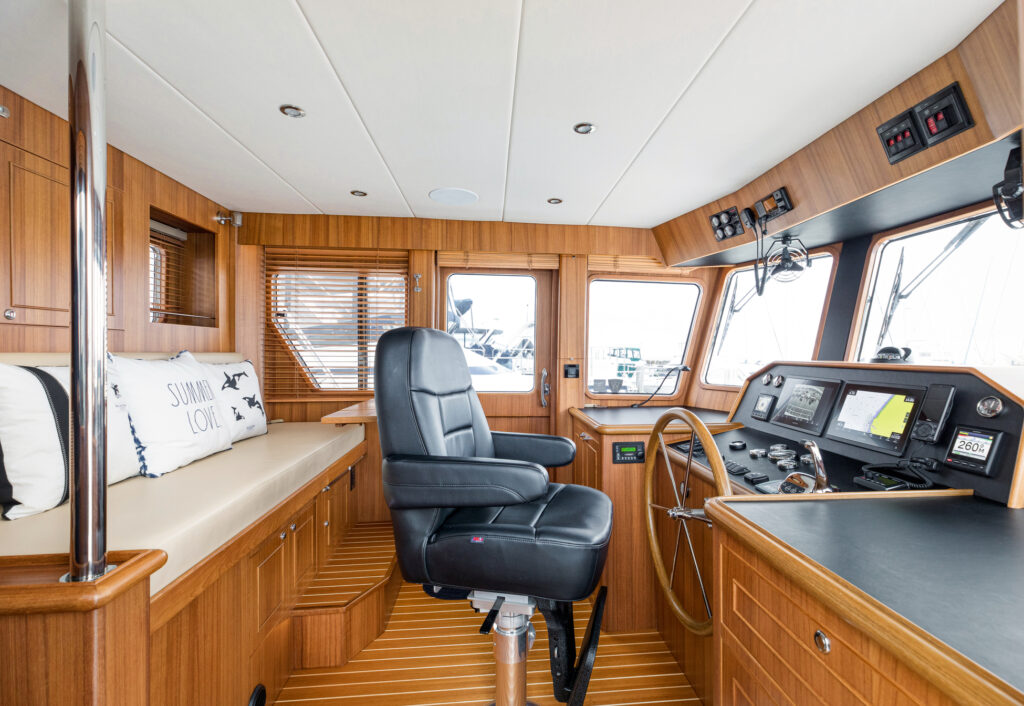
A sedan and a pilothouse layout can both have an interior helm. The useful comparison is how the operating station relates to the galley, salon, accommodation spaces and exterior routes—not a weather or passage-capability verdict based on the profile.
Think about the people who regularly cruise with you. Do they want to sit near the operator, prepare meals in a shared space or use a separate area to read and rest? Those preferences help you identify the arrangement to inspect.
Look Beyond the Profile: Helm Enclosure and Builder Labels
Builders use layout names differently. A sedan may have a slightly raised helm within the main interior; a pilothouse may separate the operating space more distinctly. Look at the actual arrangement rather than assuming a label supplies every feature.
Check the enclosure, glazing, seating and access on the particular yacht. An interior helm is one part of the operating environment; it does not establish the yacht’s handling, structural capability or suitability for your route.
Living Together vs. Separating Watchkeeping and Social Spaces
Companionship and Communication
A closer connection between the helm and living space may appeal if you want the crew to share time together. A more distinct operating area may appeal if you prefer some separation between navigation and other activities.
Try both with the people who will use them. Sit at the helm while someone is in the galley or salon. Check how you communicate and whether the arrangement suits a normal day rather than assuming it creates either uninterrupted conversation or total quiet.
Night Runs and Light Discipline
For trips that extend into darkness, inspect lights, displays, glazing and reflections at the helm. Ask what curtains, dimming or other controls the actual arrangement provides, and how living-area lighting interacts with the operating station.
A separate pilothouse does not automatically eliminate reflections, and a sedan does not automatically require every interior light to be off. Evaluate the equipment and layout rather than assigning a night-operation rule from the name.
Noise and Rest
Consider where people will read, work or sleep while someone is at the helm. A bulkhead, doorway or change in level may affect the relationship between spaces, but actual sound and privacy depend on the boat. Review accommodation access and listen aboard; do not assume the profile guarantees an undisturbed berth.
Evaluate the Helm for Weather, Not the Boat Profile
Use the same inspection questions for either layout:
- What can you see from your normal seated and standing positions?
- How do glazing and interior lights affect reflections?
- Which areas do the wipers clear, and how are washers and window-clearing controls used?
- What ventilation, heating or cooling is installed?
- How do doors and opening windows operate in the conditions you expect?
- Where do people and equipment affect the view or movement around the station?
Inspect the actual controls and discuss an appropriate sea trial if running behavior matters to your decision. Window rake or a particular equipment type should not be treated as a universal guarantee of visibility or weather protection.
Stairs, Deck Access, and Crew Ergonomics
Follow the routes between the cockpit, salon, galley, helm and accommodation spaces while the boat is secured. Count the changes in level, examine landings and handholds, and see how doors move through shared space.
A sedan should not automatically be called step-free: its helm or lower accommodation access may have changes in level. A pilothouse should not automatically be assumed to have two side doors or a particular companion seat. Identify the features of the specific arrangement you are considering.
Include everyone’s preferences, especially if stairs, reach or carrying objects matter. Door location can help define an inspection route; it does not supply a safe method for leaving the controls to handle lines.
Examining the Layouts: North Pacific 44 Sedan and 45 Pilothouse
North Pacific 44 Sedan
Our North Pacific 44 Sedan has a slightly raised helm, separated aft by cabinetry, with two helm seats and an adjacent door. The galley is near the salon, and furniture arrangements are customizable.
The guest room can have several sleeping or office uses depending on the selected layout. One head is standard, with a two-head design also available. These choices make the 44 a useful example of an interior helm connected closely with everyday living.
North Pacific 45 Pilothouse
Our North Pacific 45 Pilothouse has a central helm seat and an aft raised bench and table. The bench can extend into an L-shaped arrangement or convert into a bed. Two opening side doors connect the pilothouse with the exterior.
Its galley is in the salon, and the staterooms and heads can be reached from the salon without passing through the pilothouse. That is a specific relationship to compare with your crew’s operating and resting routines.
| Detail to examine | North Pacific 44 Sedan | North Pacific 45 Pilothouse |
|---|---|---|
| Interior helm | Slightly raised; cabinetry separation aft | Dedicated pilothouse |
| Seating around the helm | Two helm seats | Central helm seat and aft bench/table |
| Exterior connection | Door adjacent to helm | Two opening side doors |
| Accommodation choices | Customizable guest room; one- or two-head designs | Guest-room alternatives; salon accommodation access |
| What remains an onboard check | Views, noise, lighting, movement and selected layout | Views, noise, lighting, movement and selected layout |
For more detail, our 44 Sedan and 45 Pilothouse comparison develops that exact-model choice in more detail. The broader sedan/pilothouse decision should first establish which relationship between operating and living spaces you prefer.
Matching the Layout to Your Cruising Profile
Use an ordinary trip as your test:
- Where will each regular crew member sit or work during a longer run?
- How will meals, watch changes and rest fit around the operating station?
- Which doors, stairs and passages will you use most often?
- What should be tested aboard concerning light, sound, ventilation and views?
- Which accommodation choices matter after the layout direction is selected?
The best arrangement is one your whole crew understands and wants to use. When you talk with our team, bring those preferences and the questions you want to resolve about our current 44 Sedan or 45 Pilothouse.