Moorage Planning for a 45 to 60 Foot Cruising Yacht: Access, Service, and Everyday Convenience
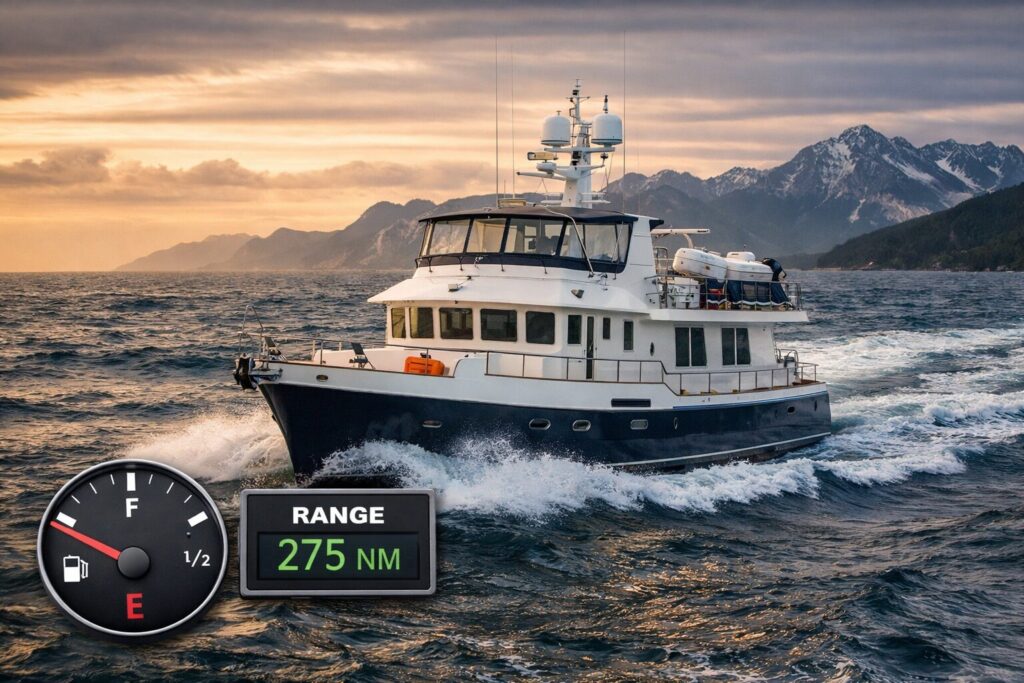
Moorage decisions are often treated as logistics to solve after buying the boat. In practice, the slip you choose affects ownership almost as much as the model itself. A good…
Designing a Cruising Yacht Galley That Still Works When the Boat Is Moving
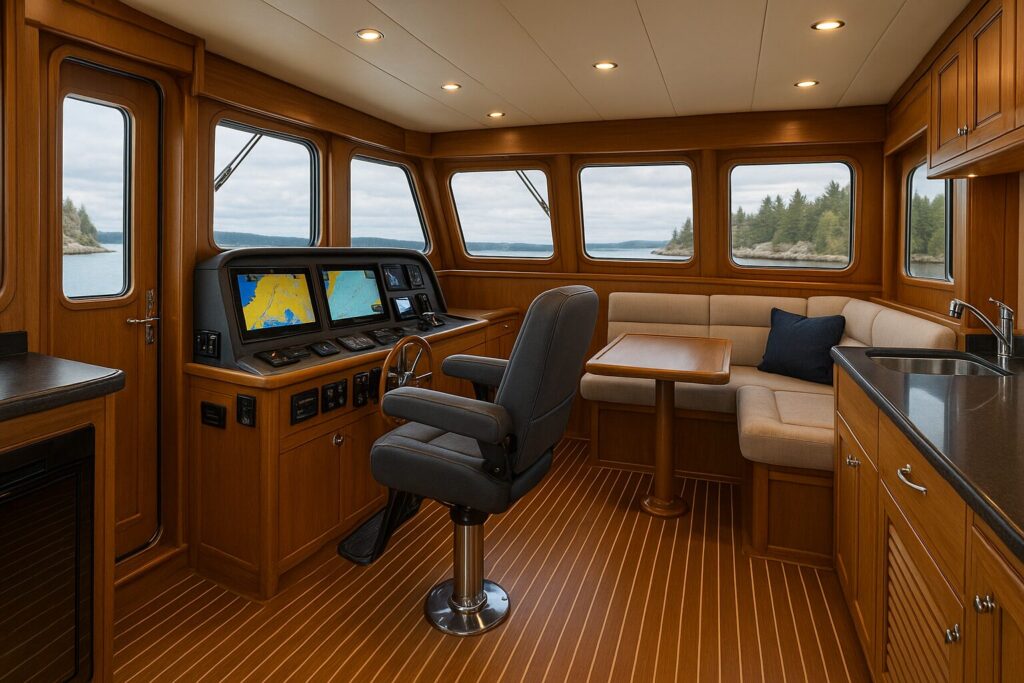
A yacht galley can look elegant at the dock and still be frustrating at sea. That disconnect usually comes from designing around appearance instead of workflow. For real cruising, the best galley is not simply attractive. It is secure, efficient, and easy to use when the boat is moving, the weather changes, and the person […]
Sedan vs. Pilothouse for Owner-Operators: Which Layout Fits Your Cruising Style?
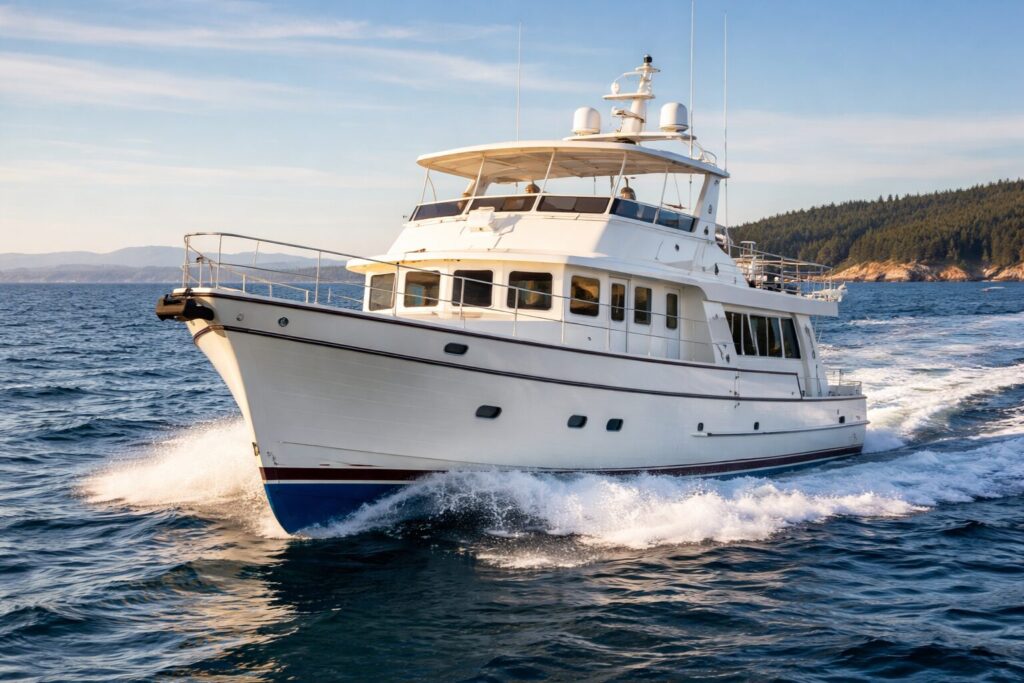
Shopping for a cruising yacht gets much easier when you stop asking which layout is better and start asking which layout fits the way you actually use a boat. That is especially true when comparing a sedan layout with a pilothouse layout. Both can be beautiful, capable cruising platforms. The right choice depends on where […]
Why Pilothouse Windshield Wipers, Washers, and Demisters Matter Offshore
On a serious pilothouse yacht, visibility is not just about having big windows. It is about keeping those windows usable when spray, salt, rain, glare, and temperature changes begin working against the operator. That is why windshield wipers, washers, and demisters deserve more attention than they usually get in a simple feature list. They are […]
Wing Stations, Aft Controls, and Docking Visibility on Pilothouse Yachts
Docking confidence on a pilothouse yacht comes from more than hull design and operator experience. It also comes from being able to see the right parts of the boat at the right time and having controls positioned where those sight lines actually help. That is why wing stations, aft controls, and docking visibility matter so […]
Night Running From a Pilothouse: Managing Glare, Reflections, and Electronics
Night running from a pilothouse often sounds simple in theory. The helm is enclosed, the electronics are protected, and the operator has a more controlled environment than at an exposed station. In practice, though, that enclosed environment can create its own problems. Reflections in the glass, light spill from screens, and poorly managed electronics can […]
How Builders Prevent Heat Buildup in Enclosed Pilothouses
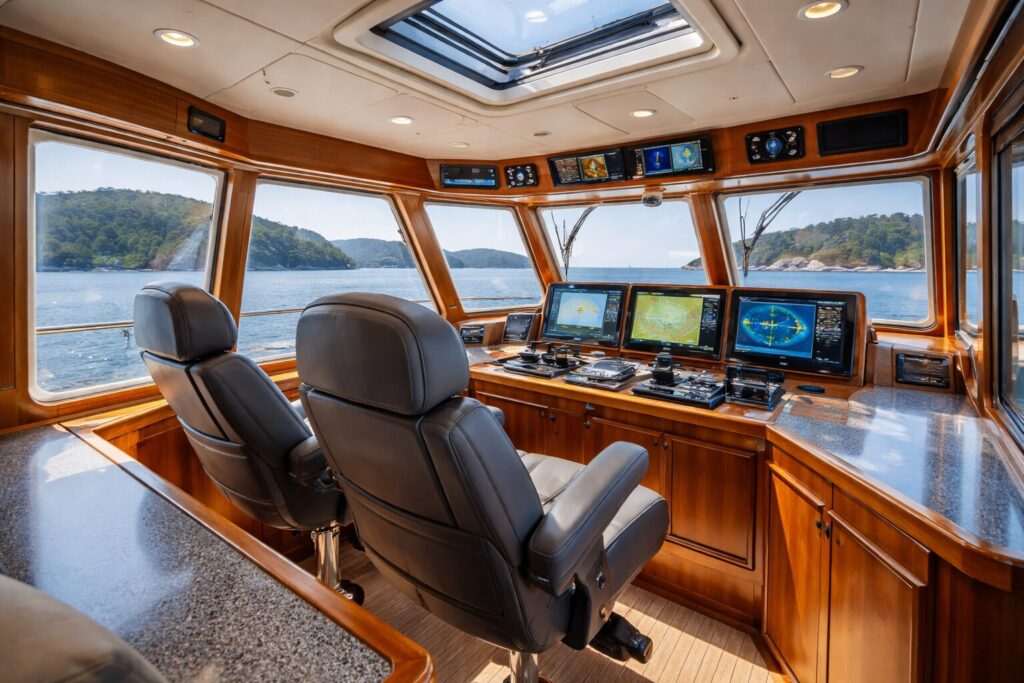
Learn how yacht builders prevent heat buildup in enclosed pilothouses using smart ventilation, insulation, window design, and climate control for long-range cruising comfort.
Pilothouse Drainage and Window Sealing: Why Small Details Matter Big Time
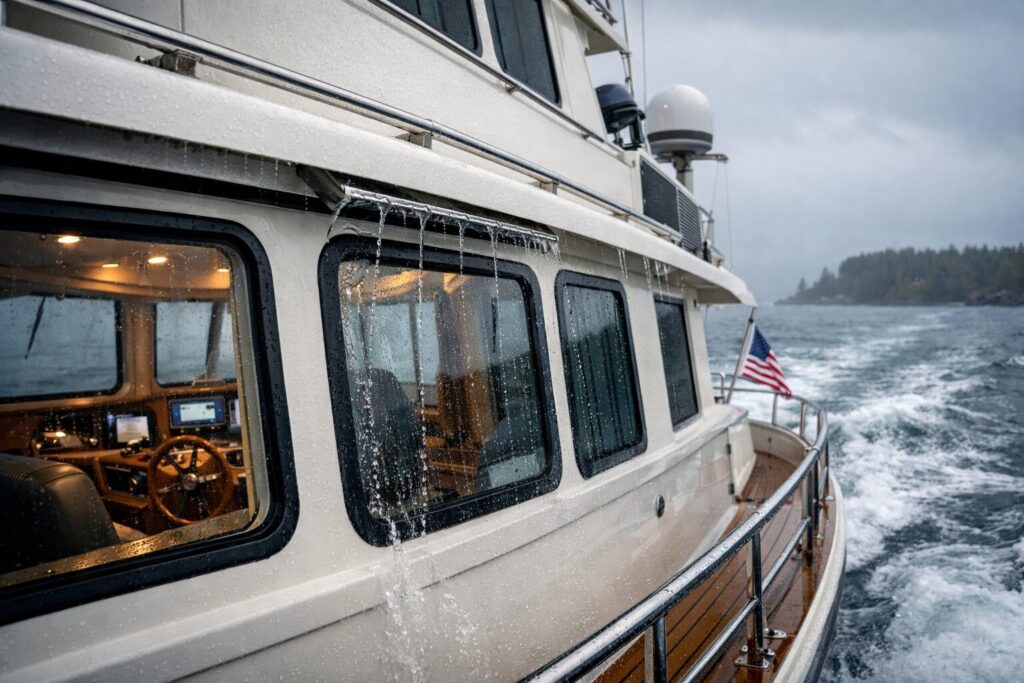
Pilothouse drainage and window sealing may seem like small details, but in the North Pacific they play a major role in safety and comfort. This guide explains how proper water management protects your yacht from leaks, damage, and long-term maintenance issues.
Why Pilothouse Yachts Are Perfect for Redundant Navigation Systems
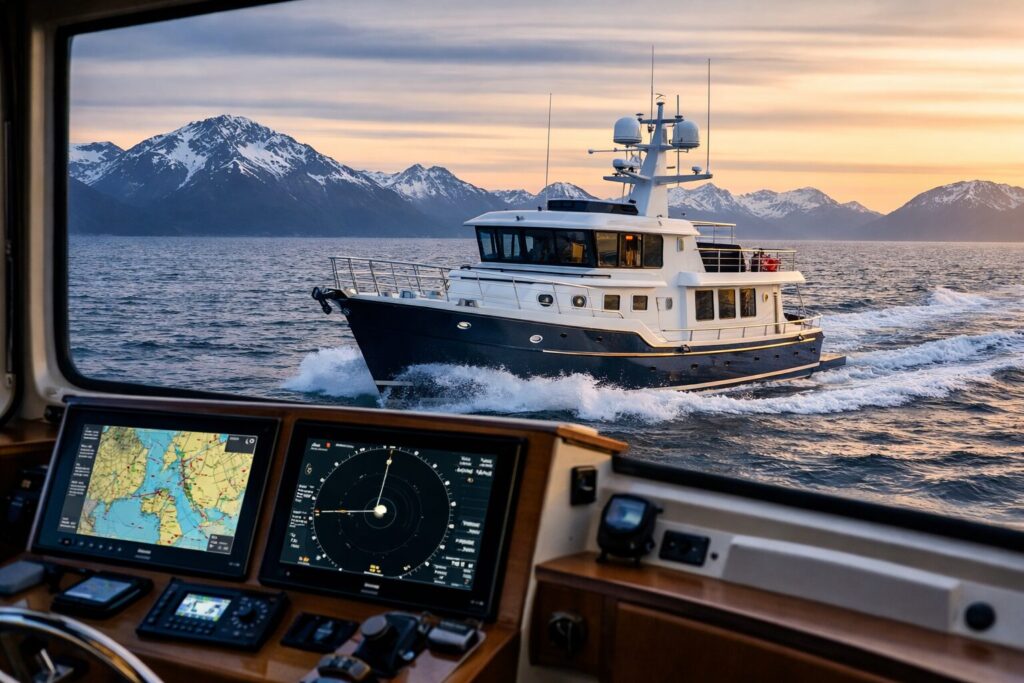
Pilothouse yachts are built for serious cruising where reliability matters most. Their enclosed design makes them ideal for redundant navigation systems and backup electronics. Learn how these yachts improve safety and confidence in challenging offshore conditions.
How Pilothouse Layout Makes Single Handed Docking Easier and Safer
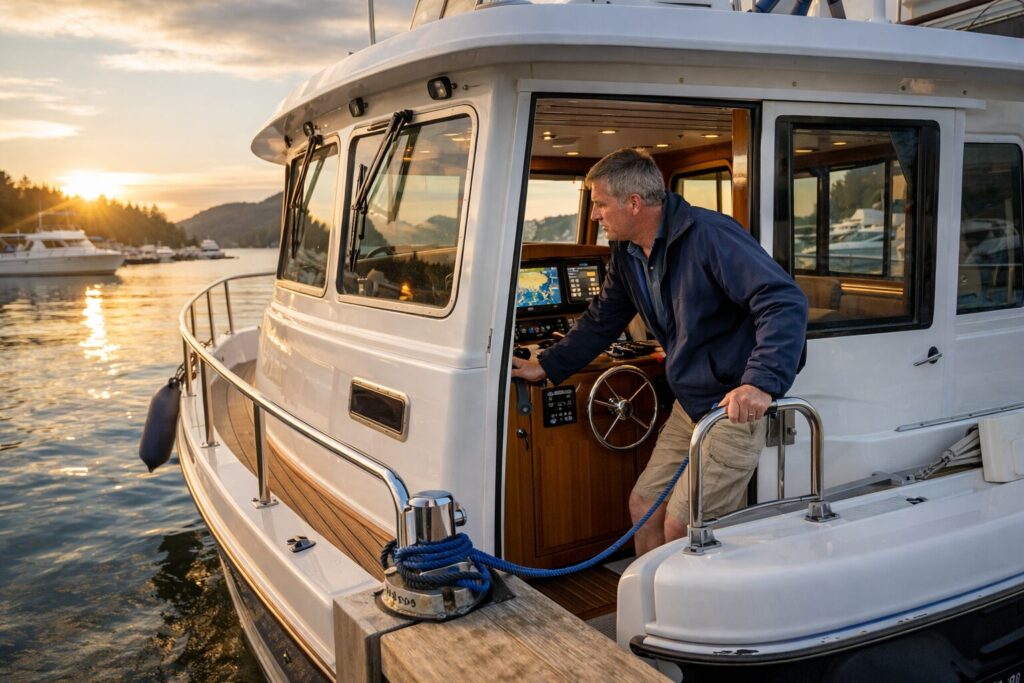
Docking a yacht alone demands confidence, control, and clear visibility. This guide explains how pilothouse layout directly impacts single-handed docking success. Learn what design features matter most on custom trawler and pilothouse yachts.