
Calculating Trawler Endurance: Usable Fuel, Measured Demand, and Planning Reserves
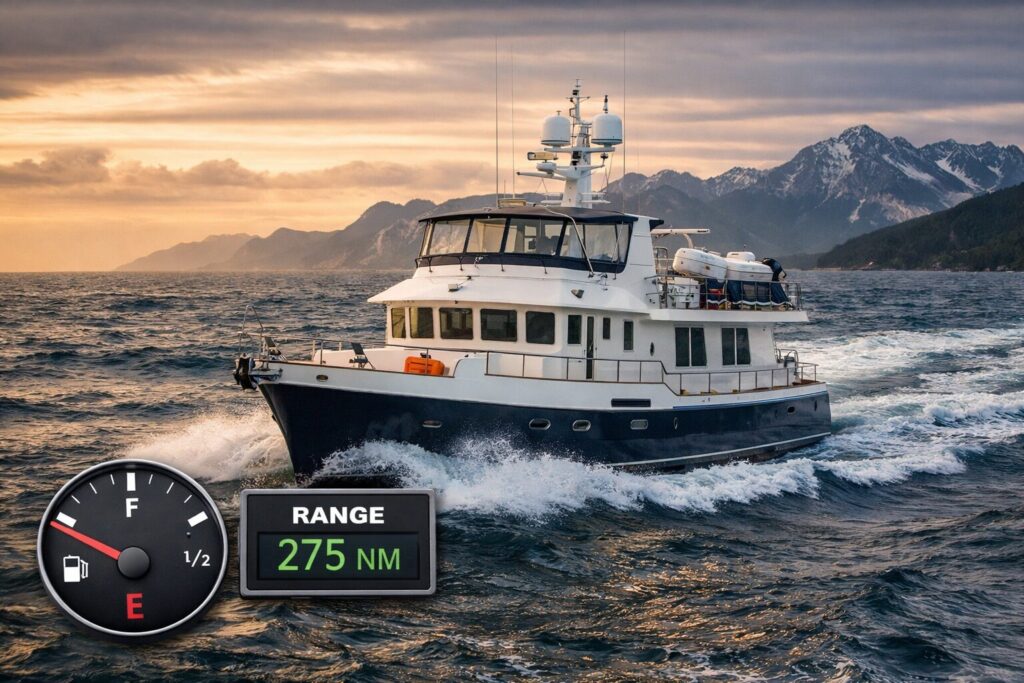
Long-range cruising demands more than brochure numbers. This guide explains how real-world conditions affect trawler range and fuel consumption. Understand true endurance and cruise the North Pacific with confidence and clarity.
What Trawler Keel Geometry Can Tell a Buyer
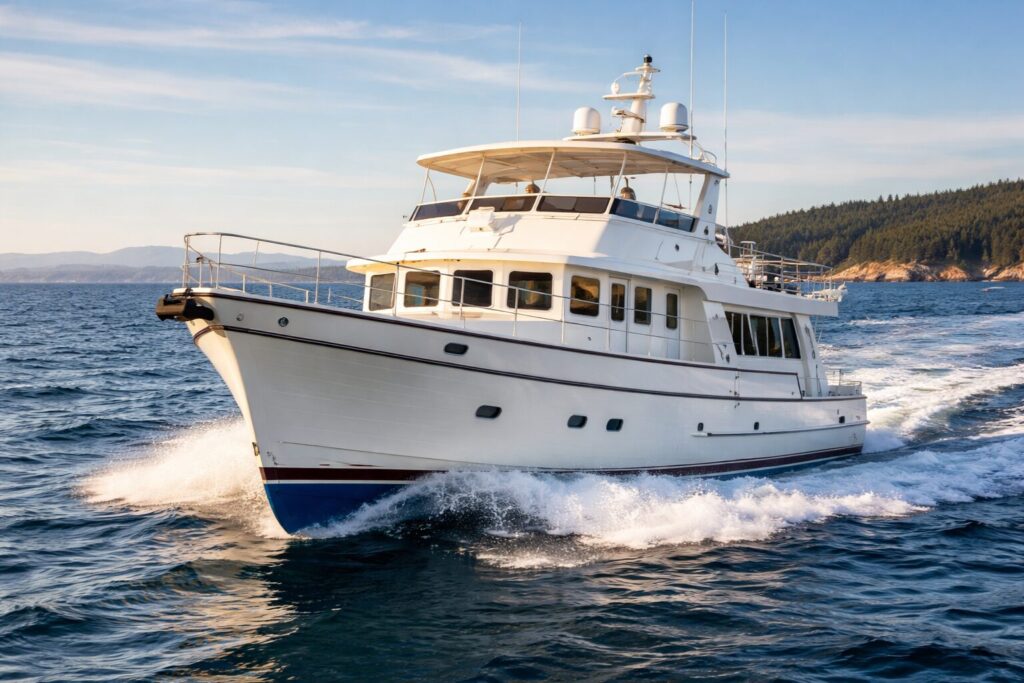
Keel design plays a critical role in how trawlers handle open water, protect vital components, and maintain steady movement. This guide explains how the right keel improves stability, tracking, and comfort during long range cruising.
Managing Pilothouse Heat Load: Enclosed Helm Design and Airflow Realities
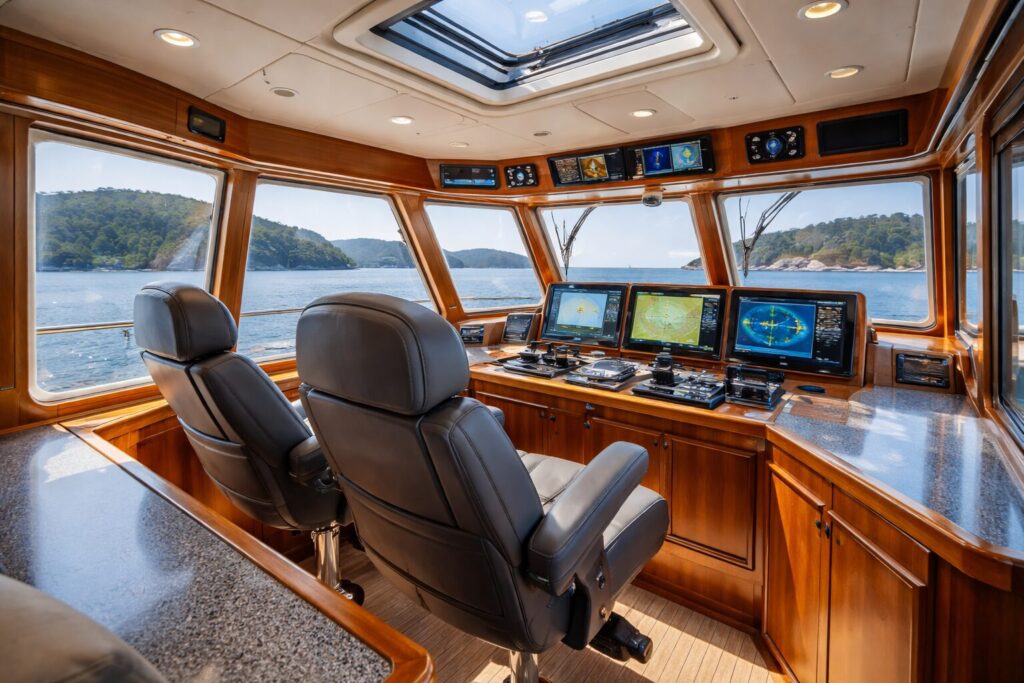
Learn how yacht builders prevent heat buildup in enclosed pilothouses using smart ventilation, insulation, window design, and climate control for long-range cruising comfort.
Pilothouse Window Seals and Drainage: What Owners Should Check
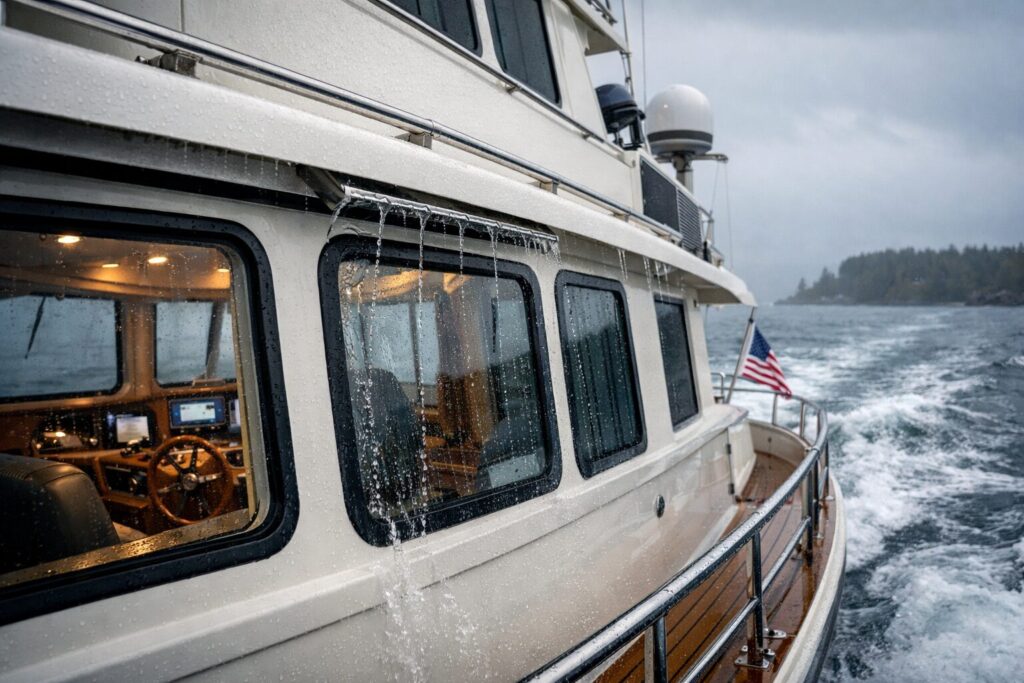
Pilothouse drainage and window sealing may seem like small details, but in the North Pacific they play a major role in safety and comfort. This guide explains how proper water management protects your yacht from leaks, damage, and long-term maintenance issues.
Pilothouse Navigation Redundancy: Why Two Screens Do Not Equal Two Systems
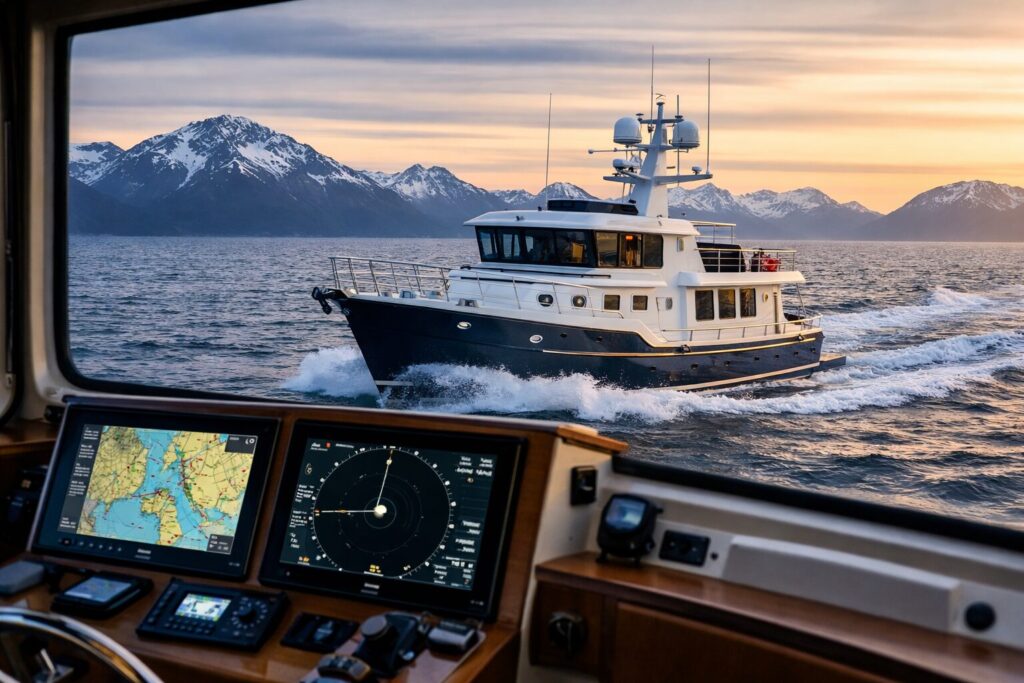
Pilothouse yachts are built for serious cruising where reliability matters most. Their enclosed design makes them ideal for redundant navigation systems and backup electronics. Learn how these yachts improve safety and confidence in challenging offshore conditions.
Pilothouse Layout and Solo Docking: Evaluating Operator Workload
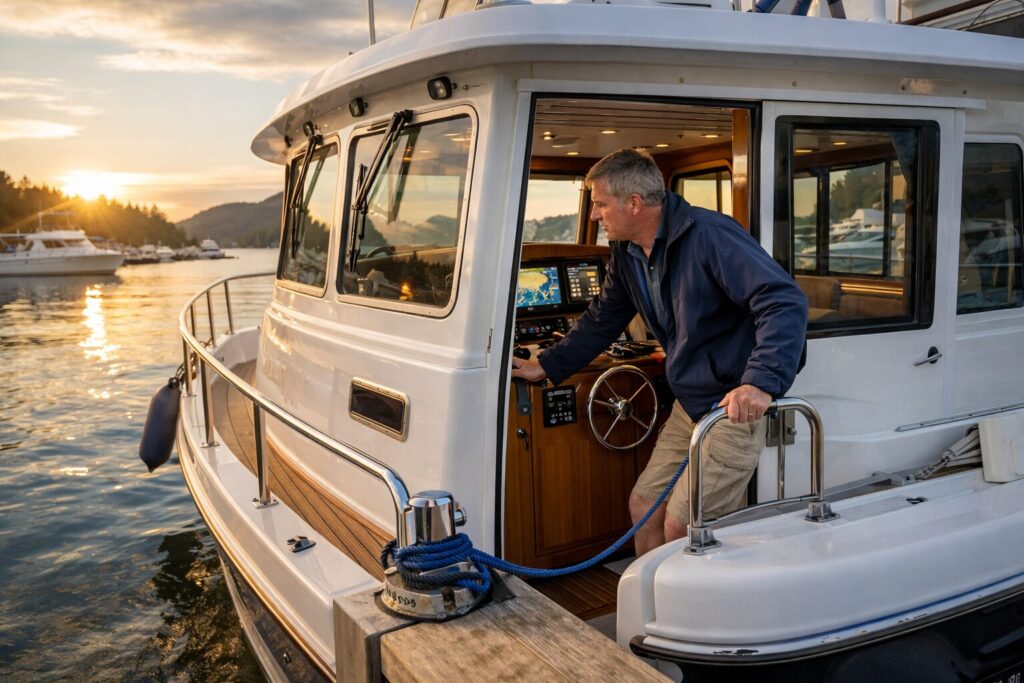
Docking a yacht alone demands confidence, control, and clear visibility. This guide explains how pilothouse layout directly impacts single-handed docking success. Learn what design features matter most on custom trawler and pilothouse yachts.
Pilothouse Design Conflicts: When One Helm Improvement Creates Another Problem

A pilothouse should support safe navigation, long hours at the helm, and comfort in changing conditions. Poor design choices can lead to fatigue, limited visibility, and inefficient control layouts. This guide explores the most common pilothouse design mistakes and how they impact real-world cruising.
Evaluating a High-Hour Trawler Engine: Duty, History, and Mechanical Inspection
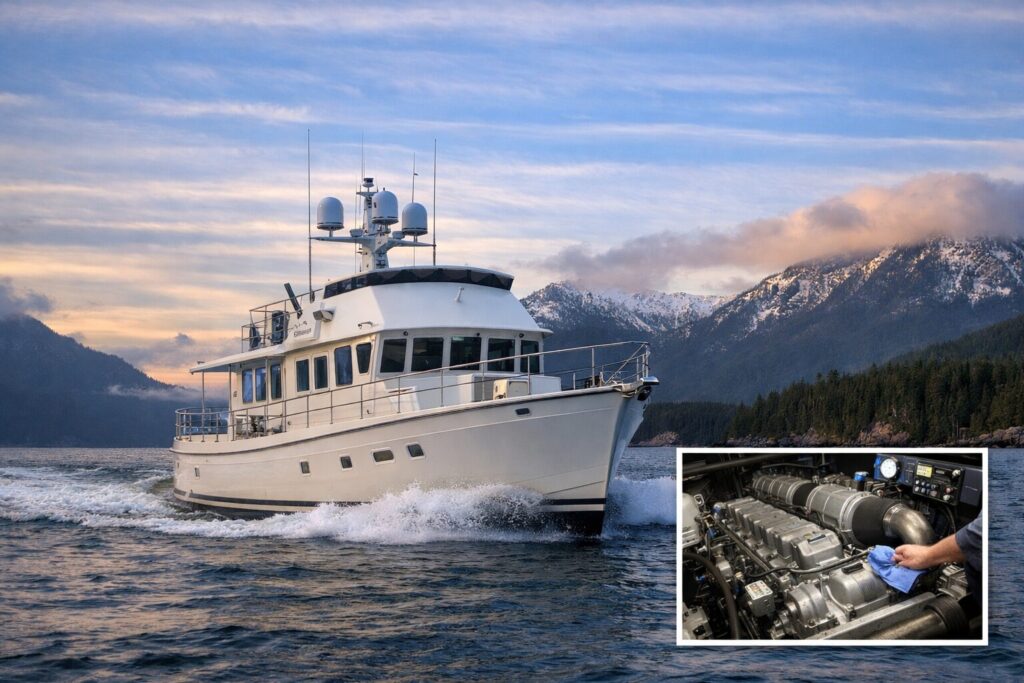
High engine hours often worry buyers, but on a trawler they usually tell a very different story. Built for steady operation and long service life, marine diesel engines are designed to run for decades. Here’s why 10,000 hours on a trawler engine is often a sign of reliability, not risk.
Planning a Trawler Battery Bank in Usable Energy
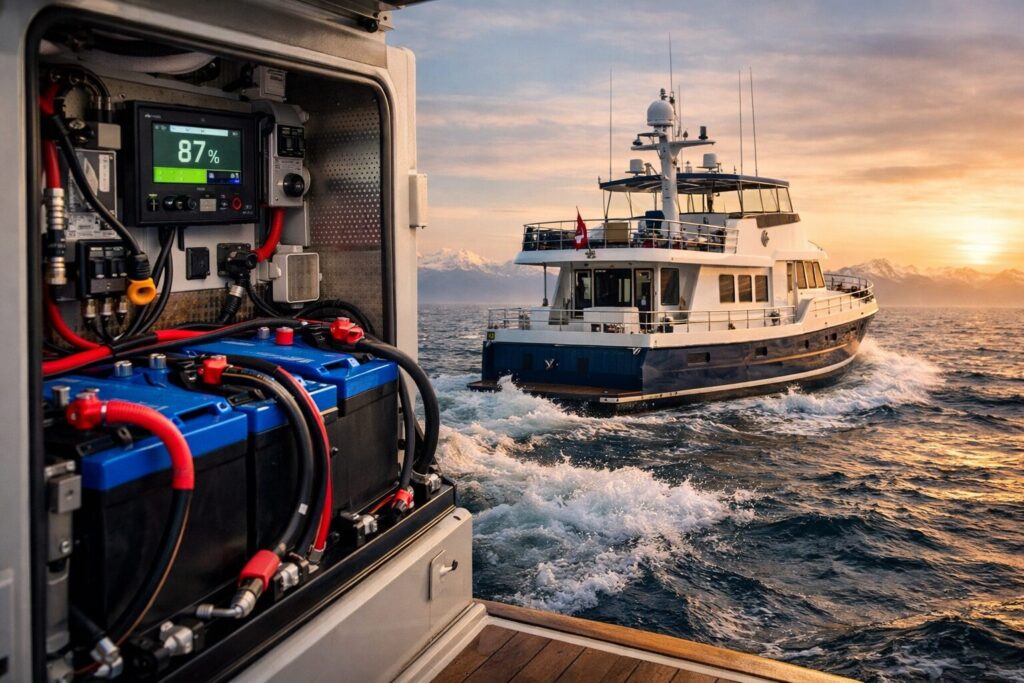
Battery banks are critical to long-range trawlers, but real-world performance often differs from advertised capacity. This guide explains what yacht owners should realistically expect from their battery systems. Understand how loads, charging, and cruising conditions shape true onboard power availability.
Trawler Draft Explained: Depth, Underwater Geometry, and Real-World Cruising
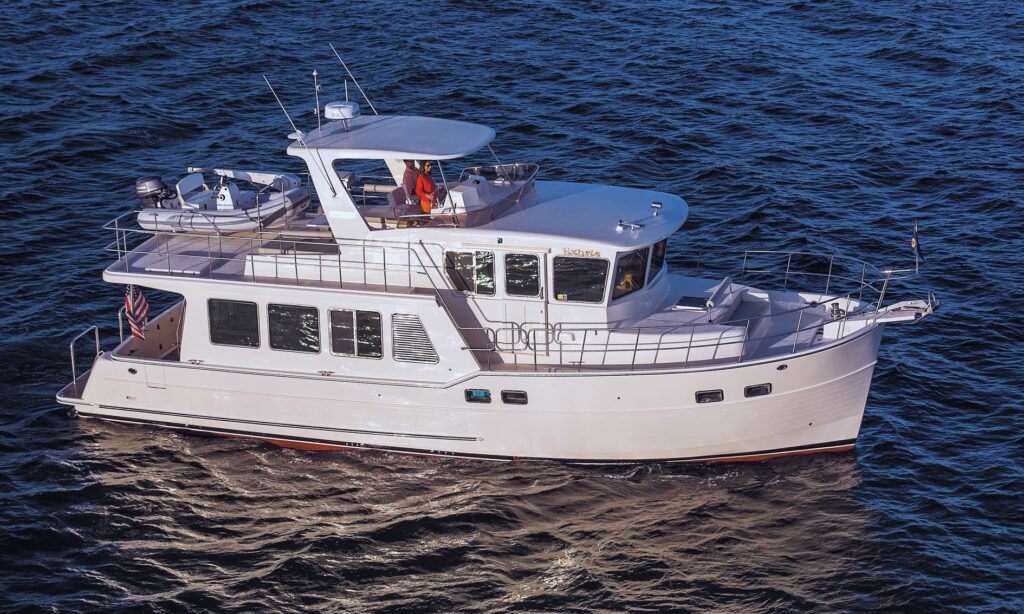
Draft is often misunderstood when choosing a trawler yacht. A deeper draft does not automatically mean limited access or poor handling. This guide explains why depth can improve stability, comfort, and real-world performance.