

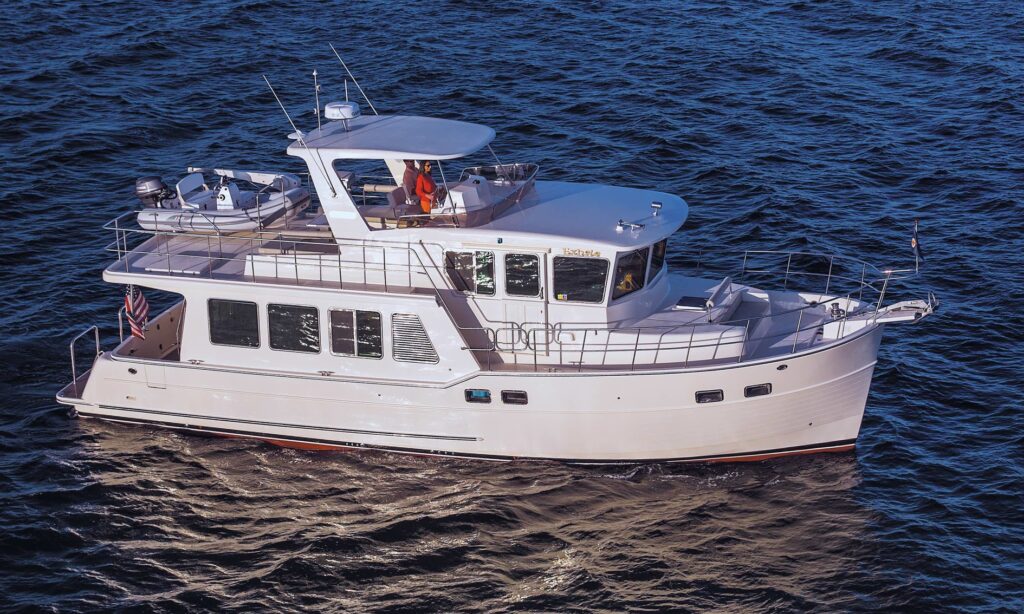
For a long-range trawler, anchoring confidence is not just about convenience. It is part of what makes the boat truly usable beyond the dock. Owners planning serious cruising, longer stays aboard, or remote nights away from marina infrastructure need a ground tackle setup that feels dependable when conditions stop being easy and the bow starts moving around in earnest.
That is why choosing the right anchor system is more than a shopping decision. It is a systems decision tied to the boat’s weight, windage, cruising plan, crew habits, and the kinds of places the owner expects to anchor most often. The best setup is not simply the largest or most expensive one. It is the one that fits the boat, supports the mission, and can be used with confidence over and over again.
Why Ground Tackle Matters So Much on a Long-Range Trawler
Ground tackle is one of those systems owners often appreciate most when conditions stop being easy. A long-range trawler may be designed for comfort, endurance, and self-sufficiency, but none of that matters much if the anchoring setup does not give the crew confidence when it is time to stay put. Whether the boat is stopping for lunch, sitting through a blow overnight, or spending days in a remote anchorage, the anchor system has to hold reliably and be easy to deploy and recover without drama.
That matters even more on trawlers because many owners use them exactly where anchoring confidence becomes part of the cruising lifestyle. Long-range boats are more likely to cruise farther from marinas, spend longer periods off the dock, and carry the kinds of loads that make a weak or poorly matched setup more obvious. The right ground tackle is not just a safety item. It is part of what makes the boat genuinely usable for the kind of self-sufficient cruising many trawler owners want.
It also ties directly into planning and peace of mind. Owners who think carefully about endurance, provisioning, and remote cruising already understand that confidence comes from systems that match the mission, whether that means fuel range, storage, or anchoring security. Ground tackle belongs in that same category, especially on a boat intended for the kind of real-world cruising discussed in serious passagemaking and long-range trawler use.
What Counts as Ground Tackle on a Trawler
The anchor itself
When people say “ground tackle,” they often think only about the anchor, but the anchor is just one part of the system. It is still the core component, and choosing the right style and size matters, but an excellent anchor can still perform poorly if the rest of the setup is mismatched. On a long-range trawler, the anchor has to match the boat’s size, windage, displacement, and the type of bottoms the owner expects to see most often.
Chain, rode, and connectors
The chain and rode are what allow the anchor to work effectively. Chain size, length, weight, and quality all affect how the system behaves under load, while shackles, swivels, and other connectors need to be chosen just as carefully because the whole setup is only as strong as its weakest point. For many owners, the conversation about anchoring confidence is really a conversation about the entire anchor rode system rather than the anchor alone.
Windlass, bow roller, and deck hardware
The windlass, bow roller, cleats, backing plates, and snubbing arrangement matter just as much because they determine how manageable the system feels in real use. A good anchor setup should not only hold well, it should deploy cleanly, retrieve reliably, and avoid damaging the deck or creating unnecessary crew stress. On a trawler used for serious cruising, the mechanical side of the anchoring system deserves the same attention as the anchor choice itself.
Start With the Boat, Not the Catalog
Displacement, windage, and cruising load
The right ground tackle choice starts with the real boat, not a generic chart viewed in isolation. A long-range trawler carries weight, freeboard, and windage differently than many smaller recreational boats, and those details affect what the anchor system must manage. A fully provisioned trawler loaded for cruising may behave very differently from the same hull sitting light at a boat show or brokerage dock.
Bow setup and deck layout limitations
Bow design matters too. The shape of the stem, the size of the bow roller, deck space, locker depth, and windlass placement all influence what anchor types and chain sizes are practical. Some setups are theoretically strong on paper but become awkward in daily use because the anchor does not self-launch cleanly, the roller fit is poor, or the hardware arrangement forces clumsy handling at the bow. The best system is one that fits the boat physically as well as numerically.
How your real cruising plan changes the answer
The cruising plan changes the answer just as much as the boat does. An owner who mostly day-stops in protected anchorages may want something different from an owner planning extended time in Alaska, longer off-grid stretches, or repeated nights in less protected locations. Ground tackle should reflect the same honest mission planning that shapes other long-range decisions, including endurance, provisioning, and the amount of independence expected from the boat.
Choosing the Right Anchor Type
Why bottom conditions matter
Anchor choice should reflect where the boat is actually going to anchor, not just what is popular online. Different designs perform differently in mud, sand, grass, mixed bottoms, or rockier terrain, and long-range cruisers often encounter more than one of those over a season. A setup that feels ideal in one anchorage may be less impressive in another, which is why bottom conditions should be part of the decision from the start.
When one anchor may be enough
For many owners, one well-chosen primary anchor is the heart of the system. If it is properly sized, matched to the bow setup, and supported by the right chain and handling gear, that primary anchor can cover the vast majority of everyday anchoring situations. The key is not chasing novelty. It is choosing something proven, appropriately sized, and easy for the crew to use with confidence.
Why many long-range owners still carry a backup anchor
Even so, many serious cruisers still carry a backup anchor because redundancy matters once the boat starts spending more time away from easy support. A secondary anchor can be useful if the primary is damaged, conditions change, or a particular bottom type calls for a different approach. On a trawler built around self-sufficiency, redundancy in anchoring can make as much sense as redundancy in other critical systems.
How to Think About Chain, Rode, and Scope
All-chain versus mixed rode
Many long-range trawler owners prefer all-chain rode because it offers abrasion resistance, weight low in the system, and confidence when anchoring repeatedly in demanding conditions. That said, mixed rode still has a place on some boats and for some use cases. The right choice depends on storage, weight tolerance, typical anchoring style, and how much emphasis the owner places on simplicity, durability, and severe-use confidence.
How much chain makes sense
More chain is not automatically smarter if it creates storage, handling, or weight issues that the boat does not carry well. But too little chain can reduce flexibility and confidence when anchoring in deeper water or in places where more scope is needed. The right amount depends on where the boat cruises, how often it anchors, and how independent the owner expects the boat to be during longer stretches away from marina support.
Why scope and anchoring technique still matter more than hardware alone
Even an excellent anchor and chain setup cannot fix poor anchoring technique. Scope, bottom evaluation, reset awareness, and the discipline to anchor properly still matter more than expensive hardware alone. Owners who are already thinking carefully about endurance and off-grid capability, as seen in content around trawler endurance planning, should think about anchoring with the same systems mindset: the gear matters, but the way it is used matters just as much.
Do Not Treat the Windlass as an Afterthought
A trawler’s anchoring system is only as usable as the windlass and deck hardware supporting it. If the windlass is undersized, difficult to service, poorly positioned, or awkward for the crew to use, the whole anchoring routine becomes less reliable and more stressful. That matters because on a long-range boat, anchoring may be a routine part of daily life rather than an occasional convenience.
The windlass should match the load profile of the boat and work cleanly with the chosen chain, rode, and bow roller arrangement. It should also be easy to operate in real conditions when the bow is moving and the crew is tired. Buyers often spend most of their attention on anchor type and chain size, but a mismatched windlass or poorly thought-out foredeck setup can undermine the entire system.
Ground Tackle for Remote and Long-Stay Cruising
The farther a trawler cruises from easy support, the more ground tackle becomes part of the boat’s independence package. Owners spending time in places like Alaska, less-developed anchorages, or long off-grid stretches need to think beyond “will this hold tonight?” and ask whether the system supports repeated anchoring, equipment reliability, and crew confidence over time. That is especially true when the boat is also carrying the loads and expectations that come with longer provisioning and self-sufficient cruising.
For owners planning remote use, anchoring confidence ties directly into the rest of the mission. A boat set up for long-term provisioning, extended stays aboard, or exploring places where marinas are not always nearby should have a ground tackle system that reflects that seriousness. In practical terms, that often means thinking more conservatively about primary-anchor confidence, chain length, backup capability, and the ease of managing the system day after day, especially on routes that overlap with the realities of remote trawler cruising in places like Alaska.
Common Ground Tackle Mistakes on Trawlers
One of the most common mistakes is choosing hardware by trend or brand familiarity instead of by boat and mission. Another is focusing entirely on the anchor while underestimating the importance of chain length, connectors, windlass quality, or foredeck layout. Owners can also overestimate what a light or convenience-focused setup will do once the boat is loaded for serious cruising and spending more nights away from marina infrastructure.
Another mistake is treating hardware as a substitute for seamanship. The best anchor in the world cannot compensate for poor scope, weak bottom evaluation, or rushed anchoring decisions in deteriorating conditions. On long-range trawlers, confidence usually comes from the combination of the right equipment, realistic setup choices, and disciplined anchoring habits rather than from any single product alone.
A Simple Ground Tackle Checklist for Buyers and Owners
- Match anchor size and style to the actual trawler, not just a generic chart.
- Evaluate the full system: anchor, chain, rode, connectors, windlass, and deck hardware.
- Consider the boat’s real cruising load, windage, and bow layout.
- Choose gear with the intended anchoring grounds and bottom types in mind.
- Decide whether all-chain or mixed rode fits the mission and storage realities better.
- Make sure the windlass and bow roller arrangement are practical for repeated use.
- Think about backup-anchor needs if the boat is meant for remote or long-stay cruising.
- Budget for the entire system rather than only the primary anchor.
- Practice anchoring technique, not just equipment selection.
- Choose a setup the crew can trust and manage confidently under real conditions.
The Best Ground Tackle Setup Is the One You Trust and Can Use Well
The right ground tackle for a long-range trawler is not necessarily the biggest or most expensive setup available. It is the system that matches the boat, fits the mission, and gives the owner confidence to anchor safely and repeatedly in the places the boat is actually meant to cruise. On some boats that may mean a more conservative, redundancy-minded setup. On others it may mean refining an already solid arrangement so it is easier to manage and better matched to real cruising loads.
The key is to think about anchoring as part of the wider ownership experience. For a serious trawler, ground tackle is tied directly to comfort, self-sufficiency, and how much freedom the crew really has once the dock lines are off. When the system is chosen well, it supports the kind of long-range cruising the boat was built for instead of limiting it.
Contact Us
If you are comparing trawlers, planning long-range cruising, or trying to understand which anchoring setup makes the most sense for the way you actually use your boat, North Pacific Yachts can help you think through the tradeoffs. We focus on trawler and pilothouse yachts built for real-world comfort, safety, and long-range confidence. Reach out to us at info@northpacificyachts.com or call 1-877-564-9989 to talk through your goals.