

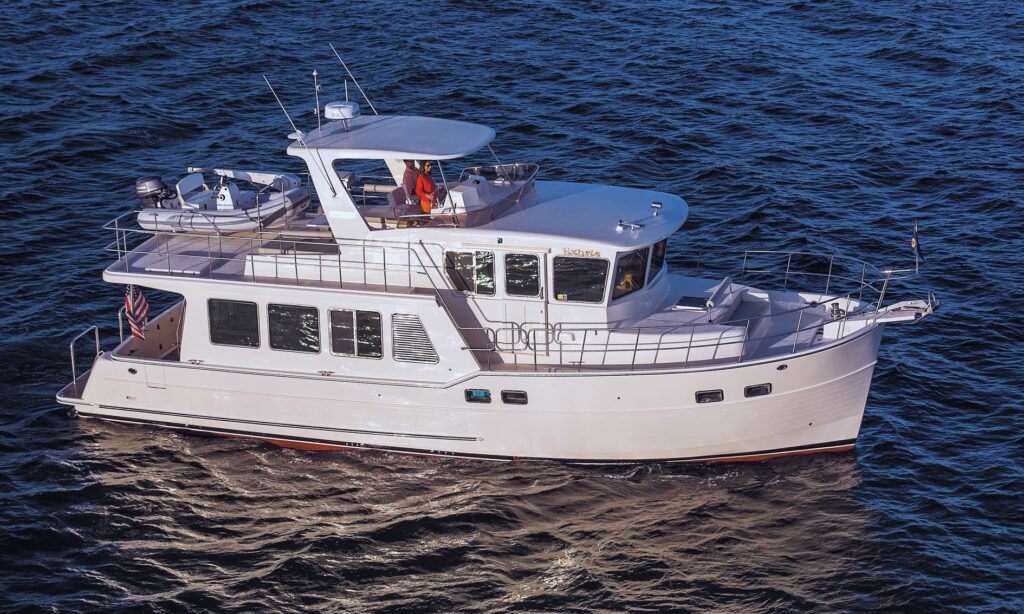
Buying directly from a yacht builder changes who coordinates the conversation. A dealer-led purchase may give you a local sales and service contact; a direct arrangement connects you with the business responsible for the boat. The actual roles vary, so ask what each party handles rather than assuming the channel defines the entire experience.
At North Pacific Yachts, we operate without a third-party dealer network. Understanding that relationship helps you prepare questions about selections, delivery and support for the yacht you are considering.
Direct Builder Access vs. Dealer Intermediation
In a dealer-led arrangement, ask who sells the boat, who answers technical questions and how the dealer communicates with the builder. A dealer may offer inventory, representation or local service arrangements, but those capabilities need to be checked with the particular business.
In a direct arrangement, ask which people on the builder’s team coordinate the project and which specialists address design or equipment questions. Direct contact can make the discussion more immediate; it does not mean every request is feasible or every answer comes from the same person.
We discuss owners’ goals and requirements before construction and allow equipment and interior customization. For buyers weighing semi-custom and fully custom trawler yachts, the next useful step is to explain the routines and choices that matter, then ask how they fit a proposed model and build scope.
How Specifications and Revisions Move to the Factory Floor
Whatever the sales channel, selections need a clear project record. Ask who translates a conversation into the proposal, how drawings and equipment choices are reviewed, and how an accepted change reaches the people doing the work.
A useful discussion follows the same practical questions:
- What cruising goals and crew needs shape the proposal?
- Which equipment and layout choices are included in the current revision?
- Which questions require drawings or qualified technical review?
- How are changes approved, priced and recorded?
- Who confirms that related documents reflect the agreed change?
Direct communication still needs documented responsibility. Ask which decisions remain open and whether a later change would affect other work or the project schedule. Do not assume that a shorter communication chain removes design limits or the need for written approval.
Commissioning and Local Work Require Named Responsibilities
Identify the delivery location and the work included before comparing offers. Shipping, receiving, commissioning, trials and owner orientation may involve different people. The proposal and written arrangements should identify their roles for the boat rather than leave them to assumptions about direct or dealer sales.
| Stage | Question to settle |
|---|---|
| Transport and receiving | Who coordinates logistics and receives the boat? |
| Commissioning | Who performs the agreed checks and records results? |
| Sea trial | Who operates, observes and reviews the agreed tests? |
| Orientation | Who explains the delivered equipment and available records? |
| Open items | Who tracks any unfinished work and confirms closeout? |
At North Pacific Yachts, our team includes regional personnel involved in commissioning, warranty work and after-sale support. Ask which arrangements apply to your boat and intended location. Then compare yacht builder support in more detail to understand reporting, local service involvement and written terms.
Evaluating Channel Trade-offs Beyond Presumed Savings
A direct sale does not establish an automatic discount, and a dealer sale does not establish better or worse service. Compare the actual package, responsibilities and relationship alongside the quoted price.
If inventory timing, a trade-in, local representation or service proximity matters, ask each business what it currently offers. Availability varies; the purchase channel alone cannot answer those questions.
Consider how comfortable you are managing decisions and local arrangements. One owner may value a nearby point of contact; another may prioritize direct build discussions. In either case, identify what the seller coordinates, what another party handles and what remains your responsibility.
Key Questions to Clarify Before Signing a Contract
Before executing a purchase contract under either model, identify who owns each operational responsibility. Ask for clear written answers to these questions, and review contract terms with an appropriate adviser:
- Contractual Counterparty: Is your legal purchase contract with the manufacturing shipyard, a regional distributor, or an independent retail LLC?
- Communication Access: Who coordinates technical questions, and how do you reach the relevant project or equipment specialist?
- Progress Documentation: What written verification, milestone surveys, and photographic logs will you receive as structural bulkheads, machinery, and wiring harnesses are installed?
- Commissioning Scope: Which commissioning checks, trials and orientation are included for the boat’s actual equipment?
- Local Service Coordination: Exactly who dispatches mobile technicians if an inverter fails or a raw-water pump seals improperly while you are cruising three states away from the delivery port?
Taking time to answer these operational questions early prevents misunderstandings once construction starts. If you are weighing how our build process, interior choices and regional service contacts match your long-range cruising goals, contact our team to discuss the details of your upcoming project.