

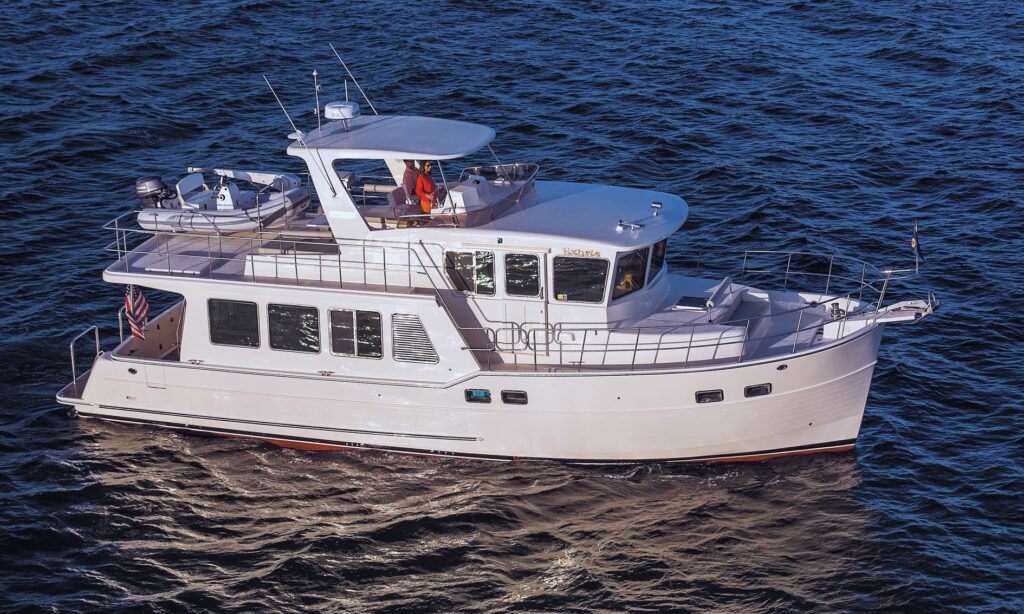
A yacht purchase contract commits substantial capital long before your hull enters the water. While initial conversations naturally focus on hull forms, interior joinery, and cruising speed, your actual ownership experience depends heavily on the operational structure supporting the yacht after delivery.
Marine equipment operates in harsh saltwater environments. Systems will eventually require adjustment, troubleshooting, or replacement regardless of the builder’s quality standards. Evaluating how a builder administers service, coordinates repairs, and communicates across every phase of ownership—before signing a contract—prevents costly misunderstandings once the yacht is tied to your dock.
Mapping Key Personnel Across Every Phase of the Build and Ownership
You should know the exact job title and chain of responsibility for your yacht at four distinct stages: construction, commissioning, warranty administration, and long-term service. Accountability often gets blurred when companies hand off projects between sales representatives, factory project managers, and third-party repair yards.
Builders structure their operations differently. Some sell through independent, third-party dealership networks where the dealer serves as your primary contact for both sales and post-delivery claims. We operate without a third-party dealer network at North Pacific Yachts. We discuss owners’ goals and requirements before construction. At North Pacific Yachts, our team includes regional service personnel whose work includes commissioning, warranty work and after-sale support; ask which people and roles apply to your proposed boat.
Before signing a build contract, map out who will handle each operational phase:
- Pre-Construction and Engineering: Who translates your equipment choices and interior layout adjustments into production drawings? Confirm whether you have direct communication with the project manager overseeing the build or if requests filter through an intermediary.
- Commissioning and Initial Sea Trials: Who conducts the final machinery alignments, electronic calibrations, and water testing? Clarify whether commissioning is handled by factory technicians, regional service personnel, or an independent destination boatyard.
- Warranty Administration: When a component requires repair, who makes the financial authorization? If you buy through a dealer, ask whether the dealer pays the service technician directly or if every repair requires factory pre-approval from an overseas office.
- Post-Warranty Technical Support: Years after delivery, who maintains your vessel’s records? Ask if the builder preserves hull-specific schematics and equipment logs so you can source replacement parts or troubleshoot older systems.
| Build Stage | Primary Focus | Key Question to Ask |
|---|---|---|
| Construction | Engineering, layout customization, systems installation | Does the project manager provide direct updates and review change orders with me? |
| Commissioning | Machinery alignment, sea trials, electronics calibration | Who signs off on the final sea trials at the delivery port? |
| Warranty | Parts procurement, diagnostic approval, invoice processing | Who approves claims and authorizes local labor rates? |
| Long-Term Support | Sourcing parts, technical schematics, refit advice | Are hull-specific as-built drawings archived and accessible to future technicians? |
Walking Through a Hypothetical Service Claim
A simple hypothetical issue makes support easier to compare. Suppose a freshwater pump starts cycling while all faucets are closed. You are asking how information and responsibility move, rather than asking the builder to diagnose an imaginary boat.
Ask who receives the first report, what yacht and equipment identifiers they need, and who keeps you informed. If a local technician needs a drawing or installation detail, who supplies it? If another party handles the equipment question, who explains the handoff?
Then ask how the item closes. A useful record preserves the observed symptom, work performed, result and any remaining question. The same information should be available if your regular contact is away.
Clarify who finds and books local assistance, authorizes work and addresses payment. A friendly offer to help does not establish the financial terms. Those answers should agree with the written documents for the proposed boat.
Separating Written Contractual Terms from Verbal Reassurances
Read the complete build agreement and warranty documents alongside the description of support. The documents address terms; the contact and issue-handling plan shows how you would seek an answer. If they appear inconsistent, ask for the discrepancy to be resolved and take legal questions to an appropriate adviser.
Ask how builder and component-manufacturer responsibilities relate to the actual package. Check any provisions concerning local labor, diagnostic work, travel, haulout, approval before repairs and reimbursement. Do not assume every warranty includes or excludes the same costs.
Request a sample of the available new yacht handover documents. Ask which drawings, manuals, equipment identifiers and test records would accompany your boat, and how later service providers could obtain relevant boat-specific information.
Assessing Geography and Local Service Fit
Your yacht may spend most of its life far from the build or delivery location. Ask how support would work at your home port and a likely seasonal base.
Our team identifies service personnel working in British Columbia, Washington and on East Coast deliveries. That gives you a starting point for asking which contact and arrangements apply to your boat. It does not replace checking local service availability for the actual equipment and location.
Speak with the yard you expect to use. Ask which engine, generator, electrical and electronics brands its technicians regularly service, and whether it exchanges drawings and findings with a distant builder. Specialized equipment may require additional manufacturer expertise; familiarity with marine systems alone does not establish capability for every component.
The useful comparison identifies what the builder coordinates, what you arrange locally and how an unresolved technical question escalates.
Managing the Punch List and Post-Delivery Open Items
Ask how commissioning observations or unfinished work would follow the boat if anything remained open at delivery. Avoid assuming there will be an open item—or that silence means all work is complete.
A useful entry identifies the observation, date, equipment or location, responsible contact, next action and confirmation needed for closeout. Ask how updates reach the owner and how the agreement addresses work that remains unresolved.
Your commissioning checklist can help organize observations. Agree who reviews an issue and how it affects acceptance or departure; do not substitute a generic checklist for the boat’s actual contract, equipment instructions and qualified evaluation.
Before signing, retain the names, written terms and issue-handling answers together. A builder support comparison becomes useful when you can follow one question from first report to a documented result.
Making Your Decision
Evaluating builder support requires looking past clean gelcoat and polished joinery to examine the operational engine behind the boat. Clear answers give you a more concrete basis for comparing proposals before you sign.
If you are evaluating custom cruising trawlers or want to understand how we coordinate construction, commissioning, and ongoing service directly with our owners, contact our team to discuss your plans.