

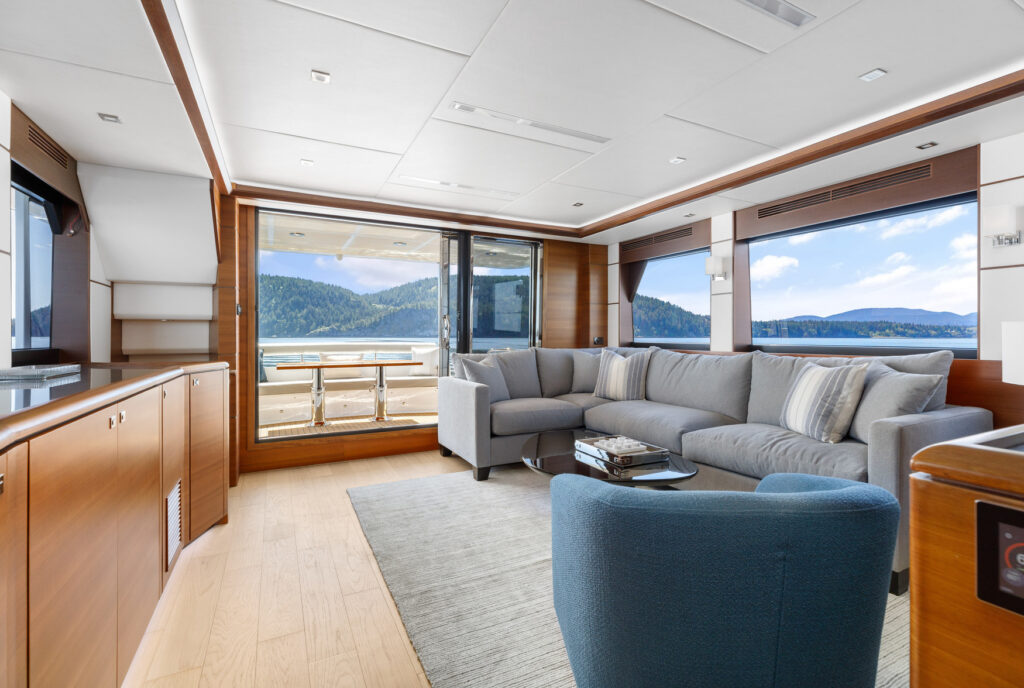
“Semi-custom” and “fully custom” can describe different offerings from different builders. Before choosing between them, identify what is established, what can change and who reviews the consequences of a change.
The useful question is how much personalization your cruising routine needs. A familiar hull platform with selected layout and equipment changes may meet that need; another project may require a broader design brief. Compare the actual scope rather than assuming the label tells the whole story.
Defining the Boundaries: Established Platform vs. Bespoke Design
An established-platform project starts with an existing design and defined choices or areas of flexibility. A bespoke project may include new hull or structural design, but even custom builds can draw on existing engineering and components. Neither label alone establishes construction method, performance or available changes.
Ask where the fixed design ends and the owner’s choices begin. Which layouts are offered? Can a partition, cabinet or equipment location change? Which requests require new drawings or naval-architect review? Which decisions must be settled before a particular build stage?
The factory-direct yacht buying relationship connects the buyer with the business coordinating the boat. At North Pacific Yachts, we do not operate through a third-party dealer network, and our team discusses owners’ goals before construction. Use that conversation to identify the practical boundaries for the exact model and proposal.
Grounding Customization in Daily Cruising Routines
Personalization matters most where it directly impacts your daily life aboard. Too many buyers spend weeks agonizing over exterior styling or salon fabrics while overlooking the practical realities of spending weeks at an isolated anchorage.
Before discussing interior modifications, map out a typical 24-hour cycle at anchor:
Sleeping and Accommodations
A berth that looks sleek in a boat-show brochure can prove frustrating during a rolling night at sea. If you plan to cruise as a couple with occasional guests, sacrificing a cramped third stateroom in favor of a dedicated workshop, laundry room, or walk-in pantry often makes practical sense. Consider mattress dimensions, step heights, and nightstand access for everyday living.
Galley Ergonomics and Provisioning
Consider how the galley supports bracing, secure storage and access during your intended use. If your itinerary involves weeks in remote regions, standard domestic refrigeration may fall short. Ask which refrigeration, cooking and storage choices are available, and how they fit the actual boat and onboard power arrangement.
Dedicated Workspaces and Connectivity
Long-term cruisers increasingly work from the water. Converting a guest cabin or a pilothouse corner into an ergonomic workstation with secure monitor mounts, dedicated DC-to-AC inverter circuits, and clean cable routing may serve an owner who works aboard better than additional berths; another crew may need the guest accommodation.
Lazarette and Deck Storage
Cruising gear accumulates quickly. Fenders, lines, folding bicycles, dive gear, outboard fuel, and spare parts all require dedicated, accessible stowage. Altering lazarette layouts or adding custom shelving keeps high-use items organized and prevents critical safety gear from being buried under recreational toys.
Translating these daily habits into a clear new yacht equipment list helps you connect the selected equipment to the routines it needs to support.
Distinguishing Surface Finishes from Structural and Mechanical Revisions
Some choices mainly concern appearance; others change space, access or system interfaces. A finish choice can still affect material weight, care or joinery, so review the actual request rather than assigning a fixed level of difficulty from its category.
| Choice | Buyer question | Review to discuss |
|---|---|---|
| Finish or material | Does it suit daily care and the desired appearance? | Samples, weight and installation details where relevant |
| Interior layout | Which routine improves, and which space is lost? | Drawings, movement, storage and access |
| Equipment or systems | What does the change connect to or require? | Mounting, power, plumbing, controls and service access |
| Structure or exterior opening | Does the request change the established design? | Feasibility and qualified design review |
Moving a head or adding electrical equipment can affect more than its visible footprint. Ask the project team about related plumbing, wiring, ventilation, space and drawings. These are interfaces to review, not instructions for choosing system sizes.
Request written feasibility, scope and price treatment before accepting a change. If a request affects the schedule or another selection, document the consequence in the same discussion.
Interior Flexibility Within an Established Hull Platform
Our interior customization can range from major layout changes to smaller finish details. The useful starting point is the space you need and how you expect to use it, followed by a discussion of what is feasible on the selected model.
Our 49 Pilothouse offers three layouts. Review the 49 Pilothouse layouts to compare the actual drawings, then discuss berth use, head access, passageways and storage for your crew. The published choice of layouts does not mean every requested modification is available or that a drawing confirms every dimension you need.
Use a walkthrough to connect the plan to real movement aboard. Imagine preparing meals, getting up at night, putting wet gear away and reaching service points after lockers fill. A change that adds desirable living space may also remove storage or make equipment harder to reach; ask how those competing needs would be handled.
Structuring a Prioritized Customization Brief
The smoothest builds start with a clear, written brief from the owner. Rather than delivering a disconnected list of wishes, organize your requirements by priority, operational rationale, and structural impact.
1. Document the Primary Cruising Mission
State clearly where the yacht will spend 80% of its time. Describe the climate, seasons, crew and time away from shore services. Discuss heating, cooling, shade, refrigeration and water needs with the project team rather than prescribing a system from the destination alone.
2. Separate “Must-Haves” from “Nice-to-Haves”
Group your requests into two distinct categories:
- Operational Essentials: Items required to make the boat functional for your crew (e.g., specific berth lengths for a tall owner, a designated workspace, a specific dinghy crane capacity).
- Aesthetic Preferences: Details that can be adjusted based on price and weight implications (e.g., specific stone selections, custom accent lighting, tile patterns).
3. Evaluate the Trade-Offs
Every adjustment on a yacht involves a compromise. Expanding a forward stateroom head might take space from a hanging locker. Additional energy storage can use space and affect weight and system interfaces. When proposing a change, identify what you are willing to give up to achieve it.
4. Demand Written Feasibility Reviews and Price Quotations
Avoid ambiguous allowances. Review every non-standard change with the builder in writing, accompanied by updated drawings and precise pricing adjustments. A builder should evaluate how each modification affects weight, electrical loads, and service access before accepting it into the build spec.
Planning Your Build Specifications
A successful build balances proven naval architecture with personal utility. Grounding your customization choices in daily cruising routines—rather than novelty or cosmetic trends—gives you a clearer basis for deciding which changes deserve space and project attention.
If you are evaluating layouts, systems, or equipment choices for an upcoming build, contact our team to discuss your plans, review technical drawings, and see how our semi-custom platform accommodates your cruising goals.