

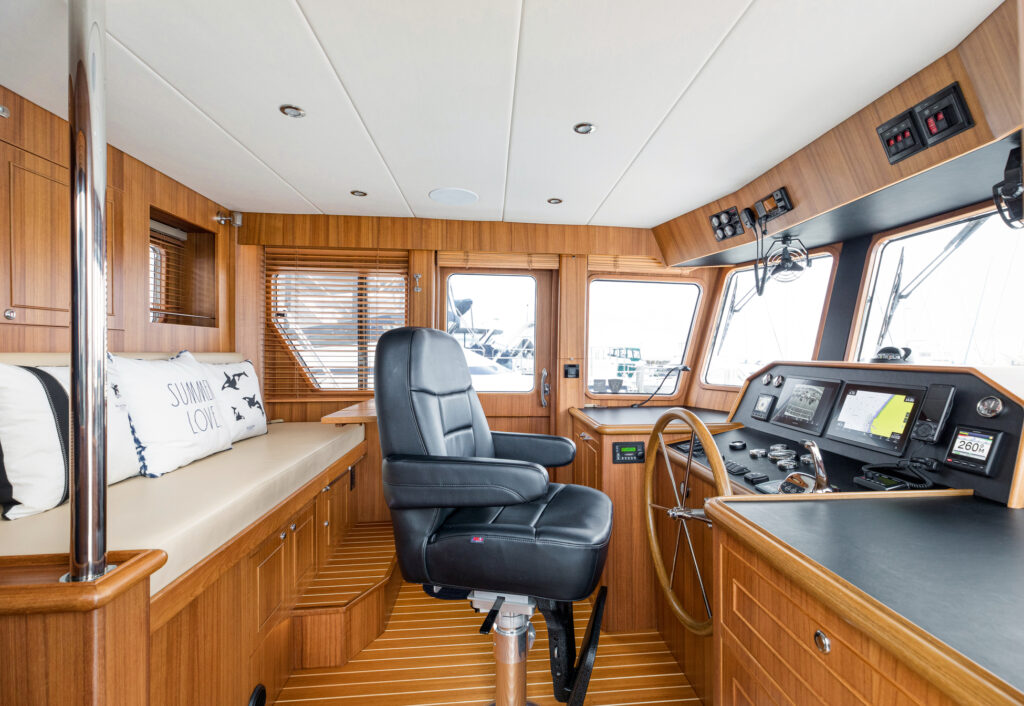
A sea trial combines two kinds of evidence: observations about how the yacht fits your cruising routine, and technical findings from the people evaluating its condition. Keeping those roles clear makes the day more useful.
Bring a notebook and agree on the trial plan before departure. Your notes should describe what happened, where and under which conditions, so that preferences and concerns can be discussed afterward.
Establishing Roles, Load States, and Environmental Baselines
Confirm who operates the boat, who conducts the technical checks and which tests are appropriate. A broker, surveyor, engine specialist and buyer may have different responsibilities; agree on them rather than assuming that a standard division applies.
Record the trial context:
- Fuel and water levels, where available.
- People, tender and other significant equipment aboard.
- Known hull and running-gear condition.
- Wind, sea state and current information.
- Engine configuration and instruments used for readings.
These details help explain differences between the trial, published data and the way you expect to cruise.
Assessing Helm Ergonomics, Movement, and Living Spaces Underway
At the intended cruising pace, observe sightlines from the positions both operators will use. Note glare, window obstructions and control reach. Ask how visibility changes with trim and loading rather than judging only from the berth.
Move through the yacht only when the operator agrees conditions and access are suitable. Observe handholds, steps and doors without seeking out rough water to prove their usefulness. A stationary walkthrough can establish many reach and movement questions before departure.
For example, our 49 Pilothouse is one model you can evaluate this way. Discuss the actual layout and fitted equipment rather than assuming a particular arrangement guarantees quiet rest or easy deck access. Our guide watchkeeping for two-person crews: a safer routine for long days underway provides related questions about lookout, handoffs and rest.
Notice the living spaces as well as the helm. Could each person comfortably use the galley, seating and berths within the limits of the observed conditions? Which concerns are preferences, and which deserve professional follow-up?
Documenting Noise, Vibration, and Motion Without Guessing Causes
When an unusual sound or shudder appears, describe it before naming a cause. Useful notes include:
- The location where it was heard or felt.
- Engine RPM, speed and what the yacht was doing.
- Which auxiliary equipment was operating.
- Whether the observation persisted or changed.
- The question you want a specialist to answer.
“Vibration felt in the helm seat at this setting” is more useful than an unsupported diagnosis. Our guide evaluating trawler noise and vibration during a sea trial develops that narrower observation process.
Logging Operating Numbers and Performance Data
Let the operator and relevant specialist select the test settings and procedures for the boat, machinery and conditions. Capture the agreed readings without imposing a universal RPM schedule or directing a maximum-load run yourself.
| Record field | Observation |
|---|---|
| Operating state | Operator-selected observation |
| RPM | |
| Speed and instrument source | |
| Fuel rate and source | |
| Temperature and pressure readings | |
| Conditions and follow-up |
Record units and identify displayed readings. Speed over ground reflects passage progress; speed through water, where reliably measured, adds different context. Opposite-direction runs may help comparisons but do not automatically cancel every current, wind and wave effect.
Our guide fuel planning for long-range trawler cruising: range, reserve, and real-world margins connects those observations with the separate passage-budget decisions.
Turning Raw Observations into Clear Purchase Decisions
At the dock, organize notes into three groups:
- Personal fit: Visibility, reach, movement, living arrangements and the pace you expect to use.
- Specialist follow-up: Unusual sound, vibration, instrument readings or equipment behavior that needs an explanation.
- Potential adjustments: Changes to discuss with an appropriate professional, including their feasibility and consequences.
Avoid assuming a preference can never be changed or that a proposed adjustment is simple. Get the answers before using it in a purchase decision.
A good sea trial leaves you with an understandable record, not just a favorable impression. If you are preparing to evaluate a yacht, talk with us about its layout, available operating information and the questions you want the trial to resolve.