

A longer northbound cruise asks you to look beyond the habits built on familiar weekends. Fuel, weather, daylight, supplies, service access and crew rest become connected decisions. A stop can be enjoyable and also provide the reset that makes the next stage workable.
Start by marking the stops that matter for fuel, water, food, waste and support. Distinguish them from places you would like to visit if conditions and time allow. A useful plan gives you room to wait, shorten a leg or replace a stop without turning every change into pressure to continue.
Plan Fuel Around the Choices You Need
Use measured consumption for the actual boat, load and intended operating pattern. Compare usable fuel with the proposed legs, appropriate reserves, diversions and auxiliary demand. Include generator or heating-system consumption where those systems draw from the fuel supply.
Neither a model label nor a nameplate tank capacity supplies that calculation. Fuel pickup arrangements, operating conditions and consumption differ. Confirm the boat’s documentation and data rather than adopting a universal unusable percentage or reserve figure.
Our guide to fuel planning for long-range trawler cruising develops the calculation and margin questions. In the northbound plan, ask what options remain if the preferred fuel stop is unavailable or a later leg takes longer than expected.
If a fuel stop matters, contact its operator before the trip and recheck as arrival approaches. Confirm availability, hours, access and any arrangements for your particular yacht. A directory entry establishes a candidate to investigate, rather than a promised service.
Give Weather and Daylight Room in the Stages
Open Canadian marine forecasts and warnings for the actual zones and check the issue time and valid period. For U.S. stages, use the applicable official regional products. Review exposed sections and the approach to the destination, rather than considering only the conditions near departure.
The guide to marine wave forecast details explain why wave height, period and direction all matter. Significant wave height is the average of the highest one-third of waves, rather than a maximum. Use the forecast with observations and local navigation information; one number cannot decide suitability for the boat and crew.
Plan for usable waiting time and arrival margin. Where the route allows it, a shorter leg may leave more time to assess the approach, settle the boat and review the next day. Daylight does not remove navigation or anchoring risks, but it belongs in the arrival plan.
The guide to weather-window planning for Pacific Northwest coastal hops develops that decision process. Check the applicable tide and current information separately, then consider the timing together. Avoid giving weather, dwindling resources and a tired crew all the power over the same decision.
Make Each Stop Do Useful Work
Before relying on a stop, ask what it can actually provide. Keep the answer, contact and date checked beside the trip plan.
| Need | What to confirm | If it is unavailable |
|---|---|---|
| Fuel | Current supply, access, hours and arrangements for the yacht | Assess a confirmed alternative against remaining usable fuel and reserves |
| Water and provisions | Replenishment options and access for the crew | Carry supplies suited to the next dependable replenishment |
| Waste | Appropriate disposal or pumpout arrangements | Plan capacity and containment until a suitable facility is available |
| Maintenance support | Available help and access relevant to the actual fault or service | Review whether the cruise should pause or change |
| Rest and shore time | Berth or moorage arrangements and suitable shore access | Choose an assessed alternative or revise the stay |
Avoid assuming power, depth, fuel quality, water availability or landing access from the appearance of a dock. A working wharf, marina and anchorage may serve different purposes. Ask the responsible operator about the exact arrangements and check current charts and conditions for the approach.
Prepare Ordinary Work and Crew Rest
Longer trips expose small inconveniences in storage and routine. Check where wet clothing, provisions, tools and the boat-specific spares live. Resolve known faults and review the maintenance tasks you are competent to perform; professional assistance may be required.
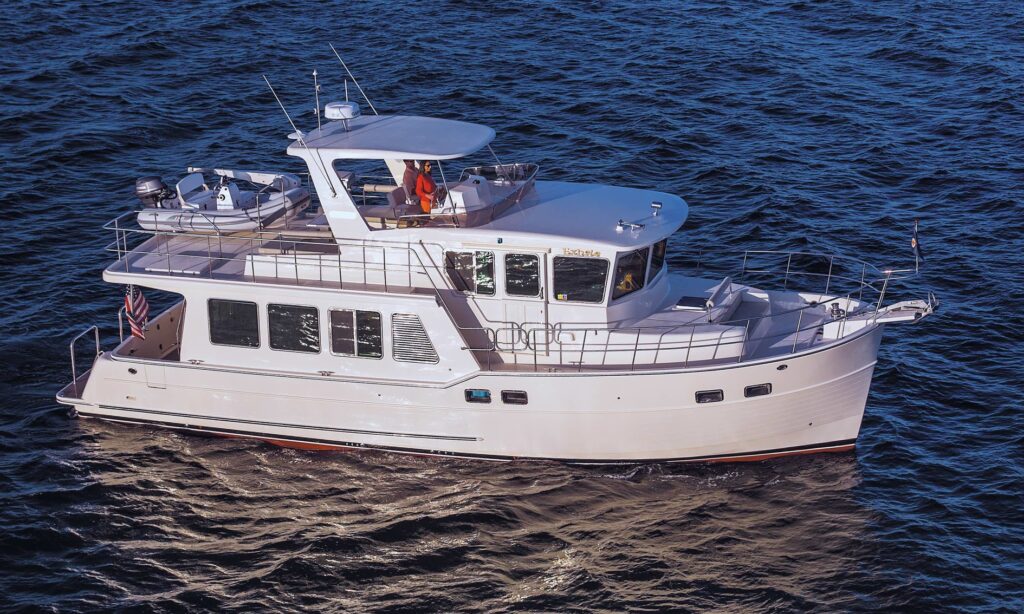
As a living-space example, our North Pacific 45 Pilothouse has a teak-finished interior, salon, galley, guest stateroom and queen island master berth. Walk through the particular arrangement with your crew and gear in mind. Can meals, rest and watch responsibilities coexist? Can the equipment you need remain accessible after loading for the cruise?
Consider how both people on a small crew will rest, communicate and share daily tasks. A layout can support a routine, but it cannot guarantee a quiet berth, alertness or comfortable conditions throughout a passage.
The guide to navigation and communications redundancy for remote cruising helps with backup information and communication planning. Confirm appropriate options for the actual route rather than assuming continuous coverage or immediate assistance.
Keep the Administrative and Destination Plans Connected
Prepare U.S.–Canada yacht border reporting for both directions where the trip crosses the border. Those instructions belong to the current authorities and the actual arrival plan.
If Alaska is part of the goal, Alaska by trawler develops the Southeast Alaska itinerary, support and park questions. Give that destination its own time allocation rather than letting the northbound transit consume it by default.
Before leaving, review essential stops, measured resources, current forecasts, crew readiness and assessed alternatives together. As you compare yacht layouts and equipment for those routines, talk with us about the cruising days you want the boat to support.