

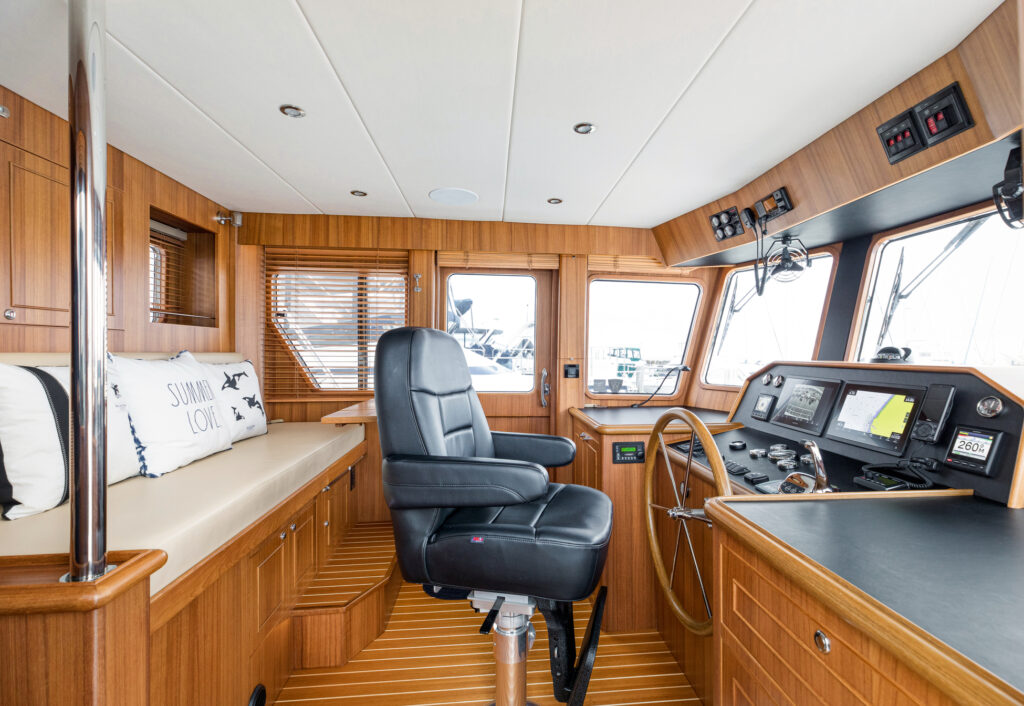
A weather window is useful when it fits the actual coastal leg, arrival and crew. Start by identifying where the route becomes exposed, where alternatives become harder to reach, and what conditions you need at the destination. Then match current marine forecasts and observations to the times you expect to be in those places.
The result should be a departure decision with room to change. A favorable forecast near the marina cannot settle every section of the voyage, and a yacht’s size or sheltered helm cannot turn one weather number into a universal permission to leave.
Identify the Parts of the Hop That Matter Most
Review the chart and route before reducing the decision to a forecast value. Ask where open swell or a longer fetch may affect the boat, where currents matter, and which approaches deserve particular attention. Assess possible alternatives for the conditions in which you might reach them.
A place that looks like shelter on a chart still needs an approach assessment. Some legs have limited alternatives. Recognizing that early helps you consider whether to shorten, delay or change the proposed hop rather than depending on an easy diversion later.
If the trip involves cruising north beyond the San Juans, include the next dependable support stop and the time available to wait. That broader staging plan gives the weather decision context.
Read Wind and Waves Across the Valid Forecast Period
Open Canadian marine forecasts and warnings for Canadian waters, or the applicable U.S. regional marine products for U.S. waters. Check the zone, issue time, valid period, warnings and any update. Compare the information with observations appropriate to the route.
The guide to marine wave forecast details explain the three fundamental wave properties: height, period and direction. Forecasts can describe more than one wave component. Significant wave height is the average height of the highest one-third of waves, rather than a maximum.
These details help explain why one wave-height number is insufficient. How a sea affects the yacht depends on the combination of conditions, course, boat and crew. Avoid treating a period-to-height formula or a named regional wind speed as a guaranteed comfort threshold.
| Forecast input | Question for the proposed hop |
|---|---|
| Wind and gusts | How do direction and expected changes relate to exposure and the arrival? |
| Wave height | What product and wave measure are being reported? |
| Wave period and direction | Which components may affect the boat along the chosen course? |
| Visibility and warnings | What changes the workload or the options available? |
| Issue time and valid period | Does the forecast cover when the boat will reach each section? |
Put Travel Timing and Current Information Together
Estimate arrival using a realistic operating plan and speed over ground, allowing for slower sections and delays. Then compare the forecast periods with the expected transit and arrival times. A change in progress can move the boat into a different part of the forecast.
Wind and current can interact, but their effect is location- and condition-dependent. When checking Inside Passage current gates, use the exact official current product, station, date and clock notes. A tide-height prediction is a different product and does not automatically supply slack-current timing.
Consider whether the current timing and weather picture fit together. Neither a favorable current nor a favorable wind forecast can override all the other inputs.
Agree on Boat and Crew Limits Before Departure
Discuss the limits appropriate to the actual yacht, configuration, crew experience and intended route. Use operating documentation, training and qualified guidance where needed. The useful discipline is agreeing what would prompt reconsideration before a destination or booking creates pressure.
Include crew condition alongside the forecast. Poor sleep, illness, unfamiliar equipment or uncertainty about an approach may change what is practical. Discuss responsibilities and how either person will raise a concern.
A protected helm may reduce direct exposure to rain and wind, but it does not eliminate fatigue, change sea state or remove the need for a proper lookout. Evaluate the entire boat and crew rather than assigning “novice,” “moderate” or “advanced” crews a fixed weather table.
Include the Exit, Arrival and Next Move
Review the start and finish with as much care as the exposed middle. Consider departure conditions, any applicable bar or inlet information, daylight, intended moorage and the work required after arrival. An acceptable passage can still end in a demanding approach.
Ask what the move does to the next day’s options. Does it put the boat somewhere with a workable waiting plan, or make the following stage harder? Evaluate the forecast and available resources over the relevant itinerary rather than imposing a fixed look-ahead interval on every cruise.
The guide to navigation and communications redundancy for remote cruising develops how to obtain information and keep backups. Confirm suitable methods for the actual trip; equipment does not guarantee coverage or uninterrupted updates.
Recheck the Departure Picture
Before departure, compare current forecasts, observations, notices, boat status and crew readiness with the assumptions in the plan. Reassess when they differ or when timing changes. An observation outside the forecast does not automatically identify its cause, and agreement with the forecast does not guarantee a safe passage.
Keep the record concise: exposed sections, forecast sources and times, current checks, arrival plan, assessed alternatives and reasons to reconsider. If your cruising plans are informing a yacht choice, talk with us about the layout, visibility and equipment questions you want to evaluate aboard.