

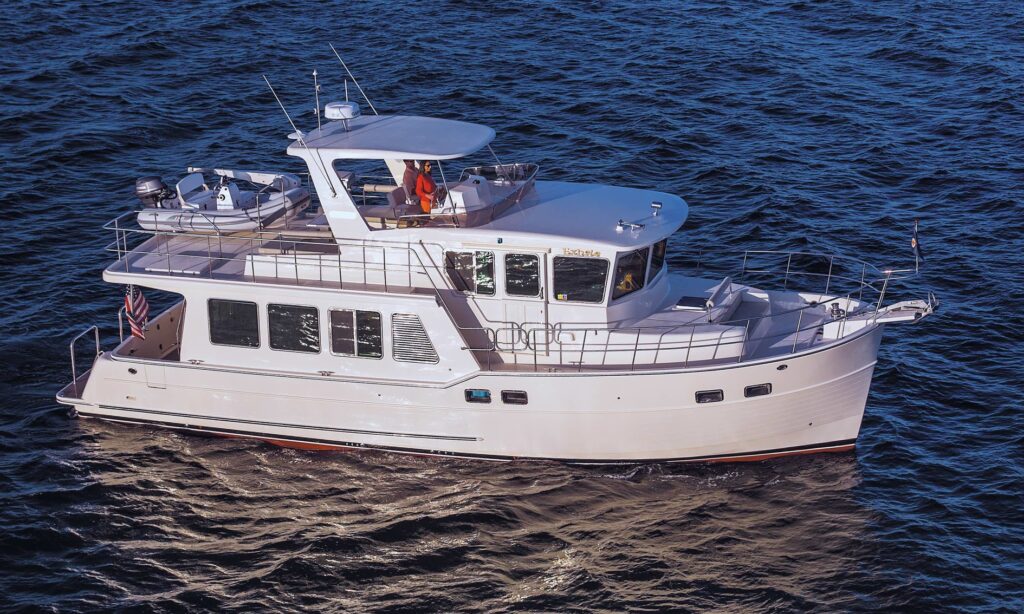
A month aboard gives you more time to discover a missing spare, an awkward storage arrangement or a system that has not been exercised in normal use. Preparing the boat and crew before departure helps you address those questions while familiar support is still nearby.
Use a commissioning checklist to organize observations, documents and follow-up. The exact equipment, its manuals and your trip determine the checks. A generic list can guide the conversation, but it cannot establish that every system is ready or prescribe the same tests for every yacht.
Scope the Voyage and Clear Outstanding Commissioning Items
Start with your route, crew, likely stops and access to assistance. A coastal itinerary with regular marina visits creates different replenishment and support questions from a month with long stretches away from services. Identify fuel, water and pumpout opportunities and review them alongside expected use.
Gather your new yacht handover documents, equipment manuals and any existing open-item list. Check whether the records match the boat and selected configuration. Retain commissioning results that are available and identify anything not yet demonstrated or understood.
For each open issue, record what was observed, where it occurs, who will review it and what confirms resolution. Ask qualified personnel how an unresolved fault affects operation or departure. Do not assume a problem is acceptable because a boat can leave the dock, or that every newly delivered yacht necessarily has unfinished work.
Verify Propulsion, Electrical, Domestic Water, and Safety Systems
Arrange appropriate checks using the actual equipment instructions and qualified technicians. Ask for normal operation and relevant maintenance access to be demonstrated. Avoid bypassing protective devices, opening energized panels or changing fuel and discharge arrangements to improvise a test.
Propulsion and Running Gear
Review service status and manufacturer guidance for the installed engine, transmission and related equipment. Ask which fluid, filter, cooling and leak checks are appropriate, and which observations should be recorded during an agreed trial. A technician can explain unfamiliar readings or symptoms without turning a buyer checklist into a repair procedure.
Use the opportunity to evaluate serviceability. Can the normal inspection points be reached, identified and checked safely? Where does a specialist need access that will become harder once provisions and spare gear are aboard?
Power and Domestic Systems
Discuss how shore power, generation, charging and battery use work on the actual boat. Confirm that the crew understands normal switching, alarms and relevant limits. Use qualified help to assess unexpected heat, repeated breaker trips or unexplained charging behavior.
Exercise ordinary onboard routines within the equipment instructions: refrigeration, lighting, cooking, water use, heating or cooling, and communications. Ask whether the boat’s actual power and replenishment plan supports those routines away from the dock.
Check freshwater and sanitation operation with the installed equipment’s guidance. Record cycling, leaks, odors or confusing tank indications for follow-up rather than treating one symptom as proof of a particular failure. Use lawful disposal arrangements appropriate to the cruising area.
Safety Equipment and Crew Familiarity
Inspect safety equipment for condition, service dates and accessibility according to the manufacturer and applicable requirements. Arrange demonstrations or checks of alarms, bilge equipment and fire systems by appropriate personnel; do not improvise activation of a safety system.
The National Safe Boating Council recommends preparation checks, current marine weather awareness, a float plan shared with a trusted person and crew safety preparation. Make sure the crew knows where relevant equipment is, how to use it and how to seek assistance.
Crew Preparedness, Provisions, and Trip-Specific Spares
Discuss recurring tasks before departure: line handling, lookout, navigation decisions, meals, cleaning and observation of systems. Assign roles suited to the people aboard, with a clear way to communicate uncertainty or a need to stop.
Plan food, clothing and everyday supplies around how the crew lives. Find accessible homes for frequently used items and keep emergency equipment clear. More gear is not automatically better preparation if it blocks access or makes the boat harder to use.
Build the spare-parts list from the exact installed equipment, manufacturer guidance, expected service and availability along the route. Verify part numbers rather than stocking a generic belt or impeller kit. Discuss with service personnel what is useful to carry and which work requires skills or tools beyond the crew’s capability.
Keep manuals and critical identifiers available offline. Replenishment intervals should follow actual capacity, use and route opportunities, rather than a universal number of days between stops.
Run a Nearby Shakedown and Record What Happens
Plan a short trip near familiar support before committing to the longer itinerary. Its duration and activities should suit the boat, crew and unresolved questions; there is no single number of hours that proves readiness.
Use normal living and cruising routines to find practical gaps. Prepare meals, use storage, observe power and water use, and practice crew roles in suitable conditions. Follow equipment instructions and qualified advice for any specific commissioning tests.
Record each anomaly with the conditions in which it occurred. A problem that does not repeat still deserves a clear record, while a fault that seems resolved may need confirmation. Return with a list of observations and follow-up actions, not an assumption that a fault-free outing guarantees the month ahead.
Departure Review and Open-Item Checklist
Use a simple record to make the final review concrete:
| Area | Observation to record | Question before departure |
|---|---|---|
| Propulsion and steering | Service status and results of appropriate checks | Has any unexplained fault been reviewed and resolved? |
| Power and charging | Normal source operation, alarms and observed use | Does the crew understand the installed system and its limits? |
| Water and sanitation | Operation, leaks, indications and planned services | Are unresolved issues and replenishment needs addressed? |
| Safety and communications | Condition, service status, access and crew familiarity | Are required arrangements and equipment ready for the trip? |
| Crew and provisions | Roles, storage, supplies and practical shakedown observations | What remains unclear or needs another demonstration? |
| Records and support | Manuals, contacts and open-item closeout | Can the crew find relevant information and assistance? |
Weather and route decisions need current information and the judgment of the skipper and appropriately prepared crew. Technical issues need equipment-specific evaluation. If an unresolved fault affects essential operation or safety, obtain qualified advice and resolve the departure question before committing to the trip.
Preparation brings the records, boat and crew together. If you would like to discuss the equipment and configuration of a North Pacific yacht for your cruising plans, contact our team.