
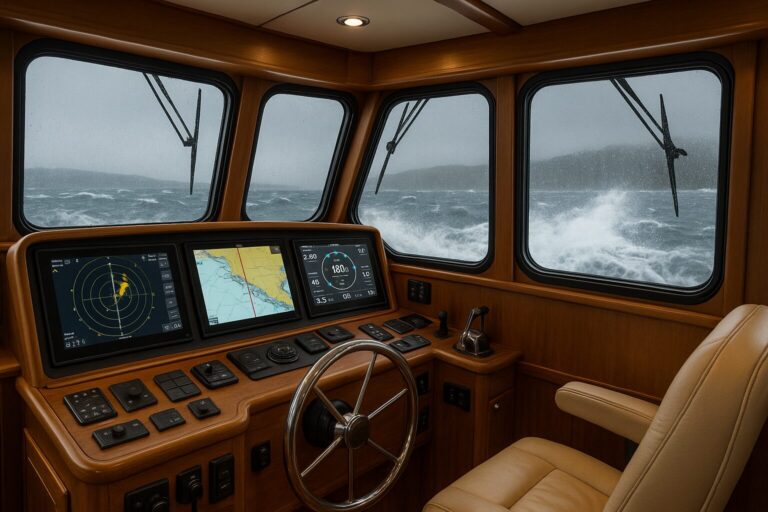
Planning a successful voyage often comes down to understanding weather windows. Whether you captain a rugged trawler or a refined pilothouse yacht, the ability to move with the rhythm of the ocean and the sky is one of the most important skills in coastal or long-distance cruising. Choosing the right time to depart can be the difference between an easy passage and an exhausting one. While every boater must learn how to read weather forecasts and conditions, the design of your yacht can make a remarkable difference in how confidently you use those windows. This is where a true pilothouse shines. Today we will break down what weather windows are, why they matter, and how a well-designed pilothouse helps you cruise smarter, safer, and more comfortably in the constantly changing climate of the North Pacific.
What Is a Weather Window
A weather window is a stretch of time when conditions are safe and favorable for departure or continued travel. In many regions, the sea state changes faster than the land forecast might suggest. Wind direction, swell height, wave period, and visibility each play a major role in determining when it is sensible to venture out. Even if you have a strong and capable vessel, choosing the right moment to leave the harbor can improve comfort and reduce strain on both crew and equipment.
Weather windows are especially important for longer legs of a journey. Coastal routes often include capes, bars, narrow passes, and stretches of open water that can turn challenging with little warning. Understanding how to identify a good window gives you confidence that the upcoming miles will be enjoyable rather than stressful.
Why Weather Windows Matter in the North Pacific
The North Pacific is known for its powerful personality. Offshore lows, shifting high-pressure systems, and seasonal wind patterns can produce choppy seas and unpredictable conditions. Even during pleasant seasons, the weather can change quickly. Long-period swells from distant storms can reach local waters without much notice. Any cruiser who has been surprised by building seas knows how tiring it can be to hold course while rolling or pitching.
Because of this dynamic environment, local knowledge and reliable forecasts are essential. Mariners often use multiple sources such as buoy readings, marine forecasts, barometric trends, and visual conditions. The more tools and information you have, the easier it becomes to spot the right window for travel. A pilothouse yacht gives you even more control because it lets you fully evaluate, prepare, and respond to conditions with clarity and comfort.
How a Pilothouse Improves Smart Cruising
A pilothouse is far more than an enclosed steering station. It is a command center, a shelter, and a major contributor to safe decision-making. Cruisers quickly discover that many of their smartest choices happen right inside the pilothouse.
All Weather Visibility
Clear visibility is one of the most significant advantages of a raised or forward-facing pilothouse. Large windows, elevated sightlines, and good wiper systems allow you to see approaching conditions long before they reach the boat. Fog banks, rain squalls, and distant whitecaps become easier to identify. You can evaluate cloud movement, patches of wind on the water, and swell direction without fighting the elements.
When you can comfortably observe what is happening outside, it becomes much easier to judge if a forecasted window is truly open. You may notice small patterns early, which gives you more time to adjust plans.
A Comfortable and Protected Helm
Comfort plays a bigger role in weather decision-making than most new cruisers realize. An exposed helm can make you reluctant to leave port even when conditions are acceptable. Likewise, it can pressure you to push forward during marginal windows because returning to the cold wind seems unpleasant.
A pilothouse removes that stress. Heat, ventilation, and full protection from spray allow you to operate the boat without fatigue. When you are warm, dry, and relaxed you simply make better choices. You can spend hours monitoring conditions without feeling worn down, which leads to smarter decisions on when to depart or when to pause and wait.
Better Use of Instruments and Charts
A pilothouse is the ideal setting for modern navigation equipment. Radar, AIS, chartplotters, autopilots, and weather data are easier to monitor when sheltered. You can keep an eye on wind shifts, sea clutter, and vessel traffic while still scanning the horizon with your eyes. This combination of digital information and natural observation strengthens your understanding of what is happening around you.
Because you are not battling the weather, you are free to study forecasts, tide tables, and route plans in detail. This helps you refine your understanding of weather windows over time. You develop instincts based on experience rather than rushed decisions.
More Control in Challenging Conditions
Even with good planning, sometimes conditions change. When a window begins to close sooner than expected it helps to have a pilothouse that makes handling the boat easier. Stable seating, quick access to controls, and clear sightlines help you maintain course with accuracy. The reduced motion inside a pilothouse can also lower fatigue during choppy seas.
This level of control gives you more confidence when choosing a window that has small uncertainties. While you always avoid unnecessary risk, the pilothouse gives you the ability to manage unexpected challenges without discomfort.
A Place for Crew to Rest and Observe
Cruising is not only about the skipper. A crew that feels comfortable and safe will communicate more effectively and keep a better watch. A pilothouse allows others to remain involved in navigation and observation without bracing against wind or spray. This shared awareness improves decision-making and contributes to a smoother voyage. When your crew understands why you chose a specific window, they also learn to identify patterns themselves. This collective knowledge makes future passages even safer.
Using a Pilothouse to Think Ahead
The smartest cruisers treat weather windows not as single moments but as patterns. A pilothouse encourages this mindset by giving you a quiet and protected place to observe conditions over time. You might spend the evening watching wind shifts as a system approaches or spend the early morning comparing the forecast with what you see outside your windows. Over weeks and months your understanding of local rhythms becomes clearer.
You begin noticing how long it takes for seas to calm after a strong blow or how afternoon thermal winds behave along certain coastlines. You notice how swell direction interacts with your hull and how different speeds feel in varying chop. All of these insights help you identify ideal windows with more confidence.
Final Thoughts
A well built pilothouse is one of the most valuable tools a cruiser can have when navigating the constantly changing weather of the North Pacific. By offering visibility, comfort, protection, and control it helps you make informed decisions rather than rushed ones. Weather windows become easier to interpret and your voyages become smoother, safer, and more enjoyable.
When your vessel supports smart planning, every journey feels more purposeful. A pilothouse yacht does more than shelter you from the weather It helps you understand the weather, work with it, and cruise with confidence through every season.
Contact Now
We turn your cruising dreams into reality by developing bespoke trawler and pilothouse yachts built for comfort, safety, and performance. From the initial hull design to the final varnish, our experienced naval architects and craftsmen collaborate with you every step of the way, integrating fuel-efficient engines, ergonomic deck layouts, and beautifully appointed living spaces. With industry-leading warranties and personalized support, we make sure your new yacht feels like home the moment you step on deck. Reach out to us by email at info@northpacificyachts.com for personalized responses to all your inquiries. If you’d prefer a conversation, we invite you to give us a call at 1-877-564-9989.