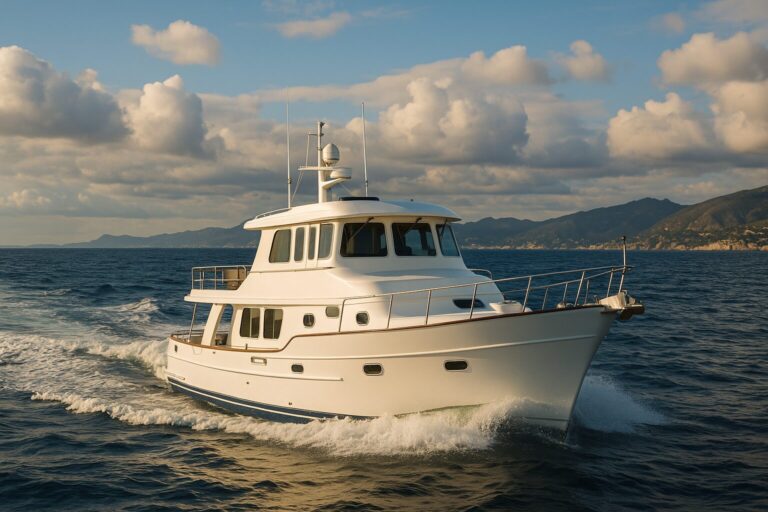
Planning an extended Mediterranean cruise aboard an enclosed pilothouse yacht requires separating climate-controlled comfort from the reality of open-water passage planning. While an enclosed helm protects the watchkeeper from salt spray, glaring sun, and raw wind fatigue, it does not alter wave physics, change your vessel’s displacement hull speed, or calm a short-period Mediterranean chop.
A successful season in these waters depends on matching your yacht’s physical characteristics to distinct regional basins, respecting local microclimates, and accepting that the Mediterranean rewards patience far more than rigid arrival dates.
Select Regional Basins and Timing Before Mapping Waypoints
Treating the Mediterranean as a single, uniform body of water leads directly to poor routing decisions. The basin is fractured into distinct seas, each separated by island chains, mountain ranges, and narrow straits that create fundamentally different operating environments.
Passage planning must begin with the macro-region and the calendar:
| Planning Choice | Questions to Resolve |
|---|---|
| Region | Which coastal forecasts and harbor authorities cover the intended trip? |
| Dates | What seasonal services, reservations and restrictions apply? |
| Passage stages | Where does exposure increase, and what options exist to wait? |
Changing the season changes the planning questions, including heat, daylight, service schedules and regional weather. Compare the actual area and dates rather than assuming spring or autumn will provide settled conditions.
For an in-depth breakdown of how to identify safe intervals between passing weather systems, refer to our guide on Weather Windows Explained: Cruise Smarter with a Pilothouse Yacht.
How Coastal Landforms Influence Regional Winds
Synoptic-scale weather maps only tell part of the story in southern Europe. The Mediterranean is ringed by high elevation: the Alps, the Pyrenees, the Massif Central, and the coastal ranges of southern Turkey and Greece. These mountain masses compress, accelerate, and redirect broad pressure systems into severe, highly localized regional winds.
A textbook example documented by meteorological services like Météo-France is the mistral. Météo-France describes this regional wind as affecting the lower Rhône Valley, Provence and nearby Mediterranean coast. Its strength and direction depend on the weather situation and local terrain.
Cruisers unfamiliar with this phenomenon are often surprised by two operational realities:
-
Clear-Sky Gales: The system frequently brings bright, cloudless skies and brilliant sunshine even as wind speeds reach gale force offshore. A clear blue sky is never proof of calm seas.
-
Extended Duration: Rather than passing through in a few hours like a standard cold front, the wind can last for several days, so a flexible itinerary matters.
Local wind names represent enduring geographic realities, but they are not daily forecasts. When planning passages across regions subject to mountain channeling, base your departures on high-resolution local weather models, active barometric observations, and harbor-master updates rather than relying solely on open-ocean forecasts.
Helm Comfort, Thermal Loads, and Seaworthiness
An enclosed pilothouse changes the physical toll of long watches. Shelter can reduce direct exposure, but the usable view, ventilation and noise environment depend on the actual boat and conditions. However, that interior comfort must never be treated as an offshore safety cushion that justifies running in conditions you would avoid on an open-bridge vessel.
-
Assess sun exposure and helm visibility.
-
Understand the installed cooling and ventilation equipment.
-
Plan the power needed for occupied spaces.
Sun exposure can increase heat inside an enclosed helm. Understand the installed ventilation and cooling system rather than assuming that enclosure provides thermal comfort. Manufacturer guidance on airflow and cooling-system care can help you identify normal operating needs and signs that deserve attention. Follow the installed equipment’s maintenance instructions; water flow, drainage and filter arrangements vary.
We explore long-term strategies for managing onboard heat, deck shading, and interior air quality in our guide, Tropical Cruising in a Pilothouse: Keeping Cool in Warm Climates.
Thermal comfort also ties into crew vigilance. Being isolated from the outside elements can disconnect you from the sea state. Do not let shelter disconnect the crew from changing conditions. Maintain proper lookout by sight, hearing and the available means appropriate to the circumstances, and assess whether glass, glare or noise interfere with that task.
Berthing Realities: Mediterranean Mooring, Power, and Beam Width
Berthing arrangements differ between facilities, from simple town quays to purpose-built marinas. Confirm the exact arrangement before arrival, including boarding access, water depth and space for the boat’s full dimensions.
-
Physical fit: Give the marina measured length, beam and draft, including relevant appendages. Ask about the assigned space and approach.
-
Power: Obtain the actual supply’s voltage, frequency, capacity and connection details, then confirm compatibility with the installed boat system. An adapter alone does not establish compatibility.
-
Water and waste: Confirm current availability and the services needed for the length of the stay. A watermaker is one possible part of a plan, not a universal requirement.
Yalıkavak Marina in Türkiye is one example with berth information and shoreside dining, shopping and accommodation. Those amenities do not establish fit or service availability for your boat. Top Trawler-Friendly Marinas Around the World compares three facility examples and the questions to ask before booking.
Structuring an Itinerary That Can Wait Out Weather
The cardinal rule of Mediterranean cruising is simple: never build an itinerary that requires running on a specific day. Assess the actual forecast and route rather than making a departure decision from a general description of Mediterranean conditions.
Protect your cruise by applying practical scheduling margins:
-
Leave flexible time: Build in waiting and rest according to the route, crew and conditions rather than a universal buffer ratio.
-
Investigate alternatives: Identify realistic places to wait or change the trip, with access appropriate to the conditions you might encounter.
-
Review equipment fit: Assess anchoring and mooring equipment for the boat and intended stops; an oversized anchor or all-chain rode does not remove uncertainty.
-
Departure: check whether the current plan still fits.
-
Passage: reassess before greater exposure or commitment.
-
Destination: confirm access and an appropriate place to stop.
-
Alternatives: retain realistic options to wait or change the trip.
When reviewing our current models, ask how the available layouts and deck arrangements relate to your intended use. Evaluate the particular configuration, crew and operating needs without assuming any feature supplies a safety guarantee.
Every boat choice involves balancing interior living space, machinery access, hull efficiency, and deck design. If you are preparing to outline your offshore cruising plans, talk with us. We can discuss your target region, crew size and comfort priorities alongside the configuration questions you want to explore.