

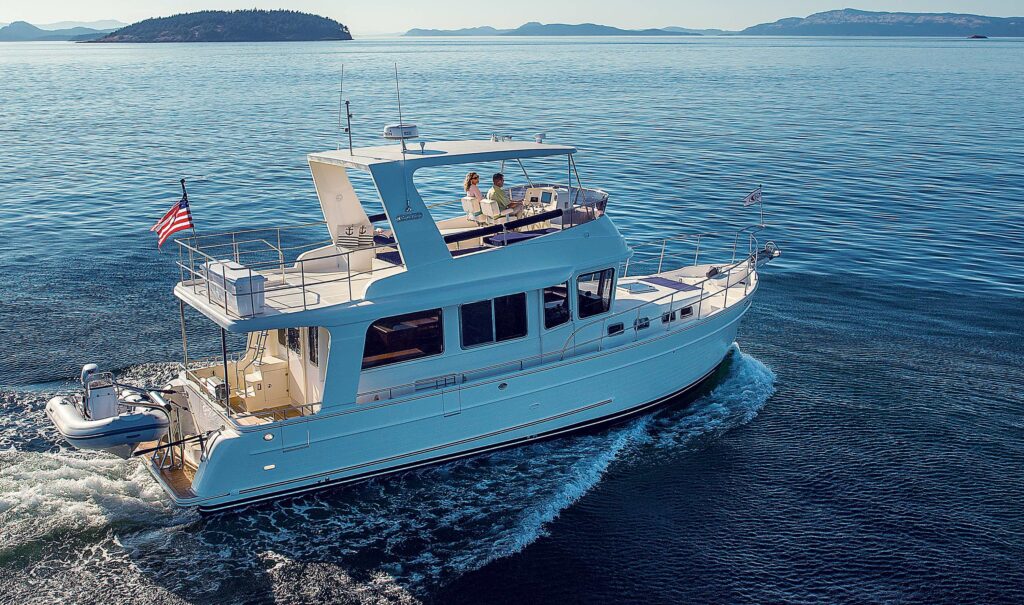
Choosing between our North Pacific 44 Sedan and North Pacific 45 Pilothouse is a decision about how your crew moves, talks and shares space. Both have interior helms, but the relationship between the operating station and everyday living is different.
Picture departure, a meal underway and an arrival. Then compare the spaces each person will use. The model details help you decide what to inspect, while the actual boat shows whether the arrangement suits your reach, mobility and preferred routine.
Daily Routines: Departure, Watch-Standing, and Arrival
Morning Departure
Identify who expects to operate the boat and who handles the dockside tasks. While secured, trace each person’s intended route and examine door travel, handholds, clearances and places for lines and equipment. Discuss how the two people will communicate rather than assuming a nearby door makes a maneuver straightforward.
The Midday Watch
Someone may prepare lunch, read or sit near the helm during a longer run. Decide how connected you want those activities to be. Compare the companion’s seating and the route from the galley, then test conversation and background noise aboard.
Harbor Arrival and Docking
Use your actual crew roles to frame the inspection. Which exterior route would the line handler use? What can the operator see from the selected station? Door placement is a useful detail, but it does not establish a safe single-person docking method or mean the operator can leave the controls to secure a line.
How the 44 Sedan Connects Helm and Living Space
Forward Helm Integration
Our 44 Sedan has a slightly raised helm, separated aft by cabinetry, with two helm seats. It gives you a specific arrangement to try if you want a companion beside you and a close connection to the main living area.
Sit in both seats and check the views, elbow room and access to the controls and displays. Then look back toward the galley and salon. Evaluate the actual connection instead of assuming that everyone will see or hear equally well.
Side-Deck Access
A door sits next to the helm, with a bulwark door outside providing dock access. Operate those doors while secured and follow the route you would use for a dockside task. Check the clearances and the positions of hardware, furniture and people on the particular boat.
Salon, Galley, and Accommodation Layout
The 44’s galley is near the salon, so food preparation remains close to its living space. Salon furniture arrangements are customizable. Its guest room offers several uses, including an office or convertible office/stateroom, depending on the selected layout.
The standard arrangement includes one head, with a two-head design also available. Review the exact accommodation plan for sleeping space, storage and head access; do not infer those relationships from the sedan label.
How the 45 Pilothouse Separates the Operating Space
The Dedicated Wheelhouse
Our 45 has a central pilothouse helm seat, with a raised bench seat and table aft. The bench can extend into an L-shaped arrangement or convert into a bed. Two opening side doors connect the pilothouse with the exterior.
That gives a companion a different seating position from the 44’s two helm seats. Try the bench and table with the person who regularly cruises beside you, and check the views and communication from each position.
Joinery and Interior Flow
Our 45 uses traditional bookmatched teak, flush cabinetry and real teak-and-holly floors. More directly relevant to this choice, the galley, staterooms and heads can be accessed without passing through the pilothouse.
The arrangement lets you examine how operating and living activities relate. Trace a meal, a watch change and a trip to the accommodation spaces. Check noise and light aboard rather than assuming that the separate helm creates total isolation.
For the broader layout question, our guide to sedan and pilothouse layouts provides context. Here, concentrate on the details of these two models.
Task-by-Task Comparison Aboard Both Yachts
| Routine | North Pacific 44 Sedan detail | North Pacific 45 Pilothouse detail | What to test |
|---|---|---|---|
| Companion time at the helm | Two helm seats | Central helm seat with aft bench/table | Seating, views and conversation |
| Moving to the exterior | Door beside the helm | Two opening pilothouse side doors | Door operation and actual deck route |
| Meals and shared space | Galley near salon; helm separated aft by cabinetry | Galley in salon; dedicated pilothouse | How people move and communicate |
| Rest and accommodation | Customizable guest room; one- or two-head designs | Accommodation access from salon | Selected plan, storage and disturbance |
| Lighting and sound | Inspect the connected interior | Inspect the separate operating space | Actual reflections, noise and controls |
These are inspection prompts, not performance or safety ratings. Neither layout guarantees a quiet helm, an easy arrival or an uninterrupted view.
What to Test During an Onboard Inspection
Seated Sightlines and Companion Comfort
Sit in the positions you would actually use. Check forward, side and aft views, and consider whether the seat support and table arrangement suit longer periods aboard. Change roles so each regular operator can evaluate the space.
Side-Deck Door Clearance and Footwork
Open the actual doors and examine the route while the boat is secured. Look for thresholds, landing space, handholds and points where two people may pass. Include the gear you expect to stage there without rehearsing an unsafe departure from the controls.
Galley Handoffs and Step Transitions
Follow the route between the galley and helm with an empty cup or other safe object. Identify stairs, turns and shared passages. Discuss how meals will be prepared and served under your normal operating routine.
Noise and Isolation Levels
Listen from both the helm and living areas. Examine lights, displays and glazing, and ask how ventilation and window-clearing equipment work. If underway behavior matters to your decision, discuss an appropriate sea trial with the people responsible for the boat.
Bringing Your Crew Aboard to Make the Decision
Layout decisions should involve the people who handle lines, prepare meals, rest and sit near the helm. The 44’s two-seat, slightly raised helm and close main-deck connection may suit your preferences. The 45’s dedicated pilothouse and salon-level accommodation access may suit them differently.
When you talk with our team, bring the routine you want to test and the accommodation choices you prefer. We can discuss our current 44 and 45 arrangements and the details to confirm on the particular boats or plans.