
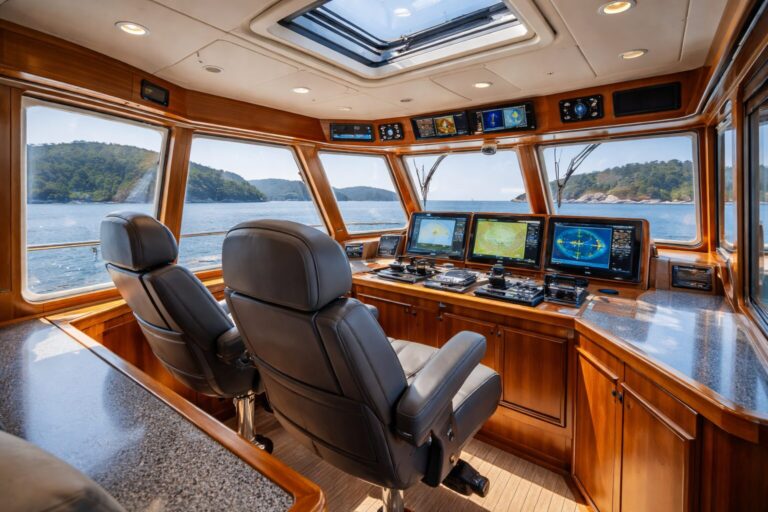
Enclosed pilothouses are one of the most valued features on trawlers and pilothouse yachts operating in the North Pacific They offer protection from cold winds, rain, spray, and long hours of navigation in challenging conditions. At the same time, an enclosed space filled with electronics, large glass surfaces, and constant sun exposure can trap heat quickly if it is not designed properly. Heat buildup inside a pilothouse is more than a comfort issue. Excess heat can affect crew alertness, strain electronic equipment, fog windows, and reduce overall enjoyment of long passages. For builders who specialize in custom trawlers and pilothouse yachts, preventing heat buildup starts at the design stage and continues through material selection, ventilation planning, and system integration.
Understanding Why Pilothouses Heat Up
Pilothouses naturally collect heat due to several factors working together. Large windows are necessary for visibility, but glass allows solar heat to enter quickly. Navigation screens, radar displays, radios, and autopilot systems all generate heat during operation. In addition, the pilothouse is often elevated and fully enclosed, which reduces natural airflow compared to open decks.
In colder regions like the North Pacific, builders must strike a careful balance. The pilothouse needs to stay warm in rough or cold weather but must also avoid overheating during sunny days or long daylight hours in summer. Heat buildup becomes even more noticeable during slow-speed cruising, anchoring, or harbor maneuvering when natural airflow is minimal. Good builders understand that heat control is not about adding a single feature. It requires a complete approach that includes layout, materials, airflow, insulation, and mechanical systems working together.
Smart Window Design and Glass Selection
Windows play the biggest role in pilothouse heat control. Builders start by carefully choosing the type of glass used in the pilothouse. Modern marine glass often includes tinting or coatings that reduce solar heat gain while still allowing clear visibility. This helps block a significant amount of infrared heat from the sun without darkening the space too much. Window size and placement also matter. While wide panoramic views are desirable, builders avoid unnecessary glass areas that add heat without improving visibility. Angled windows are often preferred over flat vertical panels because they reduce direct sun exposure and glare throughout the day.
Many custom builders also integrate external window shades, overhangs, or brow designs into the pilothouse structure. These features provide shade during peak sun angles while preserving outward visibility. Interior window covers or reflective blinds can also be added for times when the vessel is anchored or docked in direct sunlight. By combining advanced glass technology with thoughtful window placement, builders significantly reduce heat entering the pilothouse before it becomes a problem.
Ventilation That Moves Heat Out Naturally
Ventilation is one of the most effective and energy-efficient ways to manage heat buildup. Well-designed airflow allows hot air to escape while pulling in cooler outside air. Builders carefully plan ventilation paths so air moves through the pilothouse rather than stagnating. Opening side windows, sliding vents, and adjustable louvers are commonly used to create cross-ventilation. When positioned correctly, these openings allow fresh air to enter from one side and exit from another, carrying heat with it. Even small vents placed high in the pilothouse help release rising hot air.
Roof hatches and overhead vents are especially valuable. Heat naturally rises, so allowing it to escape from the top of the pilothouse prevents it from collecting around the helm and navigation equipment. Some builders install low-profile ventilators that function even in light rain, which is important for North Pacific cruising conditions. Passive ventilation systems are often paired with powered fans. Quiet extraction fans can remove warm air during calm conditions or when natural airflow is limited. These fans are usually positioned near electronics clusters where heat tends to concentrate.
Insulation and Structural Heat Control
Insulation plays a major role in keeping pilothouse temperatures stable. Builders use marine-grade insulation materials in the roof, bulkheads, and overhead panels to reduce heat transfer. This insulation limits heat gain from the sun above and prevents engine or machinery heat from migrating upward into the pilothouse. Thermal breaks are another important design element. These breaks prevent heat from traveling through metal framing or structural components. Without them, heat absorbed by the exterior structure can slowly radiate into the interior space.
Interior finishes also contribute to temperature control. Light-colored surfaces reflect heat rather than absorbing it. Upholstery, headliners, and paneling materials are selected not only for durability and appearance but also for their thermal performance. By controlling how heat enters and moves through the structure, builders create a pilothouse that stays comfortable across a wide range of operating conditions.
Managing Heat from Electronics and Equipment
Modern pilothouses rely heavily on electronic systems. Chartplotters, radar screens, computers, communication devices, and monitoring panels all generate heat, especially during long passages. Builders address this by planning equipment layouts carefully. Electronics are often mounted with proper spacing to allow airflow behind and around each unit. Enclosed consoles may include hidden ventilation channels or small fans that prevent heat from building up inside cabinetry.
Some builders install dedicated cooling for electronics bays, separating them from the main pilothouse air space. This keeps sensitive equipment running efficiently while reducing the overall heat load in the helm area. Power management also plays a role. Efficient wiring, properly sized inverters, and modern low-heat electronics reduce unnecessary energy loss. Builders who specialize in long-range cruising vessels pay close attention to how electrical systems affect interior comfort.
Climate Control Systems Designed for Real Conditions
Mechanical climate control systems provide the final layer of heat management. Air conditioning systems designed for pilothouses are selected based on volume, insulation levels, and expected operating environments. In the North Pacific, builders often choose systems that can both cool and dehumidify effectively without excessive power consumption. Air vents are positioned strategically to distribute cooled air evenly rather than blasting it directly at the helm. This prevents cold spots while still lowering overall temperatures. Adjustable vents allow operators to fine-tune airflow depending on weather conditions and crew preferences.
Builders also consider redundancy and reliability. Systems are chosen for quiet operation and long service life, which is critical for extended cruising. Easy access for maintenance ensures the system performs consistently over time. Rather than relying solely on air conditioning, experienced builders integrate climate control as part of a broader heat management strategy that includes ventilation and insulation.
Bringing Comfort and Function Together
Preventing heat buildup in enclosed pilothouses is not about one solution. It is about combining smart design, quality materials, efficient airflow, and reliable systems. Builders who understand the demands of North Pacific cruising design pilothouses that stay comfortable whether the vessel is crossing open water, navigating inland passages, or resting at anchor. A well-managed pilothouse keeps the crew alert, protects sensitive equipment, and makes long days on the water more enjoyable. For custom trawler and pilothouse yacht builders, attention to heat control reflects a deeper commitment to safety, comfort, and long-term usability. When every design choice works together, the pilothouse becomes what it should be. A calm, controlled, and comfortable command center built for serious cruising.
We turn your cruising dreams into reality by developing bespoke trawler and pilothouse yachts built for comfort, safety, and performance. From the initial hull design to the final varnish, our experienced naval architects and craftsmen collaborate with you every step of the way, integrating fuel-efficient engines, ergonomic deck layouts, and beautifully appointed living spaces. With industry-leading warranties and personalized support, we make sure your new yacht feels like home the moment you step on deck. Reach out to us by email at info@northpacificyachts.com for personalized responses to all your inquiries. If you’d prefer a conversation, we invite you to give us a call at 1-877-564-9989.
Frequently Asked Questions About Heat Control in Enclosed Pilothouses
1. Why do enclosed pilothouses get hot so quickly?
Enclosed pilothouses heat up quickly because of large glass windows, direct sunlight, electronic equipment, and limited natural airflow. Without proper ventilation, insulation, and window design, heat becomes trapped inside the space, especially during sunny days or slow cruising.
2. What is the most effective way to reduce heat buildup in a pilothouse?
The most effective way to reduce heat buildup is by combining smart window design, proper ventilation, quality insulation, and efficient climate control systems. Builders focus on reducing heat entry first and then removing excess heat through airflow and cooling systems.
3. Does tinted or treated glass really help with pilothouse heat?
Yes, tinted or solar-treated marine glass significantly reduces heat entering the pilothouse. These types of glass block a large portion of solar heat while maintaining clear visibility, helping keep the pilothouse cooler without relying heavily on air conditioning.
4. How important is ventilation in a pilothouse design?
Ventilation is critical in pilothouse design. Properly placed vents, opening windows, and roof hatches allow hot air to escape and fresh air to circulate. Even in cooler climates, good ventilation prevents heat buildup from electronics and sunlight.
5. Can air conditioning alone solve pilothouse heat issues?
Air conditioning helps manage temperature, but it works best when combined with good design practices. Without proper insulation, ventilation, and heat-reducing glass, air conditioning systems have to work harder, use more power, and may still struggle to keep the pilothouse comfortable.