
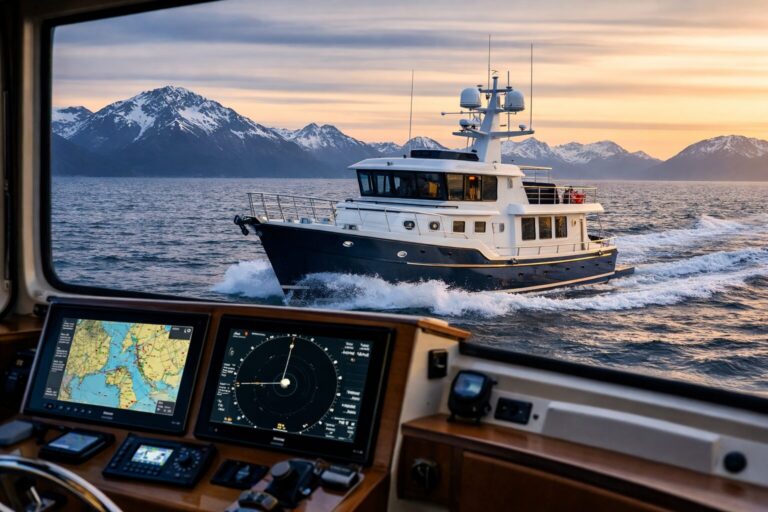
Reliable navigation is not just a convenience at sea. In remote waters and challenging conditions, it is a necessity that directly impacts safety, confidence, and voyage success. For yacht owners who operate in the North Pacific, where weather can shift quickly and distances between safe harbors are often long, redundancy in navigation systems is not optional. It is essential. Pilothouse yachts are uniquely suited to support redundant navigation systems. Their enclosed design, layout flexibility, and focus on long range cruising make them an ideal platform for multiple layers of navigational equipment. When designed properly, a pilothouse yacht allows captains to maintain full situational awareness even when one system fails, power is interrupted, or conditions reduce visibility.
Understanding Redundant Navigation at Sea
Redundant navigation simply means having more than one way to determine position, course, and surroundings. At sea, electronics can fail for many reasons including power loss, water intrusion, software issues, antenna damage, or even lightning. When a single navigation system goes down, the ability to rely on an independent backup can prevent confusion, stress, and dangerous decision making.
A truly redundant navigation setup usually includes multiple chart plotters, independent GPS sources, radar, AIS, depth sounders, and traditional tools such as magnetic compasses and paper charts. The key is that these systems are not all dependent on the same power source or display unit. Redundancy only works when failures do not cascade. Pilothouse yachts are designed with this philosophy in mind. Their operational focus is on reliability and long duration travel rather than fair weather cruising. This makes them a natural match for layered navigation systems that work together but can also operate independently.
Pilothouse Layouts Support Multiple Navigation Stations
One of the strongest advantages of a pilothouse yacht is the physical layout. The enclosed helm provides space, protection, and structural support for multiple navigation displays and control systems. Unlike open flybridges or compact express helm stations, pilothouses are designed for all weather operation and extended use. This allows for the installation of dual chart plotters side by side, each connected to separate GPS antennas or even separate navigation networks. Radar displays can be dedicated rather than shared. Backup systems can be mounted permanently rather than stored away and brought out only when needed.
Many pilothouse yachts also support secondary navigation stations. These may be located at an interior desk, an aft control station, or even a wing station for close quarters maneuvering. Each station can have its own independent display and sensors, increasing overall redundancy. The ability to operate navigation systems in a dry, temperature controlled environment also increases reliability. Electronics last longer, connections remain more secure, and displays are easier to read during heavy rain or cold conditions. This stability is a major advantage when redundancy truly matters.
Power Management and System Independence
Redundant navigation is not only about having extra screens. It is also about ensuring those systems remain operational when primary power systems are compromised. Pilothouse yachts often feature more robust electrical designs compared to other recreational vessels. Because they are intended for offshore use, pilothouse yachts typically include multiple battery banks, dedicated electronics circuits, and alternative charging sources such as generators, solar panels, or high output alternators. This allows navigation equipment to remain powered even if a primary system fails.
The enclosed pilothouse also simplifies wiring runs and equipment separation. Independent navigation systems can be isolated at both the power and data level. For example, a backup chart plotter can operate on a separate battery bank with its own GPS input, ensuring it remains functional even during a partial electrical failure.BThis level of system separation is much harder to achieve on yachts with exposed helms or limited interior space. Pilothouse yachts give builders and owners the freedom to design navigation systems with true independence rather than superficial duplication.
Improved Visibility Enhances Navigation Redundancy
Redundancy is not limited to electronics. Visual awareness plays an equally important role in safe navigation. Pilothouse yachts excel here as well. Large forward facing windows, elevated helm positions, and protected sightlines allow operators to maintain awareness even when relying less on electronic displays. In heavy fog, rain, or darkness, radar and AIS become primary tools. But in mixed conditions, visual confirmation remains critical.
When one system provides uncertain data, the ability to cross check information using visual cues, compass headings, depth readings, and secondary displays becomes invaluable. Pilothouse yachts are designed to support this type of layered decision making. The enclosed helm also reduces operator fatigue. When captains are protected from wind, spray, and cold temperatures, they can focus more clearly on interpreting navigation data and responding to changes. Reduced fatigue improves judgment, which is an often overlooked but vital part of navigation redundancy.
Long Range Cruising Demands Higher Standards of Reliability
Pilothouse yachts are often chosen for their ability to travel farther and stay at sea longer. This operating profile naturally demands higher standards of reliability across all onboard systems, especially navigation. In the North Pacific, routes may involve limited chart data, sparse traffic, and challenging weather. A single point of failure can quickly escalate into a serious situation. Redundant navigation systems allow captains to continue safely even when conditions deteriorate or equipment malfunctions.
Because pilothouse yachts are built with these realities in mind, they are better suited for thoughtful integration of redundant systems from the start. Rather than adding backups as an afterthought, redundancy becomes part of the overall design philosophy. For owners who value self reliance and confidence at sea, this approach offers peace of mind. Knowing that multiple independent systems are available allows voyages to proceed with greater assurance, even far from support or shelter.
Why Pilothouse Yachts Stand Apart
Pilothouse yachts combine protection, space, and purposeful design in a way few other yacht types can match. These characteristics make them especially well suited for redundant navigation systems that truly enhance safety rather than simply adding complexity. By supporting multiple navigation stations, independent power sources, protected electronics, and superior visibility, pilothouse yachts provide a platform where redundancy works as intended. Each system reinforces the others without sharing the same vulnerabilities.
For serious cruisers and owners operating in demanding regions like the North Pacific, this design advantage is not theoretical. It is practical, proven, and deeply connected to real world seamanship. In the end, redundant navigation is about preparedness. Pilothouse yachts make that preparedness achievable without compromise, allowing captains to focus on the journey rather than the risks.
We turn your cruising dreams into reality by developing bespoke trawler and pilothouse yachts built for comfort, safety, and performance. From the initial hull design to the final varnish, our experienced naval architects and craftsmen collaborate with you every step of the way, integrating fuel-efficient engines, ergonomic deck layouts, and beautifully appointed living spaces. With industry-leading warranties and personalized support, we make sure your new yacht feels like home the moment you step on deck. Reach out to us by email at info@northpacificyachts.com for personalized responses to all your inquiries. If you’d prefer a conversation, we invite you to give us a call at 1-877-564-9989.
Frequently Asked Questions
1. What is a redundant navigation system on a yacht?
A redundant navigation system on a yacht means having multiple independent tools to determine position, course, and surroundings. This usually includes more than one chart plotter, separate GPS sources, radar, AIS, depth sounders, and traditional tools like a magnetic compass and paper charts. The purpose is to ensure safe navigation even if one system fails.
2. Why are pilothouse yachts better for redundant navigation than open helm boats?
Pilothouse yachts offer an enclosed, protected helm with more space for multiple navigation displays and independent systems. The sheltered environment helps electronics last longer and remain readable in harsh weather. This makes it easier to install and operate backup navigation equipment compared to open helm or flybridge boats.
3. How many navigation systems should a long range pilothouse yacht have?
A well equipped long range pilothouse yacht should have at least two independent chart plotters, separate GPS inputs, radar, AIS, depth sounders, and a magnetic compass. Many experienced cruisers also carry paper charts and handheld GPS units as additional backups. The exact setup depends on cruising range and operating conditions.
4. Do redundant navigation systems improve safety in rough weather?
Yes, redundant navigation systems significantly improve safety in rough weather. When visibility is reduced due to fog, rain, or darkness, having multiple reliable navigation tools allows captains to cross check information and make better decisions. If one system becomes unreliable or fails, backups help maintain control and situational awareness.
5. Are redundant navigation systems important for North Pacific cruising?
Redundant navigation systems are especially important for North Pacific cruising due to long distances, limited harbors, and rapidly changing weather. Equipment failure in remote areas can become dangerous very quickly. Pilothouse yachts designed for this region benefit greatly from layered navigation systems that ensure continued operation in demanding conditions.