
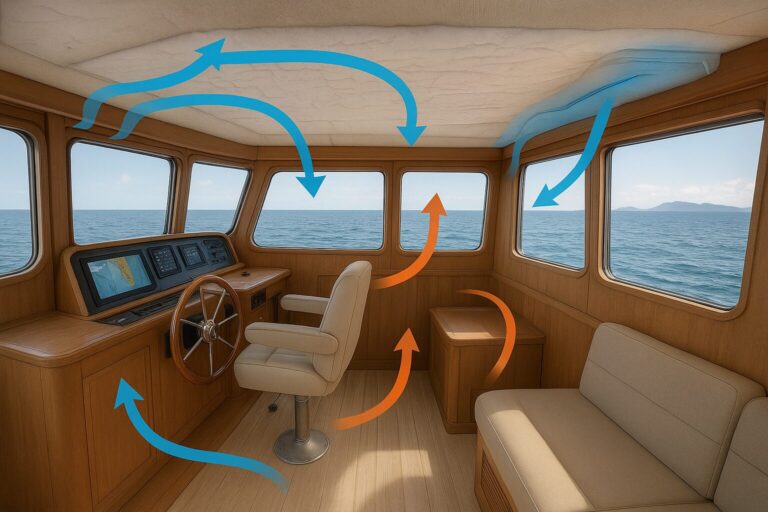
When people imagine time aboard a pilothouse yacht, they often picture sweeping ocean views, a steady helm, and the quiet rhythm of open-water cruising. What is less visible, but just as important, is what makes that experience comfortable during long days and unpredictable weather. The insulation and ventilation within a pilothouse have an enormous impact on how pleasant and livable a yacht feels. Related reading: All-Weather Upgrade: Retrofitting a Pilothouse to Your Boat.
In the North Pacific, where weather conditions can shift from misty mornings to bright afternoons and cool, damp evenings, managing interior temperature and air quality is vital. These two features work together quietly behind the scenes to keep the atmosphere inside the pilothouse steady, healthy, and enjoyable.
The Role of Insulation in a Pilothouse
A pilothouse serves as the command center of a yacht. It is where navigation decisions are made and where the captain and crew often spend long hours. Because it is a space that combines functionality with comfort, insulation plays a major part in how well the environment performs throughout the voyage.
Insulation forms a thermal barrier between the inside of the pilothouse and the outside environment. Its purpose is to slow down the transfer of heat. In the North Pacific, temperatures can fluctuate widely depending on season and location. Effective insulation helps maintain a consistent interior temperature, which reduces the load on onboard heating or cooling systems and helps conserve fuel and energy.
Keeping Warm in Cold Conditions
Cold and damp conditions are common on the northern coast. When the air outside turns chilly, uninsulated surfaces allow heat to escape rapidly. A pilothouse that loses warmth quickly becomes uncomfortable and forces heaters to run constantly to keep up. Over time, this can lead to higher operating costs and unnecessary strain on onboard systems.
Using marine-grade foam or specialized closed-cell insulation materials can make a significant difference. These materials resist moisture absorption, provide strong thermal performance, and add a layer of sound protection. When applied to bulkheads, overheads, and floors, insulation prevents heat from leaking out and helps retain the warmth generated by onboard systems or natural sunlight.
Good insulation also creates a sense of stillness inside the pilothouse. Instead of feeling every gust of cold air, the crew experiences a steady warmth that makes watchkeeping more comfortable and less tiring, especially during long passages or night navigation.
Staying Cool in Warm Weather
When summer arrives, the challenge is reversed. The pilothouse can easily trap heat from the sun, especially through large windows and reflective surfaces. Without proper insulation, it can feel like a greenhouse. Insulating materials that resist radiant heat and reflective coatings on window surfaces help minimize solar gain.
This is particularly important for long-range trawlers that spend extended periods underway. A well-insulated pilothouse keeps the interior temperature from rising too quickly and allows air conditioning systems to work more efficiently. The crew and guests benefit from a cooler, more balanced environment that stays pleasant even in direct sunlight.
Reducing Noise for a Quieter Voyage
Another benefit of proper insulation is noise reduction. The hum of engines, the sound of waves against the hull, and vibrations from mechanical systems can all create fatigue over time. Quality insulation materials absorb and dampen these sounds, creating a quieter, calmer atmosphere.
This acoustic comfort is often overlooked but has a major impact on overall well-being. It makes conversations easier, reduces stress, and allows those on board to rest more effectively. A quiet pilothouse contributes to a sense of luxury and tranquility, turning it from a purely functional space into a place where people genuinely enjoy spending time.
Why Ventilation is Equally Important
While insulation keeps conditions stable, ventilation ensures that the air remains fresh and healthy. Without proper airflow, even a well-insulated pilothouse can feel stuffy or humid after only a short time. Ventilation is what prevents that from happening.
Effective ventilation is about more than opening a window. It is a system designed to continuously exchange indoor air with fresh outside air while controlling humidity and temperature. For yachts operating in the North Pacific, where moisture and salt air are constant companions, proper ventilation is essential for both comfort and long-term maintenance of the vessel.
Controlling Moisture and Condensation
Moisture is a constant challenge in marine environments. When warm interior air meets cold surfaces, condensation forms. This can lead to fogged windows, damp fabrics, and even mildew or corrosion over time. Condensation not only affects comfort but can also cause damage to interior finishes and electrical systems if left unchecked.
Ventilation helps by keeping air circulating and balancing humidity levels. Strategically placed vents, louvers, and powered fans draw moist air out and bring fresh air in. This continuous exchange prevents condensation from building up on windows and metal surfaces. On colder days, mechanical ventilation or integrated dehumidifiers can help maintain ideal humidity without letting too much heat escape.
Maintaining Air Quality
Air quality plays a major role in comfort and health. A pilothouse that is sealed tightly for insulation can trap odors, fuel fumes, or carbon dioxide if it lacks proper ventilation. Continuous airflow prevents this buildup and ensures that oxygen levels remain consistent.
Most modern pilothouse yachts combine passive and mechanical ventilation systems. Passive systems rely on natural airflow through vents and hatches, while mechanical systems use fans and ducts to circulate air even when doors and windows are closed. Together they maintain a clean, breathable environment that keeps everyone feeling refreshed.
Managing Heat and Air Movement
Good ventilation also helps regulate temperature by allowing hot air to escape. Warm air naturally rises, so vents or hatches positioned higher in the pilothouse roofline can release excess heat, while cooler air enters through lower openings. This natural convection effect can significantly reduce reliance on air conditioning systems and help maintain comfort when anchored or underway.
Cross-ventilation is another valuable design feature. By positioning vents or openings on opposite sides of the pilothouse, fresh air can move across the entire space. This design provides continuous cooling and keeps the environment pleasant even on warmer days.
Finding the Right Balance
Insulation and ventilation might seem to pull in opposite directions. Insulation traps heat and seals the environment, while ventilation allows air movement and moisture escape. However, the best-designed pilothouses find a perfect balance between the two.
Too much insulation without proper ventilation can lead to trapped humidity, condensation, and stale air. Too much ventilation without insulation can make it difficult to maintain warmth, causing drafts and discomfort. Achieving harmony requires thoughtful design, quality materials, and precise installation. Custom yacht builders pay close attention to this balance during construction. Every material, vent location, and seal affects how air and heat move through the vessel. Advanced systems now use sensors to monitor temperature and humidity and automatically adjust ventilation or heating to maintain optimal comfort. This technology is particularly useful for North Pacific cruising, where outside conditions can change rapidly.
Real Comfort Comes from Thoughtful Design
When you step into a well-designed pilothouse, you can immediately sense the difference. The air feels fresh and balanced, windows stay clear, and the temperature remains steady. You can focus on the journey ahead without distractions from discomfort or maintenance issues. For those who spend extended time at sea or live aboard, these qualities are essential. Comfort directly affects concentration, rest, and enjoyment. A well-insulated and properly ventilated pilothouse creates a calm, livable space that supports the lifestyle of long-distance cruising.
Built for the North Pacific
At our shipyard, we understand what the North Pacific demands from a vessel. The combination of cold winds, damp air, and variable temperatures requires more than standard yacht construction. Each custom trawler and pilothouse yacht we build is engineered to provide comfort, efficiency, and durability through careful attention to insulation, ventilation, and climate control. See What Size Boat Can You Comfortably Live On?. From selecting the right materials to designing efficient airflow pathways, every detail contributes to a space that feels as comfortable as it is capable. Whether you are navigating through early morning fog or relaxing in a sunlit bay, your pilothouse should always feel inviting and stable.
We turn your cruising dreams into reality by developing bespoke trawler and pilothouse yachts built for comfort, safety, and performance. From the initial hull design to the final varnish, our experienced naval architects and craftsmen collaborate with you every step of the way, integrating fuel-efficient engines, ergonomic deck layouts, and beautifully appointed living spaces. With industry-leading warranties and personalized support, we make sure your new yacht feels like home the moment you step on deck. Reach out to us by email at info@northpacificyachts.com for personalized responses to all your inquiries. If you’d prefer a conversation, we invite you to give us a call at 1-877-564-9989.