
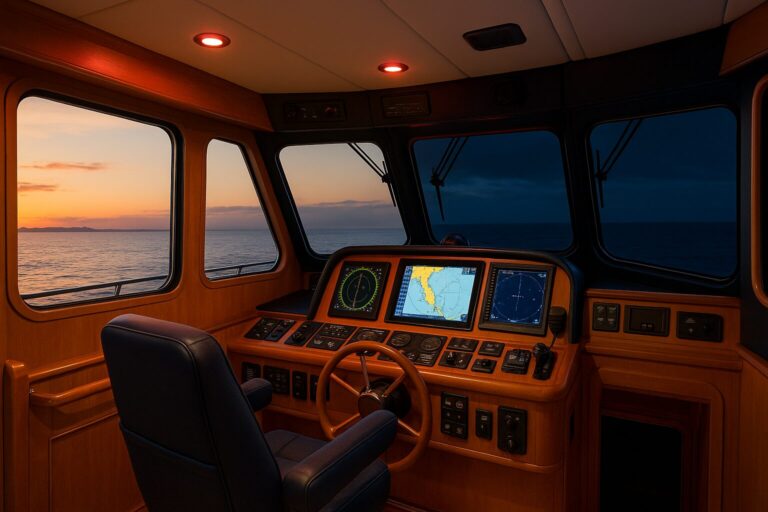
Cruising from the pilothouse of a trawler or custom yacht is an experience like no other. Whether you’re navigating through the stillness of night or gliding over sunlit waters, each time of day brings unique conditions and considerations. For boaters exploring the North Pacific or similar waters, understanding the difference between day and night operations is essential not just for enjoyment but also for safety.
Both types of cruising offer their rewards like sunrise on calm seas, a glowing sunset off the port side, or the serenity of a star-lit passage. But they also come with distinct challenges, particularly when operating from a pilothouse, where visibility, navigation systems, and crew coordination all play pivotal roles. Let’s explore what sets daytime and nighttime cruising apart and share key tips to help you stay safe, confident, and prepared no matter the hour.
Daytime Cruising: Familiar Yet Demanding
Daylight hours are the most popular time for pilothouse cruising. The reasons are obvious for better visibility, more predictable activity on the water, and typically calmer winds in the early hours. But don’t mistake daylight for ease. It still demands full attention, especially in busy waterways or coastal areas.
One of the biggest advantages of daytime cruising is your ability to see and react. Landmarks, other vessels, floating debris, and marine life are easier to spot and avoid. Pilothouse windows offer excellent lines of sight, and natural light reduces reliance on radar or night vision tools. Still, sun glare and fatigue from extended hours at the helm can lead to lapses in judgment or reaction time. Use sunshades or polarized glasses to cut through surface reflections, and don’t forget to rotate helm duty with your crew if possible.
Daylight also tends to bring more traffic like fishing boats, ferries, recreational watercraft, and paddleboarders especially closer to shore. This can mean frequent adjustments to course and speed, requiring heightened vigilance. Your radar and AIS (Automatic Identification System) can help track larger vessels, but it’s your eyes and ears that will alert you to nearby jet skis or kayaks.
Lastly, day cruising is ideal for sightseeing and anchoring in scenic coves. If you’re charting a path through the North Pacific, you’re likely to encounter a mix of commercial routes, wildlife areas, and rocky coastlines. Having updated charts and tide tables on hand is just as important during the day, especially when navigating shallow waters or inlets. Weather can also change quickly, so keeping a VHF radio tuned to local marine forecasts is good practice.
Night Cruising: Peaceful but Demanding More Precision
There’s a certain magic in cruising after dark. The sea feels quieter, lights twinkle on distant shores, and the pilothouse glows softly with dimmed instrument panels. For experienced captains, night cruising can be efficient and even enjoyable, particularly on long passages where round-the-clock movement is necessary. But it’s not without its hazards.
The most obvious difference is reduced visibility. Even with floodlights, spotlights, and high-end electronics, the human eye struggles at night. Depth perception is limited, and it’s easy to miss small objects in the water. This makes it crucial to slow your speed at night and increase your reliance on radar and GPS.
From the pilothouse, ambient lighting must be carefully managed. Too much light inside the cabin will impair your ability to see outside. Red lights or dimmable instruments are standard in well-designed pilothouses to preserve night vision. It’s also wise to brief your crew on maintaining quiet and avoiding the use of flashlights or screens near the helm unless absolutely necessary.
Sound signals play a greater role at night. If you’re approaching a fog bank or moving through a narrow channel, using your horn to signal your presence is not just a formality, it’s an important part of collision avoidance. Likewise, keeping a close eye on other vessels’ navigation lights is vital. A green and red light at once means a head-on approach; a single light on one side could indicate the direction a vessel is turning or anchored.
Fatigue is a hidden risk during nighttime operations. If your cruising schedule involves running overnight, plan for watch rotations and ensure someone is always alert at the helm. An autopilot can handle steering for long stretches, but only a watchful human can interpret what’s on the horizon or troubleshoot gear issues.
If your yacht is equipped with night vision cameras or thermal imaging, these tools can provide a clearer picture of what’s around you but they still require careful interpretation. Don’t assume technology replaces a good lookout. Train your crew to help scan the water and communicate clearly, especially during maneuvers.
Tips for Safe Operation: Day or Night
Whether you’re heading out for a sunny coastal trip or charting a midnight crossing, there are key practices that apply across the board when operating from a pilothouse:
Know Your Equipment: Spend time familiarizing yourself with your radar, AIS, autopilot, and depth sounder. Regularly check for software updates and ensure backups are available for critical systems.
Maintain a Clear Pilothouse: Keep windows clean and free from obstructions. Reduce clutter on the dashboard so you can focus on essential instruments, and keep binoculars within reach.
Prepare for Weather Shifts: In the North Pacific, weather can shift rapidly. Learn to read clouds and monitor barometric pressure drops. Set a habit of checking the marine forecast at regular intervals.
Keep a Log: Logging your position, speed, engine hours, and weather every hour not only helps with navigation but becomes vital if you encounter trouble and need to retrace your steps.
Have Redundancies: Carry paper charts, handheld GPS units, backup batteries, and analog compasses. Even the best electronics can fail.
Brief Your Crew: Whether it’s your first mate or a guest, everyone on board should know where safety gear is, how to use the radio, and what to do in an emergency.
Trust Your Instincts: If something doesn’t feel right visibility dropping, equipment behaving oddly, fatigue setting in don’t push through. Drop anchor if necessary, or adjust your plan.
The Best Cruising Comes with Confidence
From the captain’s seat of a well-designed pilothouse, there’s a unique sense of control and perspective, day or night. At our custom yacht company, we believe in building vessels that not only perform beautifully but also keep their crew safe and comfortable in all conditions.
We turn your cruising dreams into reality by developing bespoke trawler and pilothouse yachts built for comfort, safety, and performance. From the initial hull design to the final varnish, our experienced naval architects and craftsmen collaborate with you every step of the way, integrating fuel-efficient engines, ergonomic deck layouts, and beautifully appointed living spaces. With industry-leading warranties and personalized support, we make sure your new yacht feels like home the moment you step on deck. Reach out to us by email at info@northpacificyachts.com for personalized responses to all your inquiries. If you’d prefer a conversation, we invite you to give us a call at 1-877-564-9989.