
When designing a pilothouse yacht for serious cruising, electrical systems play a far bigger role than most owners realize For related guidance, see Essential Yacht Electrical System Maintenance Power Batteries Safety. From starting engines in cold northern waters to powering navigation electronics, heating systems, and onboard comforts, voltage choice affects reliability, efficiency, safety, and long term maintenance. One of the most common questions we hear is whether a pilothouse yacht should use a 12V system or a 24V system. The answer depends on how the yacht will be used, where it will operate, and how much power it needs to deliver day after day. Pilothouse yachts built for the North Pacific face unique challenges. Cold temperatures, long passages, heavy electrical loads, and the need for redundancy all influence system design. Understanding the strengths and limits of both 12V and 24V systems helps owners make smarter decisions before construction even begins.
Understanding the Basics of 12V and 24V Marine Electrical Systems
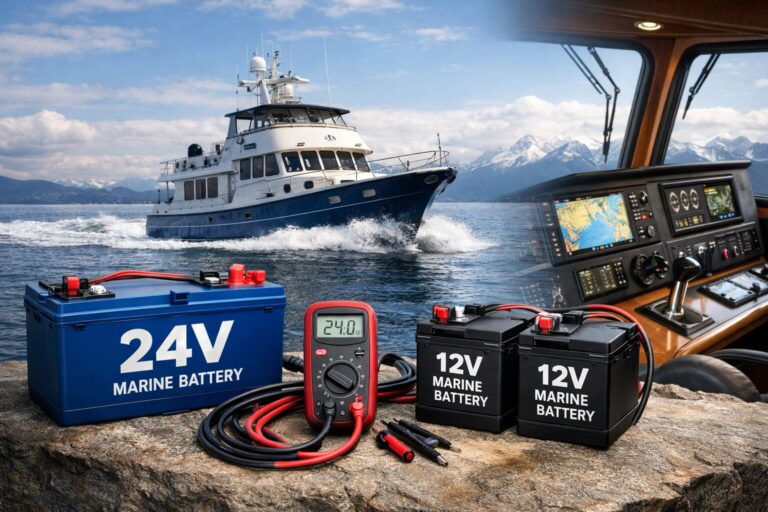
At the most basic level, the difference between 12V and 24V systems is voltage. A 12V system typically uses one battery or multiple batteries wired in parallel, while a 24V system uses two batteries wired in series to double the voltage. Higher voltage allows the same amount of power to be delivered using less current.
This difference in current has major practical implications. Lower current means smaller wire sizes, less heat buildup, reduced voltage drop, and better overall efficiency. On smaller recreational boats with limited electrical demands, a 12V system works well and remains simple. On larger pilothouse yachts designed for extended cruising, the electrical loads are much higher and that is where 24V systems start to show clear advantages. Pilothouse yachts often run powerful bow thrusters, windlasses, stabilizers, hydraulic pumps, diesel heaters, refrigeration, navigation suites, and autopilot systems simultaneously. These loads place significant strain on wiring, batteries, and charging systems, especially during long periods at sea.
Why 24V Systems Are Common on Pilothouse Yachts
Most modern pilothouse yachts, especially those built for offshore cruising and cold climates, rely heavily on 24V systems. The main reason is efficiency. When voltage is doubled, current is cut in half for the same power output. This reduces energy loss, keeps wiring cooler, and improves system reliability over long distances. Long cable runs are common on pilothouse yachts due to their size and layout. Engines are often located far from control stations, thrusters sit at the extreme ends of the hull, and equipment is spread throughout the vessel. A 24V system handles these distances far better than a 12V system by minimizing voltage drop.
Another reason 24V systems dominate pilothouse yachts is starting power. Large diesel engines require strong, consistent cranking power, particularly in cold North Pacific conditions. A 24V start system delivers more reliable engine starts with less strain on batteries and starters. Many commercial grade marine components are also designed around 24V operation. This includes navigation equipment, stabilizers, pumps, and heavy duty electronics commonly found on expedition style pilothouse yachts. Using 24V allows seamless integration of these systems without unnecessary converters or compromises.
Where 12V Systems Still Make Sense Onboard
Despite the advantages of 24V, 12V systems still play an important role on many pilothouse yachts. In fact, most yachts use a combination of both. Many domestic systems such as lighting, entertainment systems, freshwater pumps, USB outlets, and certain electronics are designed primarily for 12V operation. Marine suppliers offer a wider variety of 12V accessories, making it easier to source replacements while traveling. For this reason, builders often include dedicated 12V house banks alongside the primary 24V system. This hybrid approach allows owners to enjoy the benefits of 24V power while maintaining compatibility with common onboard equipment.
Another factor is familiarity. Many boat owners and technicians are more experienced with 12V systems. Troubleshooting, spare parts, and field repairs can be simpler in remote locations when dealing with 12V components. However, relying entirely on a 12V system for a large pilothouse yacht can create challenges. Higher current loads demand thicker cables, larger battery banks, and more robust charging systems. Over time, this adds weight, complexity, and potential failure points.
Battery Banks, Charging, and System Efficiency
Battery configuration is one of the most critical aspects of voltage choice. A 24V system typically requires fewer total amp hours to deliver the same usable power as a 12V system. This leads to smaller battery banks, reduced weight, and improved efficiency. Charging systems also benefit from higher voltage. Alternators, solar controllers, and inverters operate more efficiently at 24V, producing less heat and delivering power more consistently. This is especially valuable during long offshore passages where charging opportunities may be limited.
In cold environments, battery performance drops significantly. A 24V system provides a buffer against voltage sag, ensuring essential systems remain operational even when batteries are stressed. This is a major reason why North Pacific pilothouse yachts often favor 24V for mission critical systems. Inverter loads also tend to perform better on 24V systems. Large inverters supplying AC power draw less current at higher voltage, reducing strain on batteries and cabling during high demand periods such as cooking or heating.
Choosing the Right System for a Custom Pilothouse Yacht
When designing a custom pilothouse yacht, the choice between 12V and 24V should never be treated as an afterthought. It must align with how the yacht will be used, the cruising range, climate conditions, onboard equipment, and owner expectations. For yachts intended for extended cruising, heavy weather operation, and remote exploration, a 24V primary system with selective 12V support is often the most practical solution. This setup balances efficiency, reliability, and flexibility without unnecessary complexity.
For smaller pilothouse yachts used primarily for coastal cruising with moderate electrical demands, a well designed 12V system can still perform effectively if cable sizing and battery capacity are carefully planned Ultimately, the best electrical system is one that is tailored to the vessel rather than forced into a generic layout. Custom yacht construction allows electrical architecture to be designed around real world usage, ensuring systems work together smoothly under all conditions. A properly engineered voltage system improves safety, reduces maintenance, enhances performance, and supports long term cruising confidence. In the demanding waters of the North Pacific, those advantages are not luxuries. They are necessities.
Contact Us
We turn your cruising dreams into reality by developing bespoke trawler and pilothouse yachts built for comfort, safety, and performance. From the initial hull design to the final varnish, our experienced naval architects and craftsmen collaborate with you every step of the way, integrating fuel-efficient engines, ergonomic deck layouts, and beautifully appointed living spaces. With industry-leading warranties and personalized support, we make sure your new yacht feels like home the moment you step on deck. Reach out to us by email at info@northpacificyachts.com for personalized responses to all your inquiries. If you’d prefer a conversation, we invite you to give us a call at 1-877-564-9989.