

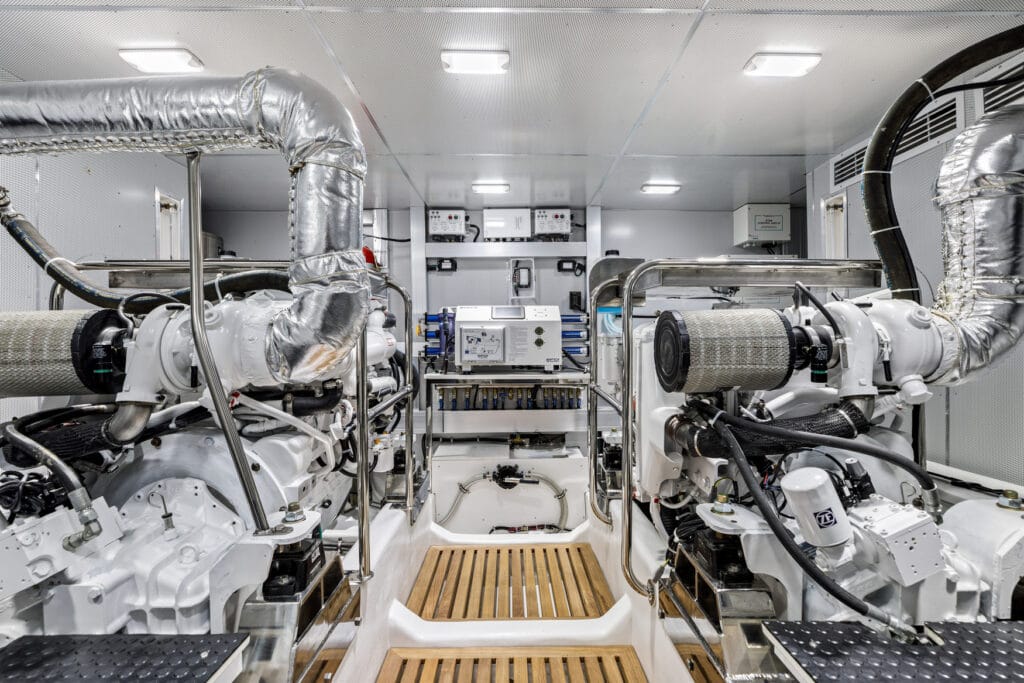
A useful spares kit matches the yacht you actually operate. It should support the service tasks you can perform and carry selected parts a technician may need where supplies are difficult to obtain. A large collection of unmatched filters, unknown fluids, or aging rubber parts adds clutter without answering that purpose.
Choose the kit around the route, the consequences of an interruption, current maintenance status, and available support. Then make every selected item identifiable and easy to find.
Rank Systems by Interruption and Support Difficulty
Ask which failures would affect propulsion, essential electrical power, water, sanitation, or safe deck routines. Consider prior issues on this boat and what support exists along the intended route. A familiar local cruise and a longer trip through remote stops may justify different supplements to the same baseline kit.
Do not assign invented failure probabilities or assume every remote repair takes a fixed number of days. Parts availability, access, and specialist support vary. Ask relevant providers which parts are worth carrying for the exact equipment and planned itinerary.
Use a seasonal maintenance calendar for Pacific Northwest cruising yachts to replenish consumed items and identify work falling due before or during the trip. Carrying a spare is not a reason to defer service the equipment already requires.
Match Machinery Consumables to Exact Equipment
Filters, belts, impellers, gaskets, and approved fluids can be useful candidates. Their suitability depends on the installed engine, generator, pump, or transmission, including any later modifications. Confirm the part through the correct equipment identification and parts information.
Cummins manuals by serial number illustrate that engine-specific documentation can identify the relevant manual and parts catalog. A displacement or broad engine-family name is not always enough. Likewise, use the Northern Lights operator manual that matches the actual generator, rather than assuming every unit shares the same spares or schedule.
| Candidate group | What to verify before carrying it |
|---|---|
| Fuel and oil filters | Installed filter assembly, exact element or part, and any required seals |
| Belts | Actual drive arrangement and specified replacement |
| Cooling-pump parts | Pump identity, matching impeller or service kit, and procedure |
| Fluids | Equipment approval, existing fluid compatibility, and storage instructions |
| Transmission items | Exact transmission identification and approved service parts |
Set quantities with the equipment guidance, trip duration, and support plan. A universal number of filter changes or impellers cannot fit every yacht. Keep fluids clearly labeled and use the specified compatibility guidance; do not mix products based only on their color or a generic description.
Select Domestic, Deck, and Electrical Candidates
For freshwater, sanitation, and raw-water equipment, consider matched fittings, seals, strainers, or pump parts where the manual and support provider justify them. GROCO service identification is one example of finding the correct product sheet and replacement parts. It does not establish which hardware is aboard your boat.
Deck candidates may include spare dock or fender lines, chafe protection, and documented parts for the installed ground tackle or tender arrangement. Match any load-bearing hardware and its use to the equipment requirements rather than buying a miscellaneous assortment.
Electrical candidates must match the installed circuit protection and equipment. Carrying a fuse or relay does not authorize replacement without the correct isolation, procedure, and assessment of the fault. Never bypass protection or substitute a higher rating to restore operation.
Domestic resource planning also matters. A parts kit can support the trip, while managing fresh water, fuel, and holding capacity on a two-week cruise addresses the consumption and service stops that parts cannot replace.
Pair Each Spare with a Use Boundary
Separate items you intend to use yourself from those carried for a service provider. Decide task by task using the exact instructions, your training, tools, access, and the consequences of an error. Do not classify all filter, pump, or electrical work as automatically owner-serviceable.
Our DIY vs. professional yacht maintenance guide develops that decision. Carrying a component for a technician can still be valuable even when installing it exceeds your competence or the working conditions aboard.
Consider access before buying bulky assemblies. Use engine-room access as a buying test to ask whether the relevant task has a safe working path and suitable clearance. A spare does not make an inaccessible component easy to replace underway.
Keep a Searchable, Current Inventory
Use consistent equipment names and labeled storage. Record enough information to distinguish similar parts without relying on memory.
| Inventory field | Useful entry |
|---|---|
| System and equipment | Exact installed item and location |
| Part | Description, manufacturer part number, and verified fit |
| Quantity and location | Count aboard, target chosen for this trip, labeled bin |
| Use responsibility | Owner-authorized task or technician handoff |
| Documentation | Matching manual and relevant procedure |
| Condition and storage | Date checked, applicable shelf life, and maker storage requirements |
Keep packaging where it protects the item or preserves identification. Follow manufacturer storage guidance for rubber parts, fluids, adhesives, and filters; do not invent one shelf life or treatment for all materials. Review condition, consumed stock, and changed equipment before departure and after the season.
Photograph nameplates rather than removing them to build the record. If you need available original equipment lists or want to discuss service access aboard your yacht, contact us. The aim is a compact kit whose parts, purpose, and use limits remain clear when you need it.