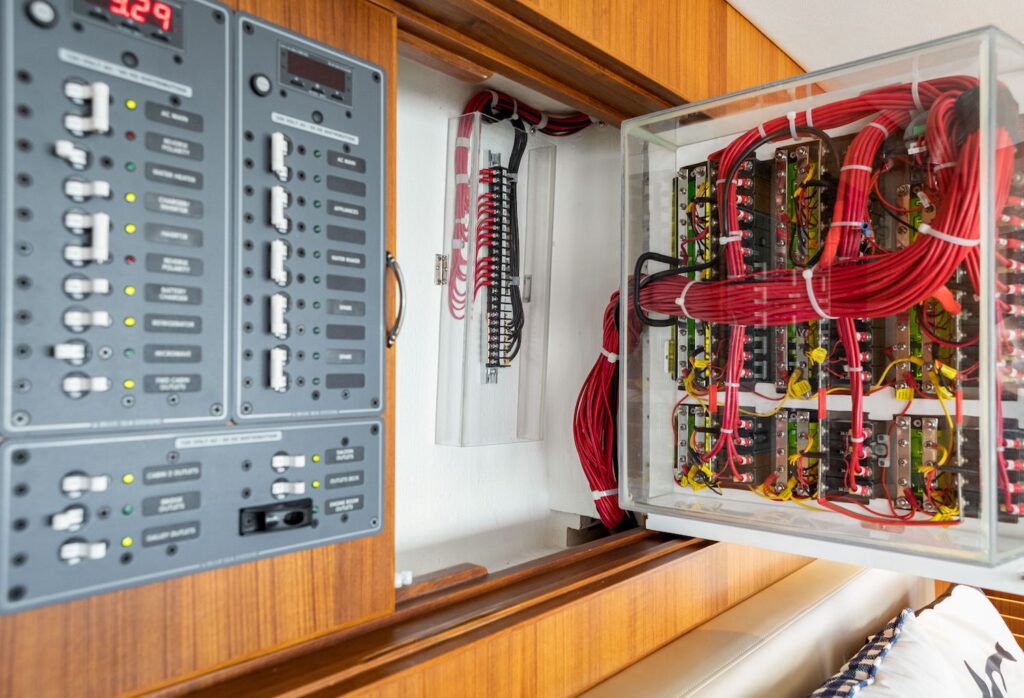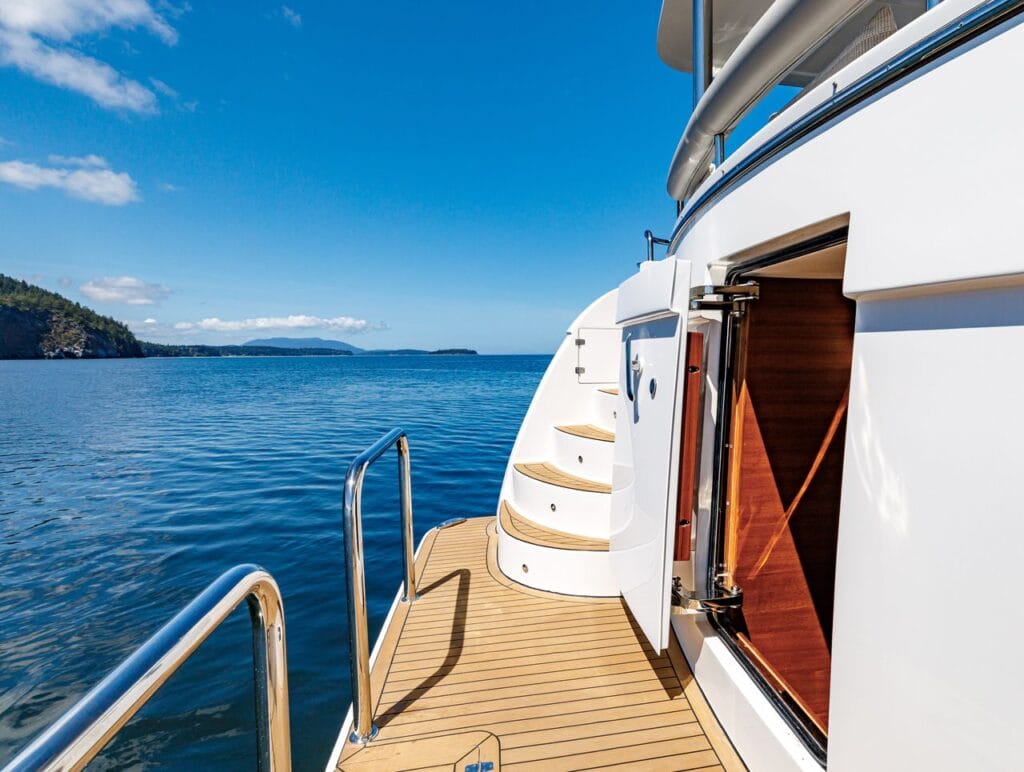
At North Pacific Yachts, we encourage owners to make that division of work task by task. Every yacht owner balances the satisfaction of hands-on care with the reality of complex shipboard systems. Before taking on a task, consider the particular yacht, the equipment involved, and whether you can follow its service instructions safely.
Knowing where your toolbag stops and a certified specialist begins protects your vessel, your budget, and your safety at sea. An honest appraisal of your skills, your onboard resources, and the consequences of a mistake will help you draw a clear line between DIY upkeep and professional contractor work.
Evaluating a Job Before Opening the Toolbox
Make a conscious evaluation before you turn a single bolt or pull a wire. A successful project requires three things: the correct technical documentation, appropriate tools, and a workable contingency plan if a fastener snaps or a fitting strips. If any one of those three components is missing, pause and reevaluate.
Skills and equipment
Basic mechanical aptitude does not automatically translate to marine systems. A domestic plumbing repair or automotive brake job differs fundamentally from servicing raw-water-cooled machinery or isolated marine electrical banks.
Some tasks require tools, access, or diagnostic equipment beyond a normal onboard kit. Let the actual procedure define those requirements. If a tool, safe working space, or necessary skill is missing, arrange appropriate help before starting.
Documentation is equally critical. Generic advice found on online forums rarely matches the realities of your vessel. For major propulsion machinery, Cummins parts and service manuals are indexed directly to specific engine serial numbers and engine families. Relying on generic assumptions instead of verified engine-specific service information can lead to ordering the wrong gasket, misinterpreting clearance tolerances, or improperly torquing a critical component. If you do not have the relevant procedure, obtain it before deciding whether to undertake the job.
Consequence and warranty
Evaluate what happens if the repair fails. A dripping freshwater faucet at the dock is an inconvenience; a compromised engine raw-water hose or a leaking below-waterline seacock can sink the boat.
Consider the consequences of an error, including leakage, loss of power, damage to a finish, and failure of a safety system. A task that appears simple may still have serious consequences because of where it sits in the installation.
Read the actual warranty terms and any applicable insurance conditions before undertaking work. Requirements differ by product, policy, and task; ask the supplier or insurer when the terms are unclear.
Low-Risk Maintenance Best Suited for Owners
The most valuable maintenance an owner performs involves structured inspection, routine servicing of serviceable items, and proper cosmetic care. Routine observations can reveal changes worth assessing before the next trip.
Established spring commissioning guidance emphasizes this observational approach. Before a cruising season begins, use the installed equipment’s instructions to check the following or arrange qualified checks:
- Inspect all bilge pumps and mechanical float switches for smooth operation and debris clearance.
- Inspect shore-power cable ends and vessel inlets for discoloration, melting, or terminal pitting caused by electrical resistance.
- Examine raw-water and sanitation hoses for dry rot, cracking, stiffness, or corroded double-clamps.
- Check fluid levels, belts, and coolant condition across all engines and generators.
Cosmetic care is another natural owner task when the method suits the installed material. Morbern’s vinyl guidance is an example of stain-specific instructions, including approved methods and warnings against abrasives and unspecified industrial cleaners. Confirm the exact product on your boat before choosing a treatment.
| Decision | Owner’s question | Appropriate next step |
|---|---|---|
| Familiar routine care | Can I follow the manual safely with the tools and access I have? | Carry out only the work within that competence and record it. |
| Unfamiliar procedure | Can I identify the isolation, inspection, and return-to-service steps? | Obtain instruction or arrange service before opening the system. |
| High-consequence repair | Could an error affect water exclusion, propulsion, electrical safety, or emergency equipment? | Discuss the scope with a qualified marine specialist. |
| Material care | Do I know the product and finish? | Use its care instructions; postpone chemical treatment if identity is uncertain. |
When to Call a Certified Marine Specialist
Complex machinery, electrical systems, structural repairs, and safety equipment often call for specialist knowledge. Match the technician’s experience and qualifications to the actual job rather than assuming one trade can service every system.
Electrical Systems
Visual inspection of shore-power cords can help an owner spot damage. Changes to wiring, circuit protection, charging systems, or distribution panels need a competent marine electrical specialist. Our electrical system maintenance guide develops the distinction between observations and electrical work.
Propulsion and Fuel Systems
An experienced owner may undertake some manual-defined service tasks after proper instruction. Fuel-injection work, internal engine repairs, and unresolved alarms or performance changes need an appropriate engine specialist. Report what changed without beginning exploratory disassembly.
Underwater Machinery and Hull Integrity
Work on through-hulls, shaft seals, bearings, alignment, or suspected structural damage can affect water exclusion or propulsion. Ask the boatyard or relevant specialist to assess the scope and specify the required inspection and return-to-service checks.
Fire and Life Safety
Follow the installed LPG and fire-suppression equipment’s inspection and servicing requirements. Confirm who is qualified to perform the work and what documentation is required for that equipment and your insurance arrangements.
Coordinating Service, Handoffs, and Shipboard Records
Hiring a professional marine technician is an active management process, not an abdication of responsibility. The quality and cost of professional service depend directly on how well you prepare the work area, describe the problem, and document the resolution.
When scheduling a specialist:
1. Provide operational facts, not casual diagnoses. Tell the technician: “The port engine ran at 195°F instead of its normal 175°F after running at 1,800 RPM for 30 minutes, but dropped back to normal at idle.” Do not tell them: “I think the heat exchanger needs to be replaced.” Let the technician diagnose the root cause without bias.
2. Deliver complete equipment identification. Supply the technician with exact model numbers, serial numbers, and equipment hours ahead of time. This helps them identify the appropriate parts and service information before attending the boat.
3. Stage the vessel. Clear gear out of the engine room or lazarette before the technician arrives. When a contractor spends their first hour clearing fenders, dock boxes, and deck furniture to reach a bilge pump, you pay yard rates for manual labor.
Balance your involvement to support predictable maintenance budgeting. Taking on routine fluid checks, hull inspections, and interior care yourself leaves financial bandwidth for hiring experienced specialists for running-gear alignments, complex electrical updates, and scheduled machinery overhauls.
Maintain a permanent shipboard maintenance binder or digital equipment log. Record every part number, oil type, fluid capacity, and technician invoice. When an owner can hand a professional a clean log showing the last cooling-system service and raw-water pump work, the technician has a more useful starting point for the assessment.
To begin, audit your vessel’s machinery spaces this week. Gather the exact serial numbers for your primary engine, generator, and domestic pumps, and confirm you have the official manufacturer service manuals stored onboard.
Sources