

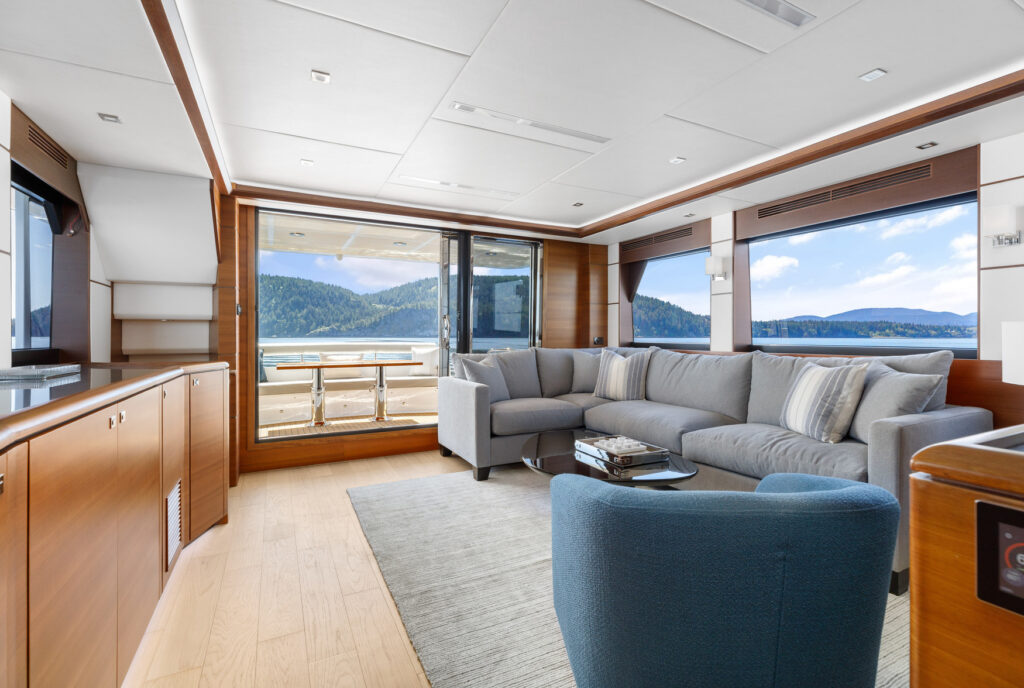
Choosing the accommodation arrangement for our North Pacific 590 Pilothouse starts with the people who will spend time aboard. Private guest rooms, a workspace, storage and a more expansive master can all be worthwhile priorities. The useful choice is the arrangement that serves the trips you expect to repeat.
Our 590 offers several accommodation choices. Its interior includes a full-beam master with a nearly-king bed, flexible guest-room arrangements, two or three staterooms forward and optional quarters in the lazarette. Three- and four-stateroom availability appears in our model overview. Before assigning people to rooms, review the proposed arrangement with us so that those descriptions refer to the same configuration.
Separating Routine Crew Needs from Occasional Visitors
List the people who regularly sleep aboard and the visitors who join for part of a trip. Consider whether they can share a room, whether different sleep schedules matter and how long they tend to stay.
Then identify the uses that continue when guests leave. A room may need to support remote work, reading, storage or flexible sleeping. Those needs deserve a place in the discussion alongside private cabin count.
A guest room that is used often may be worth dedicating to accommodation. A room used only occasionally may be more useful with a flexible arrangement. Neither choice is automatically better; compare them with your actual cruising habits.
Two vs. Three Forward Cabins: Master Expansion and Workspace Flexibility
Our 590 guest-room choices include an arrangement with two lower beds that can slide together, plus a fold-down bunk. An office/bunk configuration is another possibility, and space can also be allocated to a more expansive master. The available guest-room space depends on the master arrangement selected.
These are useful choices to compare without assuming a particular room map for every count. If you want fewer dedicated rooms, consider what you would do with the flexible space. If regular guests need separate rooms, consider what storage, workspace and access you want to retain around them.
Review the current labeled arrangement rather than counting visible furniture shapes in a gallery image. Confirm which spaces are staterooms, which have flexible functions and which berths are included in your proposed configuration.
Understanding Optional Aft Quarters
Optional crew or guest quarters in the lazarette give you another accommodation possibility to discuss. They should not automatically be treated as the fourth room in every four-stateroom arrangement. The public descriptions do not establish a universal count-to-room mapping.
If you want aft quarters, ask us to show the applicable arrangement, entry and exit routes, head provision, ventilation and service access. Consider who would use the space and whether its location fits that person’s routine.
Storage belongs in the same conversation. Make a list of bulky gear, tools, spares and luggage you intend to carry, then ask where they will live in the proposed configuration. Do not assume that an aft room will leave a particular workshop or equipment area available.
Privacy, Heads, and Traffic Flow
Privacy is more than the number of doors. Trace the paths people will use at night, in the morning and during a normal cruising day.
- How does each person reach a head without disturbing someone resting?
- Where do stairs and shared passages place people near sleeping spaces?
- Which rooms need to support both work and accommodation?
- Where are bags, clothing and everyday gear stored while a room is occupied?
- How do routine checks and service access interact with any aft quarters?
Our 590 interior includes a day head at the forward starboard side of the salon. Its other head and shower arrangements should be reviewed with the selected accommodation plan. Confirm the actual locations and access rather than extrapolating from a stateroom count.
The helm choice and salon/deck arrangement are separate decisions. They can affect where people spend time, but they do not determine the lower-deck room program. Keep the cabin discussion focused on the people and uses it needs to support.
Layout Comparison Across Cruising Profiles
| Your recurring need | What to examine in a proposed arrangement |
|---|---|
| Mostly the regular crew, with occasional visitors | Flexible guest accommodation, workspace and storage between visits |
| Guests who stay for longer trips | Dedicated sleeping spaces, personal storage and head access |
| People with different work or sleep schedules | Door locations, shared routes and separation of active uses |
| Interest in optional aft quarters | Exact room labels, access, head provision and service routes |
| Preference for a more expansive master | How the chosen master changes the available guest space |
This is a requirements table, not a berth-capacity chart. The proposed drawing and specification need to identify what is actually included. A larger room count does not automatically provide the right arrangement for every group.
Sibling Models: Evaluating Interior Scale
If you are still deciding how much boat you need, compare the 45, 49 and 590 first. This article concerns accommodation choices within the 590; it does not assume that another model lacks an appropriate guest or work arrangement.
Once the 590 is your focus, separate the accommodation decision from the helm and deck choices. That makes it easier to identify which compromise matters most in your daily life aboard.
Evaluating a Proposed Configuration: A Practical Checklist
Use the 590 layout drawings to start your discussion, then review the particular arrangement with us:
- Identify the proposed stateroom count and the labels of each sleeping or flexible-use space.
- Check berth dimensions, access and storage against the people who will use them.
- Trace the routes to heads, stairs and shared areas, including nighttime use.
- Locate the equipment and service access that must remain available.
- Review optional aft quarters as a specific configuration rather than an assumed fourth-room formula.
- Keep the current drawing and selected options together as the proposal develops.
When you talk with our team, bring a crew list and the uses each space needs to support. We can discuss the current accommodation choices and the details that should be confirmed for your proposed 590.