

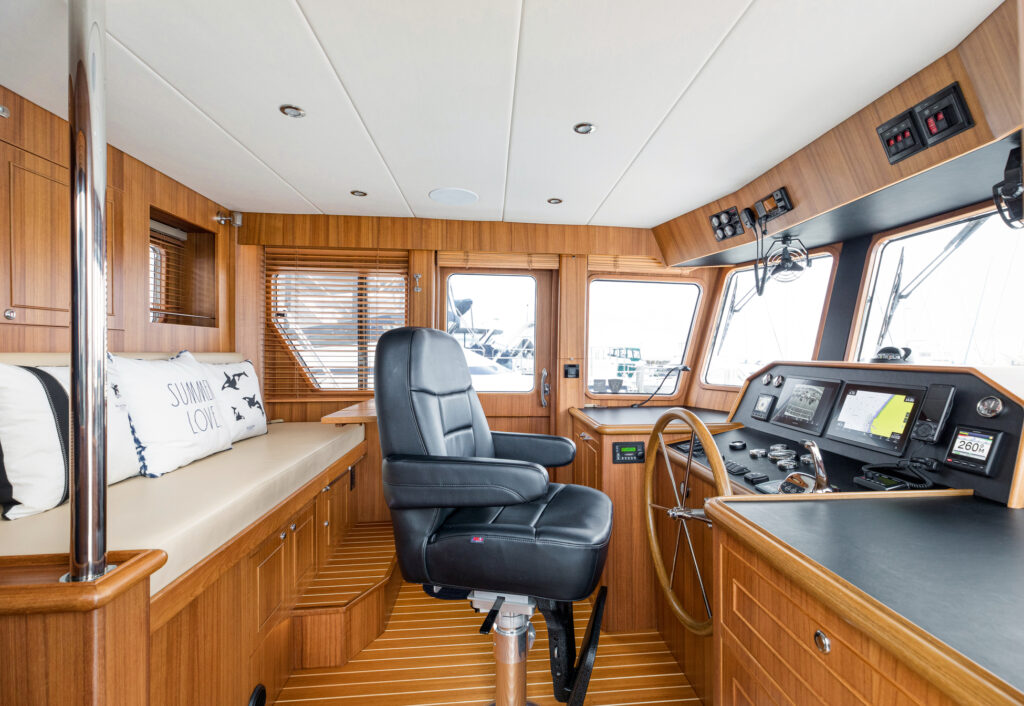
On a serious pilothouse yacht, visibility is not just about having big windows. It is about keeping those windows usable when spray, salt, rain, glare, and temperature changes begin working against the operator. That is why windshield wipers, washers, and demisters deserve more attention than they usually get in a simple feature list. They are part of what allows the pilothouse to deliver on its core promise: protected, confident control in real cruising conditions.
For offshore-minded buyers, these systems are worth evaluating as part of the helm environment as a whole. A well-designed pilothouse should not only feel comfortable in good weather. It should also help the operator maintain clarity, awareness, and low-stress decision-making when visibility becomes more demanding. Seen that way, these small systems say a great deal about how thoughtfully a yacht is built for actual use.
Why Small Visibility Details Matter Offshore
When buyers look at pilothouse yachts, they often focus first on the big-ticket features: layout, range, construction quality, electronics, and overall comfort. But offshore practicality is often revealed just as clearly by smaller systems that do not sound dramatic in a brochure. Windshield wipers, washers, and demisters are a good example. They can seem minor until conditions turn wet, salty, cold, or visually demanding, and then they suddenly become central to how usable the helm really is.
That is because offshore comfort is inseparable from offshore visibility. The pilothouse is supposed to provide shelter, control, and confidence in weather that would feel far less pleasant from an exposed helm. But that advantage only holds if the operator can still see clearly through the glass. Once spray, salt film, rain, condensation, or fogging start affecting visibility, the quality of those small systems begins to matter in a very practical way.
This is exactly the kind of detail that separates generic “looks good on paper” design from real cruising thoughtfulness. Serious owners and offshore-minded buyers tend to notice these features because they understand that the pilothouse is not just about comfort. It is about maintaining command, awareness, and confidence when conditions are less forgiving.
Wipers Are About More Than Rain
Spray, salt, and visibility loss
Many buyers instinctively think of windshield wipers as rain equipment. Offshore, they are often dealing with something less obvious but just as disruptive: spray, blown mist, and salt residue that build across the glass in changing patterns. Even when the sea state is manageable, the combination of wind, motion, and airborne moisture can quickly reduce clarity at the helm. A pilothouse only delivers its full value if the operator can keep a usable forward view while those conditions develop.
That is one reason serious cruisers look beyond whether a yacht simply has wipers. They want to know how well those wipers help preserve visibility once the boat is actually moving through rougher weather. On a long-range trawler or pilothouse yacht, the question is not whether the windshield will ever get wet. It is how effectively the system helps the operator maintain awareness when the glass is repeatedly exposed to spray and film offshore.
Why wiper coverage matters
Coverage matters because not every windshield design gives the operator the same cleared viewing area. A system can be present without truly clearing the part of the glass that matters most from the helm seat. The result is a yacht that looks well-equipped at the dock but asks the operator to work around streaked or partially obscured sightlines when conditions get more demanding. Buyers should pay attention to the sweep pattern, the number of wipers, and whether the cleared area supports natural visibility from the primary running position.
This ties directly into broader pilothouse visibility planning. Good sightlines are not just about window size; they are about how much of that glass remains useful when weather starts working against you. That is why visibility details should be considered alongside other helm advantages such as window geometry and operator perspective, not as a standalone afterthought. Related reading on pilothouse headroom and visibility helps frame that bigger picture.
Reliability matters more offshore than at the dock
Reliability is where these systems stop being a feature list item and start becoming an operational concern. A wiper motor, blade, arm, or switch that works inconsistently can be frustrating at the marina. Offshore, it can become a real distraction at the exact moment the operator needs to stay focused on traffic, sea state, or a tight approach. Salt exposure and repetitive use tend to expose weaknesses quickly, which is why dependable hardware matters more than marketing language.
For that reason, buyers evaluating a pilothouse yacht should think in terms of serviceability and repeat use, not just initial presence. Offshore equipment earns its value by continuing to function when the boat is wet, the glass is dirty, and the operator needs a quick, predictable response. In that environment, robust windshield systems support the same kind of helm confidence that North Pacific owners also look for in rough-water handling and all-weather navigation.
Washers Help Restore Useful Visibility, Not Just Clean Glass
Salt film and smear management
Washers matter because offshore glass often needs more than a dry blade passing over it. Salt film and fine residue can build in a way that turns a wiper alone into a smearing tool rather than a true visibility aid. Instead of clearing the windshield, the blade may drag salt and moisture across the glass, leaving a hazy or streaked surface that still compromises the view ahead. In real conditions, that can be surprisingly tiring for the operator.
A well-designed washer system helps break that film so the wipers can actually restore a useful view rather than simply move contamination around. That makes a meaningful difference on passages, in quartering conditions, or after repeated exposure to spray. For serious cruising, it is not hard to imagine situations where a clean sweep across the glass improves comfort, but also reduces hesitation at the helm when quick visual confirmation matters.
Why fresh water at the glass can matter quickly
Fresh water at the windshield becomes valuable because visibility problems offshore can build faster than people expect. It does not take a full storm for salt to accumulate. A few hours of wind, spray, and minor sea state can be enough to make the glass noticeably less clear, especially under angled light or at night when glare exaggerates every streak. In those moments, the ability to wash and clear the glass immediately is a practical advantage rather than a luxury.
This also connects to nighttime pilothouse use. Any residue left on the windshield can interact poorly with reflections, electronics glow, and outside light sources, making the operator work harder to read what is happening ahead. That is one reason washer performance should be considered part of the same visibility conversation as night running from a pilothouse, not as an isolated convenience feature.
What happens when washers are treated as optional
When buyers or builders treat washers as optional, the compromise usually shows up later in actual use. The pilothouse may still feel comfortable and protected, but the operator loses one of the fastest ways to recover a clean field of view after spray or contamination builds up. That can lead to improvised workarounds, delayed reaction, or simply a lower willingness to keep running in conditions the yacht itself may be fully capable of handling.
For offshore-minded owners, that is the wrong place to economize. The whole point of a proper pilothouse is to make the boat more usable in mixed conditions while keeping the crew sheltered and the operator in command. Washers support that promise in a very direct way. They help turn the pilothouse from a comfortable room with windows into a helm that keeps functioning well when salt and weather start testing it.
Demisters Matter Whenever Glass Wants to Fog Faster Than You Can React
Interior moisture and temperature differences
Demisters become important whenever the inside and outside environments stop cooperating. An enclosed pilothouse protects the crew from wind, cold, and spray, but that comfort can also create temperature and moisture differences across the glass. Once warm interior air meets cooler windshield surfaces, fogging can happen quickly. It does not always arrive dramatically, but even gradual haze can reduce clarity enough to make the helm feel less precise.
That matters because fogged glass is not solved by exterior wipers alone. If the visibility problem is forming on the inside, the operator needs a system designed to manage the windshield environment from within the pilothouse. Demisters are what make that enclosed helm more consistently usable across changing climates, shoulder seasons, rain events, and overnight temperature swings.
Why enclosed pilothouses need active glass management
The more enclosed and comfortable the pilothouse becomes, the more important active glass management is. Buyers often appreciate the warmth, protection, and noise reduction of a proper pilothouse, but those benefits come with a need to manage condensation and visibility from the inside out. Without that support, a beautifully sheltered helm can still lose practical value when the windows begin to fog during a passage or an early-morning departure.
This is part of what separates thoughtful offshore design from a simple styling exercise. A pilothouse should not merely look capable; it should help the operator maintain control in varying weather without fighting the environment inside the cabin. Visibility systems belong in the same conversation as drainage, sealing, and weather-readiness features discussed in related NPY topics such as pilothouse drainage and window sealing.
How demisters support all-weather helm confidence
Demisters support confidence because they remove one more layer of uncertainty at the helm. The operator is not left hoping that the glass stays clear enough or waiting for conditions to improve. Instead, there is an active system helping preserve forward visibility as temperature, humidity, or crew comfort needs change. That predictability is especially valuable on longer passages, where conditions can evolve over the course of a day and small nuisances become real fatigue factors.
For technical buyers, this is one of those details that says a lot about the boat’s intended use. Offshore-minded owners understand that a pilothouse earns its reputation through many small systems working together under pressure. Demisters are part of that package because they help the helm stay functional and comfortable when the environment is trying to reduce visibility from inside the glass instead of outside it.
These Systems Work Best as a Visibility Package, Not as Isolated Features
One of the easiest mistakes in yacht evaluation is looking at wipers, washers, and demisters as unrelated options. In practice, they work best as a combined visibility package. Wipers help manage moving moisture and spray. Washers help restore clarity when residue or salt film builds on the exterior glass. Demisters help prevent the inside of the windshield from becoming part of the problem. Taken together, they support the real promise of a pilothouse: usable visibility in mixed conditions from a protected helm.
That bigger view matters because offshore operation is rarely neat or predictable. Conditions can shift from clear to damp, from comfortable to chilly, or from daylight to glare-heavy dusk over the course of a single run. Buyers who understand that tend to evaluate visibility systems the same way they evaluate broader pilothouse performance: as overlapping tools that keep the operator effective, not as isolated add-ons that only matter once in a while.
Why Offshore Cruisers Notice These Details More Than Casual Buyers
Offshore cruisers notice these details because they have a clearer mental model of what the helm needs to do when the weather turns mediocre instead of dramatic. They know many of the hardest piloting moments happen in ordinary bad visibility rather than in headline-level storms. Spray on the windshield, low-angle light, smearing salt film, interior condensation, and fatigue can combine to make the helm more demanding even when the yacht itself remains capable and composed.
Casual buyers may look at these systems and see convenience items. Experienced owners often see continuity of control. That difference in perspective is what makes pilothouse yachts so appealing to serious cruisers in the first place. The best examples are designed around maintaining comfort, awareness, and confidence when the environment becomes less cooperative, which is also why related topics like pilothouse performance in rough seas resonate with the same audience.
Common Mistakes Buyers Make When Looking at Pilothouse Visibility Systems
A common mistake is checking the box for “has wipers” and moving on. Presence alone does not tell you whether the system clears the right area, performs well at the helm seat, or seems robust enough for repeated use. Another mistake is overlooking the washer system entirely, even though salt and grime often create the visibility problem that buyers later blame on the wipers themselves. Demisters are also easy to undervalue because they may not draw attention during a pleasant dockside showing.
Buyers also sometimes separate visibility equipment from the larger pilothouse design conversation. In reality, window placement, reflections, helm ergonomics, weather exposure, and all-weather systems all influence how usable the helm feels offshore. It is more useful to ask whether the boat presents a well-thought-out visibility environment than to focus on one component in isolation. That approach leads to better decisions and a more realistic understanding of the yacht’s cruising intent.
A Simple Pilothouse Visibility Checklist for Offshore-Minded Buyers
When comparing pilothouse yachts, buyers can keep the evaluation simple by asking a few practical questions. Does the wiper sweep actually protect the most important viewing area from the normal helm position? Is there a washer system that can help clear salt film quickly? Is there an effective demisting solution for cool, wet, or variable conditions? Do these systems feel like part of an integrated helm design rather than token add-ons? And, just as importantly, do they appear durable and easy to rely on when conditions are not ideal?
That kind of checklist helps buyers stay grounded in real use instead of showroom impressions alone. The goal is not to obsess over every detail, but to understand whether the pilothouse will still deliver clarity and confidence once the yacht leaves calm water and perfect weather behind. For owners planning serious cruising, those answers matter because visibility is one of the foundations of safe, low-stress operation.
The Best Pilothouse Features Are the Ones You Notice Most When Conditions Turn Against You
Wipers, washers, and demisters rarely dominate a yacht listing, but they are exactly the kind of features that reveal whether a pilothouse has been designed for real-world cruising. They support visibility when rain, spray, salt, temperature shifts, and fatigue begin working against the operator. That may sound modest, yet it goes directly to what makes a pilothouse valuable offshore: the ability to stay sheltered, aware, and in command even when conditions are less friendly than they were at the dock.
For serious buyers, these systems deserve attention because they reflect the difference between a boat that merely looks capable and one that has been thought through for actual use. When a pilothouse keeps the operator comfortable and the glass clear in changing conditions, the entire helm experience becomes calmer and more confident. Those are the small details that experienced cruisers tend to respect most.
Contact Us
If you want to learn more about pilothouse yacht design, offshore visibility, or the features that matter most for serious cruising, contact North Pacific Yachts. We are always happy to talk through layouts, equipment decisions, and what makes a pilothouse feel truly capable in real conditions.