

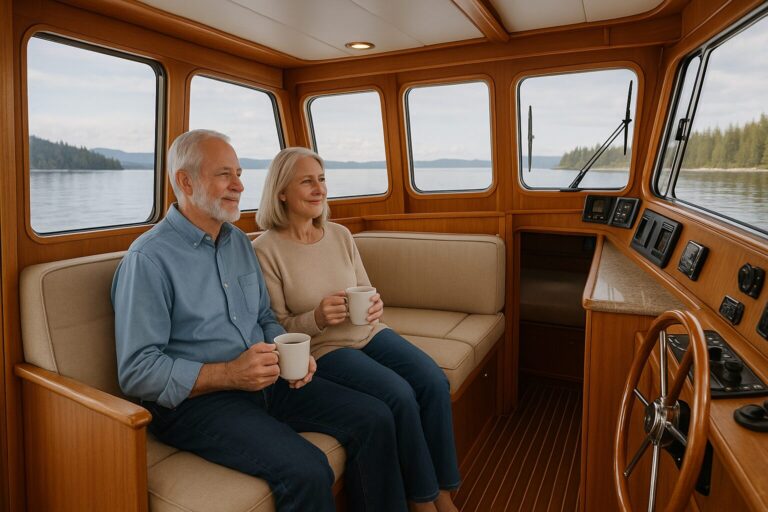
The practical success of long-range cruising in retirement depends far more on daily physical movement and routine maintenance tasks than on chronological age. A boat that feels comfortable during a sunny twenty-minute dockside walk-through can demand exhausting physical effort when docking in a gusting crosswind or checking oil levels in a hot engine compartment.
Choosing the right vessel requires an honest assessment of how you and your partner live, move, and handle heavy gear. By matching your operational habits to the right deck design, mechanical access, and support network, you protect both your investment and your time on the water.
Define Your Cruising Pattern Before Evaluating Layouts
Different cruising itineraries demand completely different interior volumes, equipment redundancies, and daily maintenance commitments. Consider how much of your time will resemble these different patterns:
- Seasonal coastal cruising: Using the boat for part of the year, followed by scheduled yard haul-outs or extended marina storage. This routine demands straightforward winterization access, simple system layouts, and easily secured deck gear.
- Active passage-making: Moving regularly between distinct cruising regions with extended running days, overnight passages, and frequent anchoring. This demands dedicated pilothouse sightlines, robust ground tackle handling, heavy-duty battery banks, and protected walkaround decks.
- Liveaboard residence with localized travel: Using the boat as a primary or secondary home with occasional local journeys. Interior storage, residential galley appointments, full-size showers, and cabin heating/cooling take precedence over offshore speed or extreme tank capacities.
Deciding which of these patterns reflects your real intentions simplifies every subsequent equipment choice. When evaluating layouts, choosing a yacht for your lifestyle means prioritizing the specific spaces where you expect to spend much of your time rather than outfitting for hypothetical offshore extremes.
Evaluate Daily Physical Movement Aboard
Marine construction cannot offer universal domestic accessibility. Sills, ladder steps, and rolling motion are permanent features of life afloat. You must assess whether moving around the vessel requires strained balance or excessive physical exertion.
Boarding and Side Deck Transitions
Dock heights vary dramatically between regions, tide cycles, and marina designs. With appropriate supervision and support, assess boarding from the types of docks you expect to use.
- Note the height and placement of boarding gates in the bulwarks.
- Examine whether you must pull your entire body weight upward using a lifeline, or if fixed, rigid handrails provide stable support.
- Walk the normal deck routes under supervision in suitable conditions. Notice steps, handholds and obstructions; keep your hands available for support rather than turning the visit into a carrying test.
Stairs, Hatches, and Elevation Changes
Climbing steep vertical ladders between the cockpit, flybridge, and engine room quickly causes physical fatigue. Look for molded staircase transitions with deep stair treads and continuous handrails placed at natural elbow height.
Inside the boat, test the route from the salon up to the pilothouse and down to the accommodations. You should never find yourself reaching across a wide, open gap to find a handhold. Every transition zone requires continuous, instinctive bracing points.
Living Spaces, Berths, and Heads
Inspect the primary stateroom with daily chores in mind. An island queen master berth allows both partners to get in and out of bed without climbing over one another, while also making the daily chore of changing bed linens manageable.
In the heads, step directly into the shower stall and close the door. Verify that there is sufficient elbow room to wash and brace yourself safely without bumping against smooth fiberglass surfaces. Balancing living space and privacy aboard requires distinct, functional separation between guest areas and the owner stateroom so that having family aboard does not compromise your daily routines.
Gauge Crew Roles, Watchkeeping, and Physical Workload
Short-handed cruising means that two people must handle every line, anchor deployment, docking maneuver, and underway watch. Discuss what you would do if a crew member were fatigued or unable to help, including training, outside assistance and changes to the cruising plan.
| Operational Task | Physical Demand | Essential Boat Features to Inspect |
|---|---|---|
| Docking & Line Handling | Reach, balance and coordination with the helm | Access to the relevant working positions and usable handholds |
| Anchoring | Controls, inspection and gear handling | The actual installation, maintenance access and crew workload |
| Engine Checks | Reaching inspection points without strain | Access suitable for the tasks you expect to perform |
| Watchkeeping | Sustained attention and communication | Seating, visibility, controls and a workable watch arrangement |
Docking is frequently the most stressful task for a cruising couple. Examine how the actual helm and deck routes support communication and assigned roles. Door arrangements vary by boat; a nearby door is not a reason to leave a vessel without appropriate control or lookout.
Under way, legal and practical duties require continuous diligence. The USCG navigation rules—specifically Rules 5, 6, and 7—mandate maintaining a proper lookout by sight and hearing, operating at a safe speed for the prevailing conditions, and actively assessing collision risks using all available equipment. Modern electronic aids, chartplotters, and slower trawler speeds never discharge the watchstander from these responsibilities. The pilothouse layout must support prolonged, comfortable alertness by placing radar, engine monitoring, and VHF controls within immediate physical reach of the helm seat.
Ground Ownership Commitments and Systems Maintenance
Managing a trawler involves routine systems oversight. Rather than assuming that modern marine systems run themselves, prospective owners must evaluate how much direct mechanical involvement they want to handle themselves versus hiring outside yard support.
Machinery Space Access
Understand the manufacturer’s predeparture checks and maintenance schedule. Inspect how you access the fuel-water separators, dipsticks, coolant reservoirs, and sea strainers.
- Do you have to dismantle the salon furniture and lift heavy floorboards to check the oil?
- Can you reach the raw-water pump impeller without contorting your spine around an exhaust riser?
Vessels engineered for owner-operators incorporate dedicated access hatches, removable headliners for wiring runs, and dedicated utility chases. If accessing a primary component requires extreme physical contortion at the dock, it will be neglected when underway.
Electrical Systems and Battery Management
Modern vessels balance domestic comfort with mechanical reliability. Our North Pacific 49′ Pilothouse equipment includes an AGM battery bank and Victron inverter/charger, with lithium battery options available.
Ask about the complete battery, charging and load arrangement, its service needs and what happens when a component fails. Do not assume a chemistry choice alone will reduce generator use or make ownership simpler.
Insurance, Marina, and Yard Realities
Owning a larger displacement trawler requires formal budgeting for ongoing logistical realities:
- Insurance: Ask the underwriter what experience, training and operating conditions apply to the specific boat and crew.
- Moorage: Confirm berth size, access, availability and terms with the marina.
- Professional maintenance: Obtain local service quotations for work you would prefer to delegate.
The Onboard Trial Checklist
When you schedule an inspection or sea trial, leave marketing brochures behind. Bring your boat partner, wear your standard deck shoes, and run through this operational checklist:
- Boarding under real conditions: With the host’s supervision and appropriate support, assess the boarding arrangement you would use. Can you move comfortably while keeping your hands available for support?
- Sightlines from the lower helm: Sit at the pilothouse helm seat. Can you see the horizon clearly across the bow without stretching or stooping? Can you glance aft to verify traffic without leaving the station?
- Deck route: Under suitable supervised conditions, assess the route between helm and line-handling positions. Is it workable for your movement and agreed crew roles?
- Galley security: Stand in the galley with your feet planted at shoulder width. Are counters, fiddles, and residential galley appliances positioned so you can brace yourself while preparing food in a rolling sea?
- Master berth accessibility: Climb in and out of the bed from both sides. Verify that making the bed does not require lifting heavy mattress corners while bent at an awkward angle.
- Stateroom flexibility: Inspect the secondary cabin arrangements. If you plan to host adult children, grandchildren, or rotating cruising friends, determine whether the layout provides functional living space without cramping your personal storage.
- Engine room inspection: Ask the host to demonstrate safe access to the machinery inspection points relevant to routine checks. Identify any task you would need to delegate.
Customizing Configurations for Long-Range Confidence
Every cruising couple brings a unique balance of physical capabilities, mechanical interest, and long-term travel ambitions. The North Pacific 49′ Pilothouse provides an illustrative baseline for how these priorities integrate into a finished build. Our NP49 includes an island queen master stateroom, a flexible guest stateroom, residential galley appliances and heads with separate shower arrangements. Assess the chosen layout in person rather than inferring accessibility from those features.
Because we operate as a direct builder rather than through a third-party dealer network, we consult directly with owners on machinery, galley equipment, and joinery choices before construction begins. We build vessels tailored directly to the owner’s cruising program, allowing you to configure storage lockers, staterooms, and equipment lists to match your actual routine.
Take the time to evaluate your physical routines and crew priorities candidly. When you are ready to explore configurations that match your underway plans, contact our team directly to discuss your cruising plans with us.