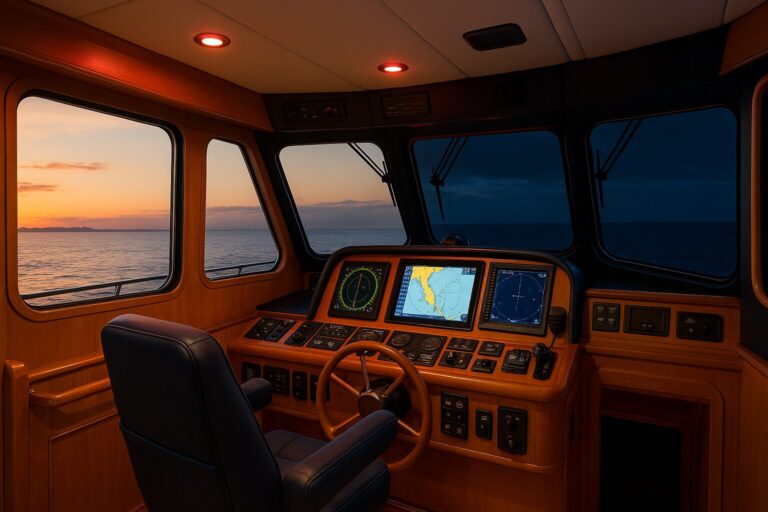
A coastal route that feels familiar in daylight can present a different picture after sunset. Shoreline detail fades, small objects become harder to distinguish and isolated lights can be difficult to place. Inside a pilothouse, reflections on the glass may become as distracting as glare on the water was earlier in the day.
Planning for those changes helps a crew decide whether a night leg fits its experience, equipment and available energy. An enclosed helm offers shelter, but it does not make a daytime plan equally suitable after dark.
What Darkness Changes
Daylight gives an observer several clues at once: a vessel’s outline, surrounding water, shoreline features and the relationship between nearby objects. At night, some of those clues disappear. A light may be visible without its distance or identity being clear.
Shore lighting can further complicate the picture. USCG Rule 6 specifically includes background light at night among the factors considered when determining safe speed. The rule does not prescribe a fixed speed for darkness; the operator must assess the prevailing circumstances and the vessel’s ability to respond.
Daylight has its own limitations, including low sun, reflected glare and distracting activity. The useful comparison is how the information available to the watch changes, rather than assuming that either time of day is automatically easy.
Prepare Before the Light Fades
A planned transition allows the crew to examine lighting, equipment and workload before those tasks compete with navigation.
| Consideration | Daylight question | After-dark question |
|---|---|---|
| Outside view | Does sun or spray obscure the view? | Do interior reflections obscure lights or the water? |
| Navigation picture | Which visible features help confirm position? | Which references will still be identifiable? |
| Crew workload | Is someone available to assist the watch? | Can that assistance continue without exhausting the crew? |
| Arrival | Is the entrance familiar and accessible? | Does the plan depend on an unfamiliar arrival in darkness? |
Lighting and Visibility
Review the available display settings and cabin lighting on the actual boat. The aim is to keep information readable while limiting reflections that interfere with the outside view. Follow equipment instructions and seek help if the controls or navigation-light arrangement are unclear.
Consider the whole interior. A light behind the helm may reflect on forward glass even when the instrument screens seem suitably dim. Discuss with the crew how phones, task lights and movement through the space might affect the watch.
Workload and Rest
Plan around the people aboard, not an ideal watch schedule. A crew that has already managed a long day, poor sleep or an equipment problem may have less capacity for a night leg than the itinerary assumes.
Agree how someone will ask for help and how responsibilities will transfer. Clear crew communication is useful throughout the day; after dark, avoiding uncertainty about who is watching matters particularly when several tasks compete for attention.
Maintain an Effective Watch
USCG Rule 5 requires a proper lookout by sight and hearing and appropriate available means. Radar, AIS and other equipment can contribute information, but they do not replace that obligation. Their limitations should be understood before relying on them in demanding conditions.
Cross-check what you see with other available information. An unidentified light or uncertain display contact deserves attention rather than a quick assumption about another vessel’s intentions. Navigation-light interpretation and collision assessment are skills to develop through suitable training.
An enclosure can affect how external signals are heard. Assess the arrangement with an instructor familiar with the boat and the conditions in which you plan to operate. A universal instruction to open a door or window would overlook weather exposure and the particular vessel’s arrangements.
Weather also affects the night watch. Rain, spray and reduced visibility can add to the difficulty of interpreting lights and maintaining a clear view. Reviewing weather at the helm helps connect those conditions with the workload your plan requires.
Reconsider the Timing
Consider whether waiting for daylight would remove a difficult arrival, unfamiliar entrance or uncertain visual reference. Assess potential alternatives before departure, including whether they remain accessible under the expected conditions.
If the plan changes underway, the next decision needs to account for the vessel’s position, local hazards, weather and crew condition. A sheltered destination on a chart is useful only if its approach is suitable at the time.
For a first planned night leg, discuss the route and boat with a competent instructor. The best preparation is understanding what the crew will need to recognize and do, with enough flexibility to choose a different time when circumstances warrant it.
Sources