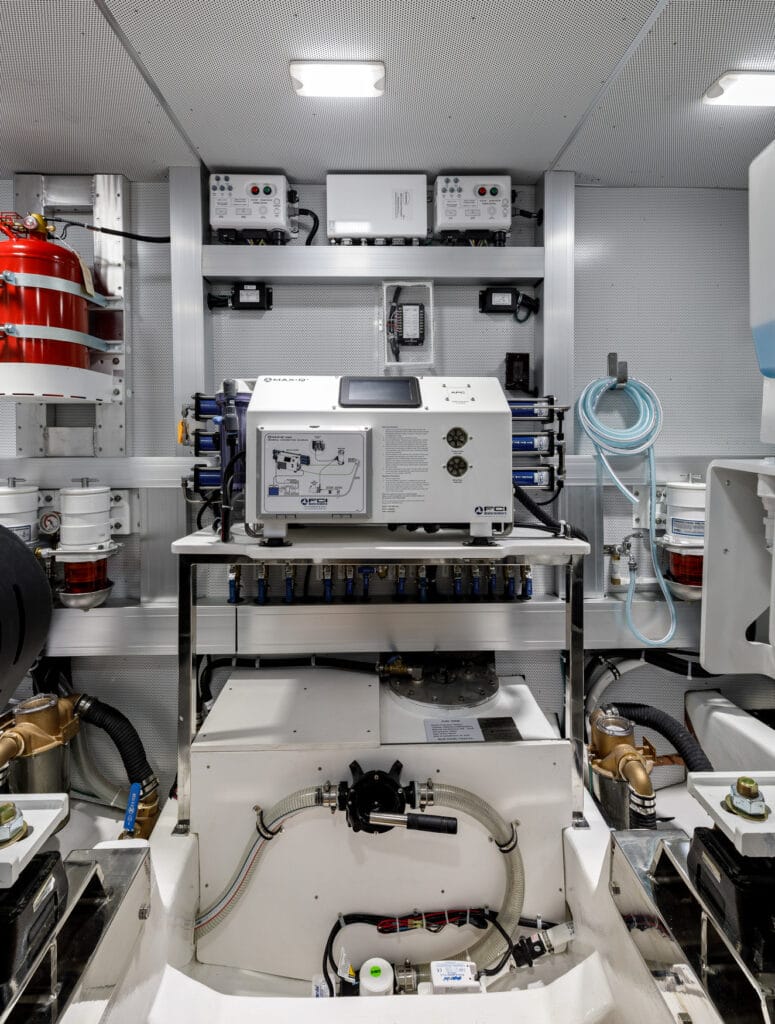
Maintenance mistakes can arise from conflicting advice, misjudged service intervals, or physical changes that go unrecorded. Looking at those habits helps an owner improve care without treating every problem as proof of neglect.
We want owners to approach yacht care with clear information and a workable routine. Preventing repeat mistakes does not require you to become an engine builder or a marine chemist. It requires checking equipment specifications, documenting changes, and communicating clearly with anyone who works on your boat.
Why Yacht Care Mistakes Tend to Repeat
Maintenance errors repeat when yacht owners rely on memory, casual schedules, and fragmented handoffs between different people. A modern cruising yacht is an interconnected web of DC and AC electrical circuits, raw- and fresh-water plumbing, hydraulic actuators, and specialized composite surfaces. When three different people—an owner, a weekend washdown crew, and an independent marine mechanic—touch those systems without a shared record, assumptions take over.
One avoidable gap is the assumption that someone else checked a critical baseline. A detailer assumes the mechanical tech inspected the seacock hoses; the mechanic assumes the owner checked the raw-water strainers; the owner assumes the yard tested the automatic float switches during haul-out.
Breaking this cycle requires replacing dockside habits with simple operational boundaries:
– Separate observation from diagnosis: Note what you see, smell, or hear before deciding what is broken.
– Isolate equipment records: Keep equipment manuals and service logs organized by specific component rather than relying on general vessel memory.
– Verify every handoff: Ask what was completed, what remains outstanding, and what checks the technician recommends before returning the equipment to use.
Selecting Compatible Products and Respecting Service Triggers
Damaging equipment with the wrong material or running it past its designed service window are two avoidable sources of trouble.
Wrong Materials and Methods
A cleaner or tool suitable for one surface may be incompatible with another. Identify the material and finish, read the care instructions, and choose the method those instructions support rather than increasing chemical strength or scrubbing pressure by guesswork.
Identified Sunbrella fabric offers a useful example. Sunbrella upholstery care begins with blotting spills, cleaning gently with mild soap and water, rinsing thoroughly, and air drying. The furniture construction matters too: confirm whether the casing is removable before attempting machine washing. Its instructions discourage abrasive brushes and steam; that guidance should not be transferred to every textile aboard.
The same discipline applies to joinery, sanitation systems, and clear window materials. Keep their care instructions with the product records, and check compatibility before applying a new treatment. A label saying “marine” does not establish compatibility with every finish or seal aboard.
Deferred or Excessive Servicing
The second major operational pitfall is running equipment according to rigid, generic rules of thumb rather than actual machinery demands. Dockside lore often suggests changing parts on arbitrary dates—such as “every spring”—regardless of how the vessel was run, or deferring engine work simply because running hours remain low.
The right schedule depends on the actual equipment. Cummins’ marine maintenance guideline includes both calendar and operating-hour triggers and directs owners to current QuickServe information. Use that source for the identified engine, rather than assuming a low-hour season removes its calendar obligations.
Conversely, pulling raw-water cooling bundles or dismantling complex fuel systems ahead of specified intervals without diagnostic cause can introduce leaks, air locks, and cross-threaded fittings into an otherwise stable installation. To prevent service errors:
1. Locate the exact data plate on the engine block, transmission, and generator.
2. Cross-reference operating hours and elapsed calendar months against the specific manufacturer maintenance schedule for your exact model serial number.
3. Replace wear items like raw-water pump impellers, zinc anodes, and primary fuel filters based on documented operating parameters, rather than guessing based on what a slip neighbor does.
Catching Small Physical Changes Before Systems Fail
Some problems develop gradually, while others occur without useful advance warning. Recording changes helps a technician assess a concern; it does not guarantee that every failure can be predicted.
A new stain, salt deposit, unusual sound, or fluid trace deserves attention, but it does not establish a diagnosis by itself. Photograph it, note the location and operating conditions, and ask an appropriate specialist how to assess it safely. Avoid running a suspect system merely to reproduce a leak or overheating condition.
Observation → record the change → check the relevant manual → arrange an appropriate assessment.
Seasonal transitions are a useful time to revisit the boat’s condition. BoatUS spring commissioning guidance includes bilge-pump and float-switch checks, hose inspections, and examining shore-power cables and inlets for burns. Carry out owner checks using the installed equipment’s instructions. Burnt or melted electrical components need qualified assessment and replacement before reuse.
Winter lay-up also needs an explicit plan. BoatUS winter storage guidance distinguishes storage afloat from storage ashore: a boat afloat still needs functioning bilge pumps. A cabin heater is not a substitute for system-specific freeze protection. Follow each equipment manufacturer’s winterization method and approved products, and document which systems remain active during storage.
Establishing Clear Service Handoffs and Closed Loops
When you hire a yard or an independent contractor, assuming they know your yacht’s history is a recipe for incomplete repairs. Service errors frequently stem from vague work orders, unverified parts installations, and unclear return-to-service checks.
To protect your investment and maintain accountability, handle service relationships with clear operational steps:
- Write specific symptom descriptions: Instead of telling a technician to “look at the starboard steering,” record the exact behavior: “Steering helm shows increased resistance when turning to port after running above 1,800 RPM for 30 minutes; fluid level verified full at reservoir.”
- Require baseline documentation: Request that the technician record initial pressures, electrical draw, or diagnostic codes before tearing down assemblies.
- Save replaced components: Ask the yard to retain all worn impellers, belts, filters, and electrical contacts so you can visually confirm wear patterns and verify that new components were installed.
- Confirm return-to-service checks: Ask the technician to specify and complete the appropriate return-to-service checks. Record the outcome and any remaining limits before planning your next trip.
As your ownership routine develops, you may want to separate high-frequency tasks from long-term projects. Using a comprehensive yacht maintenance checklist helps you track weekly deck checks and fluid verifications systematically. At the same time, weighing DIY versus professional maintenance helps you establish clear personal limits on which tasks match your onboard tooling and which require specialized yard support.
Put Better Care Habits into Practice Today
Preventing repeat maintenance issues comes down to consistency. You do not need to overhaul your entire operating routine at once; start by confirming the exact components installed on your vessel.
On your next visit, match the engine and generator identification to their manuals, visually review disconnected shore-power cord ends, and confirm that the bilge-pump test procedure is clear. Schedule any uncertain or unsafe check with the appropriate specialist.
Recording observations and following up on outstanding work gives everyone a clearer picture of the boat’s condition. That is a practical place to start improving your maintenance routine.
Sources
- Cummins marine maintenance guideline
- Sunbrella upholstery care
- BoatUS spring commissioning
- BoatUS winterizing guide