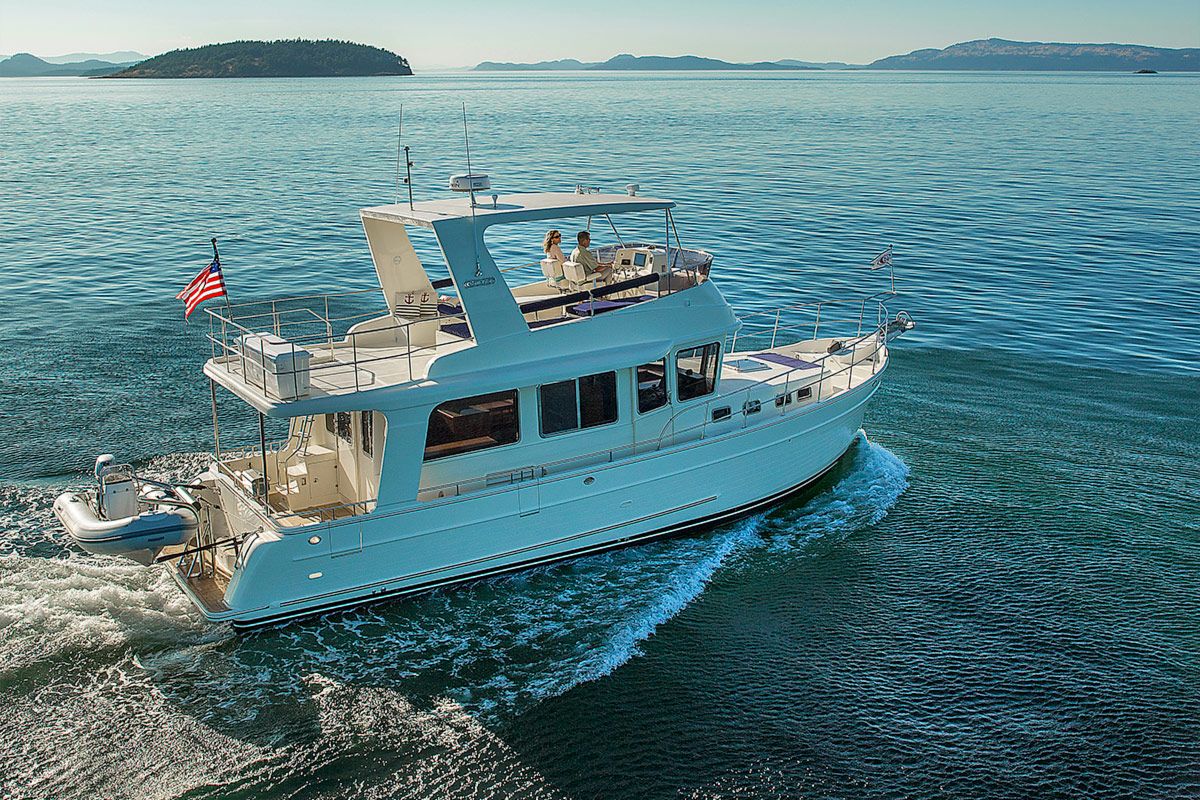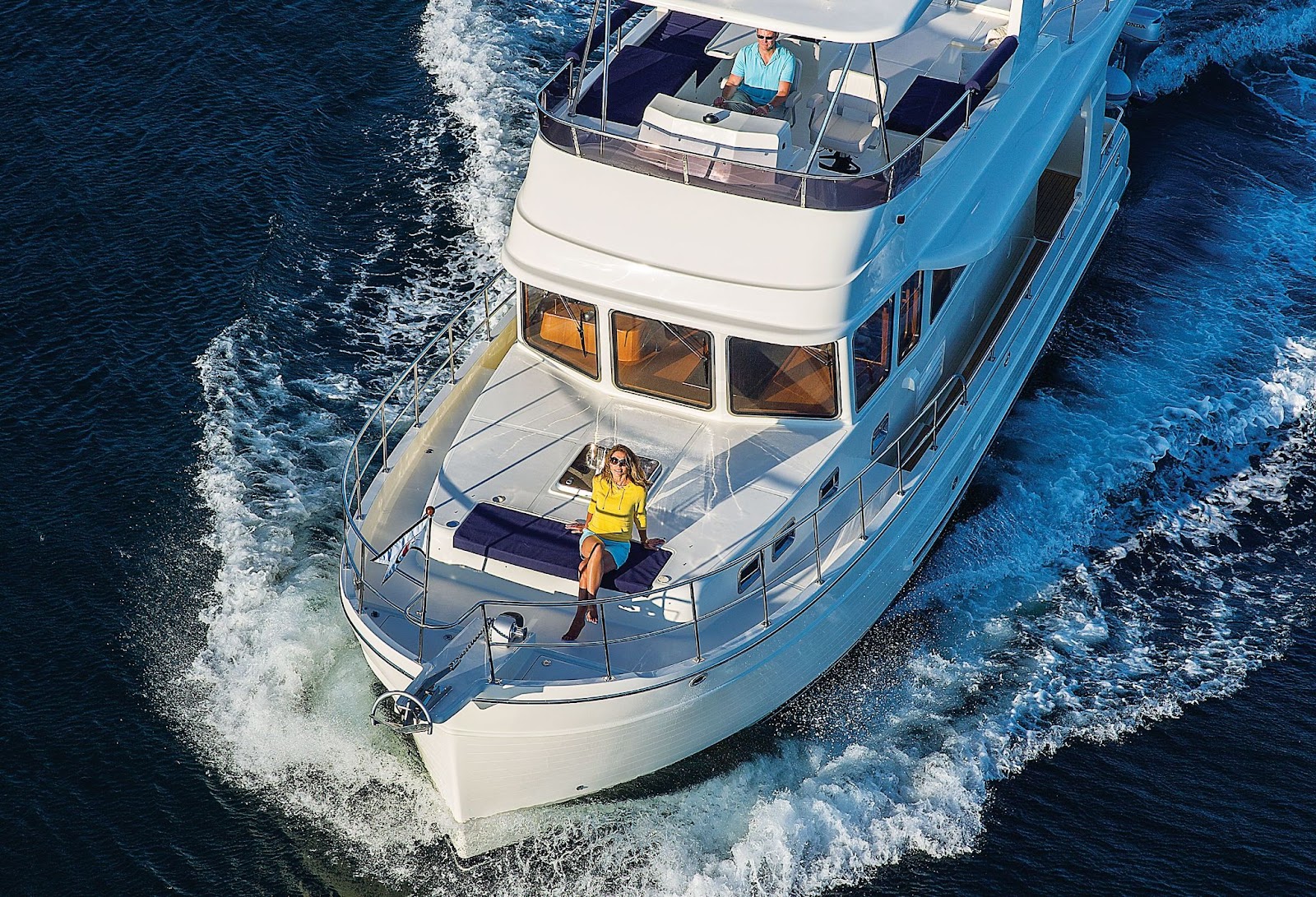
Recreational cruisers are drawn to trawlers because these boats treat time on the water as a home rather than a high-speed sprint. The appeal centers on living spaces that support daily domestic routines, an unhurried cruising pace, and a purposeful profile.
“Trawler” is a broad marketing and recreational category rather than a single naval architectural standard. Vessels carrying the label feature diverse hull geometries, single or twin engines, and widely varying displacement characteristics. Because of this variety, a boat being called a trawler does not automatically guarantee low interior noise, exceptional roll stability, a specific cruising speed, foul-weather capability, low fuel burn, or simplified handling around the dock. Instead, the enduring attraction comes down to a clear design philosophy: prioritizing interior volume, sightlines, and comfort for extended stays alongside the owner’s preferred cruising pace.
A Travel Pace That Centers on the Journey
For someone who enjoys a measured pace, time underway can be part of the attraction. The useful question is whether the particular boat’s comfortable operating pace suits the way you want to spend a day, rather than whether its category promises a particular performance.
Traveling at modest speeds allows the crew to experience passage-making as an enjoyable part of the day rather than a jarring sprint between destinations. The journey becomes the activity. Sightlines from a raised deck or pilothouse provide an expansive view of changing shorelines and water conditions.
The aesthetic presence of a trawler also drives strong personal interest. Many owners prefer the purposeful profile of a trawler—high bows, covered side decks, upright pilothouse windows, and deep bulwarks—over the sleek, swooping fiberglass lines typical of modern sport cruisers. It looks and feels like a small ship designed to spend real time on the water, which resonates with boaters planning long seasons aboard.
What Slower Speeds Ask of an Owner’s Calendar
Operating at moderate speeds requires a fundamental trade-off: time. A boat’s actual speed, the route, and conditions determine how much of your day a passage will occupy.
This pace asks owners to reframe how they structure their calendar:
- Shorter daily ranges: Passage planning must account for modest speed capabilities, meaning the day’s distance needs to fit the boat, route, conditions, and crew.
- Wider weather planning margins: Forecasts, currents, and practical alternatives belong in the plan for any boat; allow enough flexibility to change the itinerary when needed.
- Extended time commitments: Longer trips may make a slower pace easier to enjoy, but a weekend itinerary can also fit when the destinations and time available suit the boat.
Active helm watches demand sustained, disciplined vigilance regardless of speed. Cruising at a modest speed does not mean leaving the wheel unattended; spotting debris, monitoring engine telemetry, and tracking commercial traffic require the same sharp attention demanded on a faster vessel. The difference is the mental rhythm of the voyage.
Accommodations Built for Ordinary Daily Living
For owners planning substantial time aboard, accommodation may matter as much as transit performance. Compare how the particular layout supports cooking, sleeping, storage, and time together rather than assuming one yacht style has the only practical arrangement.
Interior volume translates directly into functionality during weeks at anchor:
- Galley utility: A useful galley has working space and storage that fit the meals and provisions you intend to prepare.
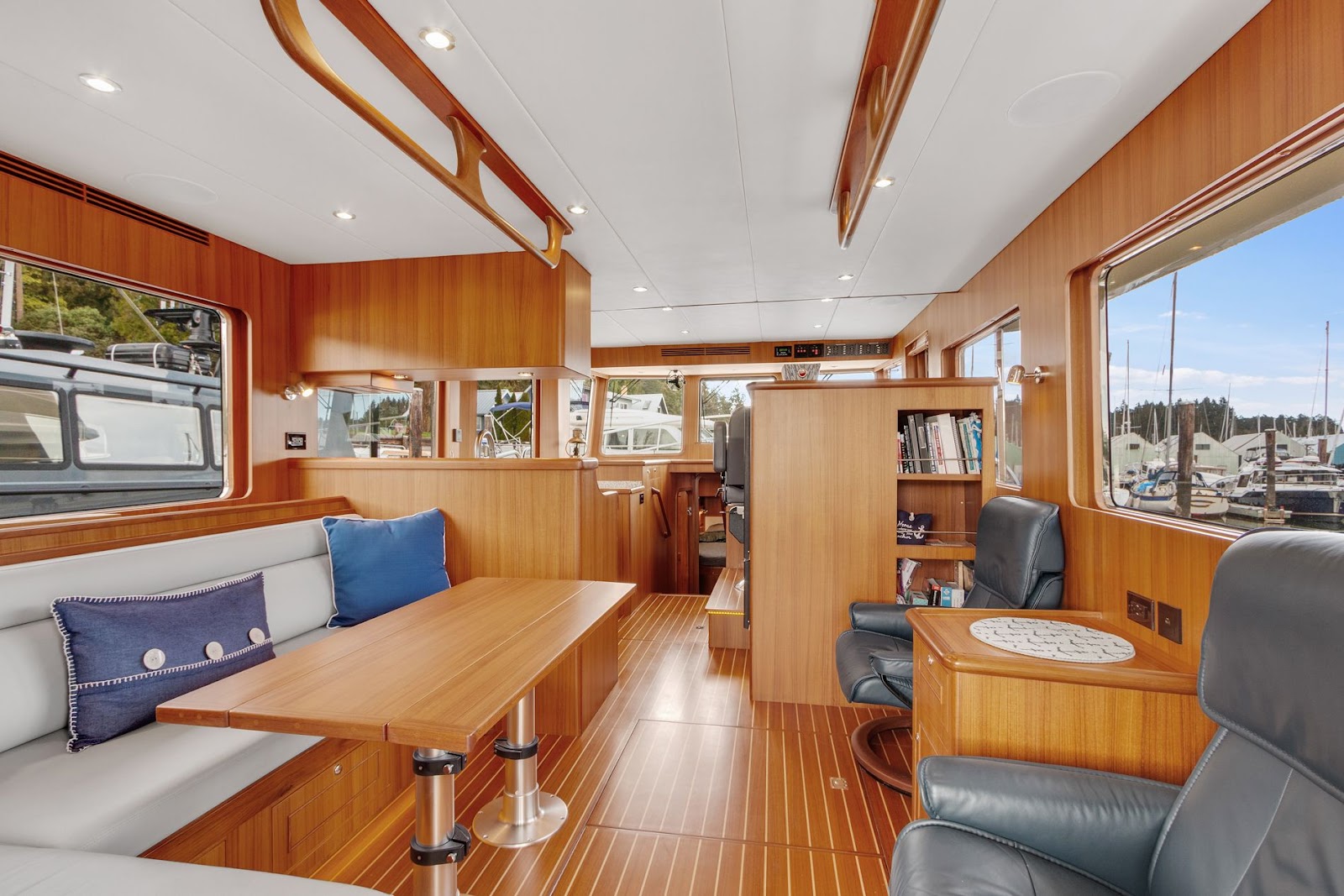
- Natural light and airflow: Window placement, ventilation, and the view from everyday seating can affect how pleasant an interior feels.
- Stateroom ergonomics: Walk-around berths eliminate the gymnastics of climbing over bedding, while dedicated storage lockers keep clothing and provisions organized over long passages.
These are useful priorities to discuss with us about a particular yacht. In our 49 Pilothouse, for example, the interior layout provides an enhanced galley with residential appliances, an island queen master stateroom, and a flexible guest stateroom for you to assess against your guest and household routines. Combined with high ceilings and large windows throughout the living areas, the layout gives a prospective owner concrete features to assess while imagining ordinary days aboard.
Evaluating Personal Preferences Before Buying
Liking the idea of a trawler is quite different from finding the right boat for your cruising reality. Because the term encompasses everything from heavy full-displacement globetrotters to lighter semi-displacement coastal cruisers, you must evaluate specific builds against your real-world usage patterns.
Reflect on these core lifestyle preferences before focusing on a particular model:
- Your cruising calendar: How much time can you allow for passages, and which destinations fit that time?
- Onboard living expectations: How much time will you spend aboard at anchor or at a dock versus actively underway? If livability outranks speed, the interior volume of a trawler makes sense.
- Mechanical comfort: Are you prepared to maintain the complex domestic systems—from refrigeration and generators to waste systems—that make extended living aboard practical?
Understanding what draws you to the design helps frame the next operational questions. Exploring whether the general category matches your practical requirements leads directly to our guide, Are Trawlers Good Boats?, which helps turn your preferences into questions for evaluating a particular boat.
Sources