A recreational trawler can be a good boat when its actual performance, layout, and operating demands fit your cruising plans. The question is whether a particular yacht meets your needs—not whether the category guarantees comfort, economy, or safe handling.
The word “trawler” is a broad marketing term, not a universal engineering standard. In today’s recreational market, it encompasses full-displacement passage makers, semi-displacement coastal cruisers, and fast planing hulls with traditional styling.
The label alone cannot tell you a yacht’s actual fuel burn, cruising range, roll period, engine room accessibility, or crew-size suitability. Deciding whether a trawler is a good boat comes down to whether a specific candidate matches your pace, destinations, crew abilities, and daily onboard routines.
Define Your Operating Profile Before You Look at Hulls
A purchase can disappoint when there is a mismatch between how an owner imagines using a boat and how they actually spend their days on the water. Before browsing listings or touring boat shows, establish your non-negotiable operational requirements across four areas.
1. Intended Cruising Pace
Ask for performance information applicable to the particular boat and its configuration. Compare the resulting passage times with your available cruising time, crew endurance, and route. If you enjoy spending the day underway, a measured pace may suit you; if reaching a distant destination quickly is essential, test that requirement directly.
2. Destination Profiles and Physical Constraints
Where you plan to cruise dictates the underwater and overhead profile you can accommodate:
- Draft considerations: Compare the boat’s actual loaded draft with current depths, tides, and any access restrictions along the intended route.
- Overhead clearance: If your itinerary includes inland routes with fixed bridges, such as parts of the Great Loop or canal systems, air draft matters as much as water draft. Confirm the actual height and any documented arrangement for reducing it; do not assume equipment can be lowered.
- Mooring and dockage limits: Confirm the candidate’s beam and length against the slips and facilities you intend to use, and obtain the applicable fees.
3. Crew Dynamics and Physical Ergonomics
The crew and the boat’s arrangement both affect operating workload. Look closely at how the yacht supports shorthanded operation:
- How can crew move between the helm and deck, and how will responsibilities be divided while keeping a proper watch?
- Are the side decks wide, flat, and protected by high bulwarks and sturdy handrails, or must you balance on narrow coamings during a wet docking maneuver?
- Are interior transitions handled with gradual stairs or steep vertical ladders? Moving between the pilothouse, saloon, and engine space should not feel like an obstacle course when the hull is rolling in a beam sea.
4. Daily Routines at Anchor vs. in Marinas
Consider where and how you expect to spend most of your time aboard. If you intend to stay in marinas, confirm the shore services available and what happens if they are interrupted. If your goal is remote anchoring for weeks at a time, interior layout, natural ventilation, appliance power demands, refrigeration capacity, and dinghy launch setups take precedence over sheer hull horsepower.
Evaluating the Core Compromises
Every yacht design is an exercise in managing competing priorities. While reviewing broad trawler pros and cons can clarify overall category trade-offs, evaluating an individual boat requires examining how specific design choices impact daily use.
| Requirement | What to verify on the candidate | Decision it helps you make |
|---|---|---|
| Passage pace | Performance information and realistic passage times | Whether the itinerary fits your available time |
| Waterway access | Loaded draft, air draft, beam, and current route restrictions | Whether planned destinations are compatible |
| Daily living | Galley, berths, storage, ventilation, and privacy | Whether ordinary routines work for your household |
| Operating workload | Deck access, sightlines, maintenance needs, and crew responsibilities | Whether the boat fits your abilities and support plans |
Candidate Evaluation: The 49 Pilothouse
To move past theoretical design specs, examine how physical dimensions and layout choices translate to real-world cruising on an actual yacht.
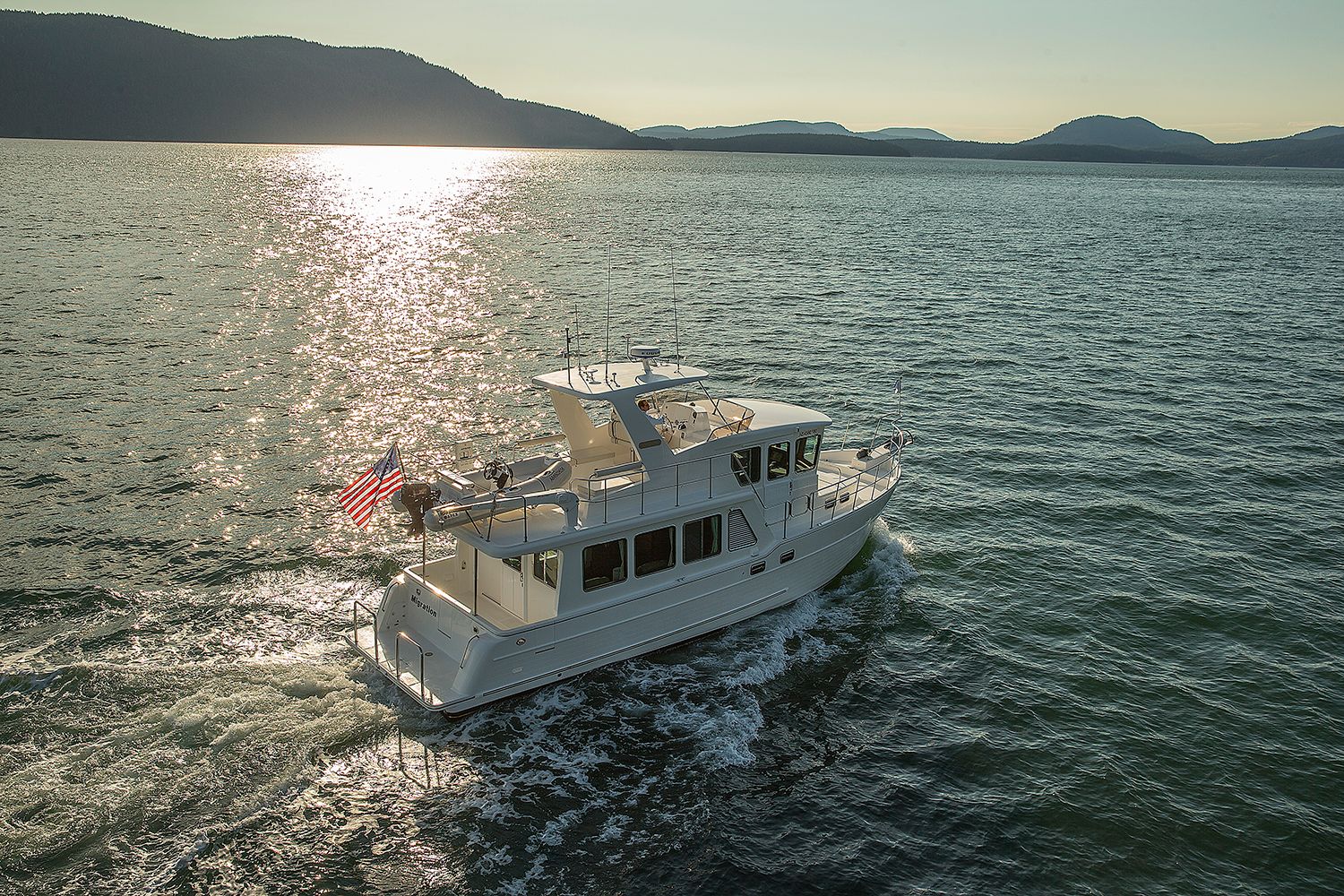
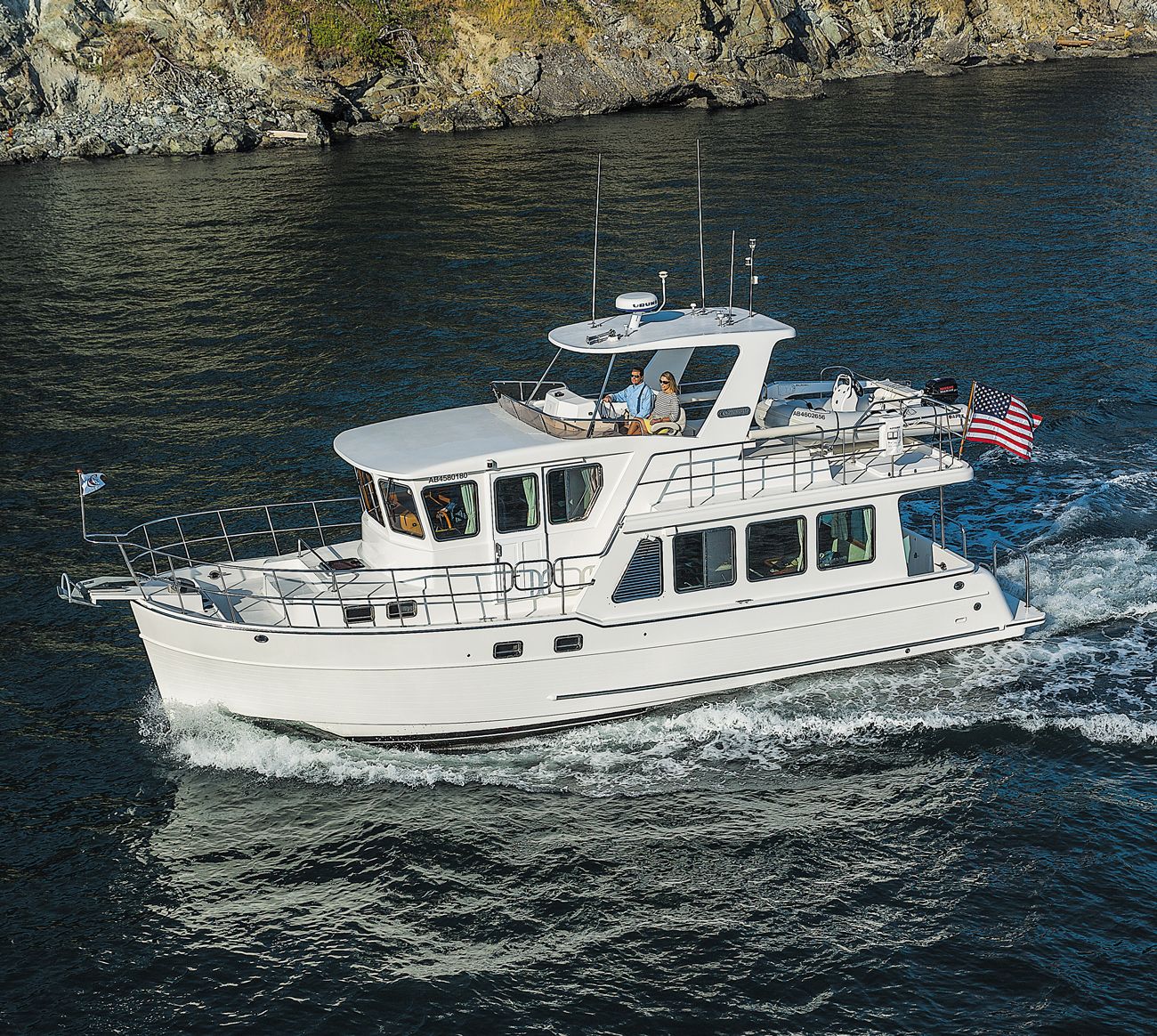
Consider our 49 Pilothouse as a candidate evaluation example.
Living Spaces and Accommodations
Extended cruising requires an interior that supports daily domestic routines without feeling cramped when poor weather keeps you inside:
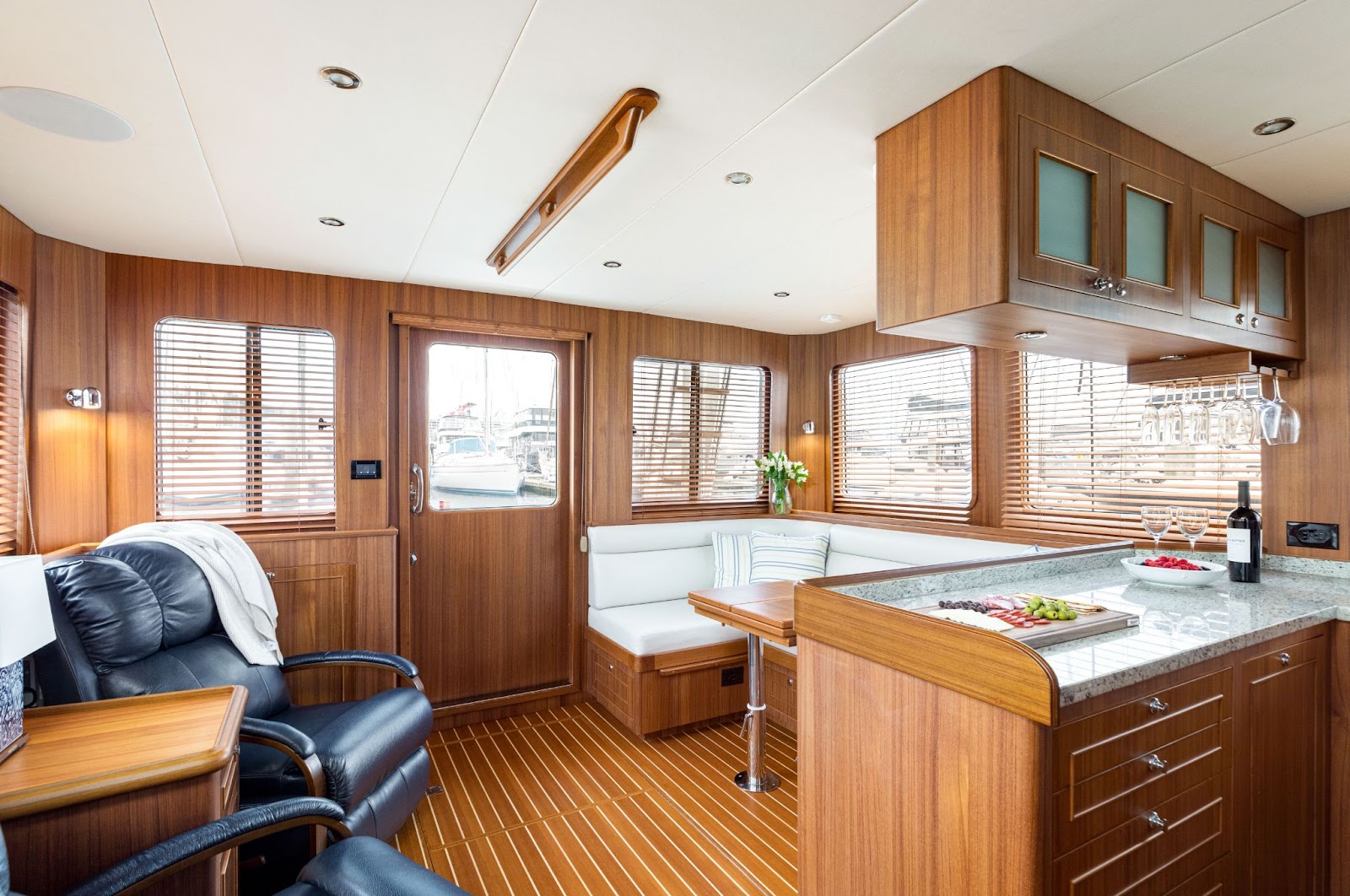
- The Living Area: The salon features high ceilings and large windows for you to evaluate from the places you expect to sit, cook, and spend time.
- The Galley: An enhanced galley with residential appliances is worth assessing against your food preparation and storage habits.
- Sleeping Arrangements: An island queen master stateroom and a flexible guest stateroom give you specific accommodation features to assess against sleeping, guest, and storage needs.
Verifying Navigational and Route Compatibility
The 49 Pilothouse carries a published draft of 4 feet, 10 inches.
When evaluating this boat—or any comparable trawler—against your cruising itinerary, that published figure is your starting metric for verifying access. It helps you assess slip availability at your home marina, approach depths along shallow coastal rivers, and bottom margins in low-tide anchorages.
Confirm the actual loaded draft and adequate clearance for the intended waters; the published dimension is not a safe-access guarantee.
Avoiding Assumed Specifications
Never assume a production or brokerage trawler includes specific off-grid capabilities simply because it looks like a passage maker. Confirm which solar, watermaking, or battery equipment is installed on the exact boat and what its documented capabilities and operating limits are.
Similarly, an ocean-going profile does not automatically mean a vessel holds an unrestricted offshore category rating. Always review the exact equipment inventory and technical documentation for each specific hull.
Acceptance Criteria: The Role of Professional Surveys and Trials
Touring a boat at the dock gives you a feel for its layout, but dockside impressions cannot verify system integrity or sea-keeping manners.
The BoatUS evaluation checklist provides a systematic approach for buyers reviewing vessels, and it explicitly incorporates a dedicated sea trial. Importantly, BoatUS notes that no checklist is a substitute for an independent, qualified marine surveyor and a competent marine engine mechanic.
Keep your evaluation structured around this division of labor:
What to Assess During the Walkthrough and Trial
- Operating Sightlines: Can you maintain a clear view of the water, instruments, and horizon from the helm when seated, standing, and running through trim changes?
- Ergonomic Access: With systems in a safe state and appropriate guidance, can you reach the routine checks and controls you are expected to use?
- Noise and Vibration: Does the hull rattle or vibrate excessively at typical cruising RPM? Can you converse normally in the salon while running underway?
- Motion at Sea: Discuss appropriate trial conditions with the professionals involved, and consider how the observed motion feels to your crew without treating one trial as proof of capability in all conditions.
What to Delegate to Accredited Professionals
Agree the survey and machinery-inspection scope with qualified professionals. Ask which tests are appropriate for the boat’s construction, age, systems, condition, and your intended use. Review the findings, limitations, and recommended follow-up before deciding whether the candidate meets your requirements.
The Verdict on Recreational Trawlers
Are trawlers good boats?
They can be, when the particular boat’s verified characteristics support your plans and its compromises are acceptable to you. The same boat may suit one crew’s itinerary and frustrate another’s.
Treat every prospective boat as a unique assembly of trade-offs. Check the published draft against your home waters, assess deck access and crew workload, insist on a comprehensive professional survey, and ensure the vessel’s layout supports how you actually live aboard.
Sources