

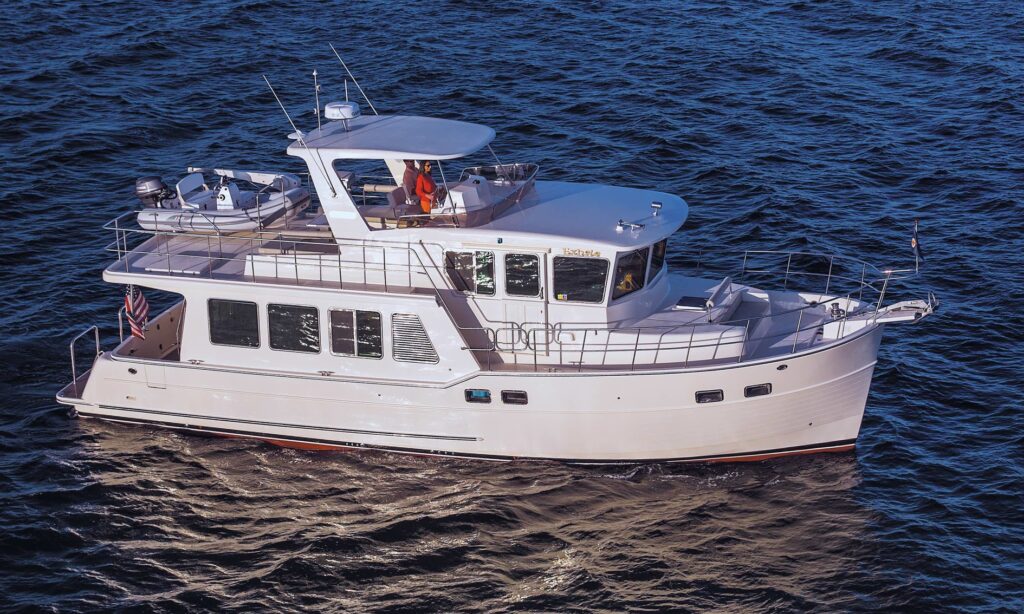
The trawler name began with a fishing method. A fishing trawler tows a trawl net; recreational yachts later adopted the name for a cruising tradition influenced by working boats. That is why a yacht can be called a trawler even though its owner has no intention of carrying fishing gear.
The name helps explain a boat’s lineage and the way people talk about it. It does not supply a complete technical description. Understanding those two uses makes yacht listings and boating conversations easier to interpret.
The Fishing Job Behind the Name
In the dictionary, the meaning of trawler is tied to a boat used in trawling. The vessel takes its name from the activity rather than from a particular length, engine or accommodation plan.
Trawling uses a net to catch fish. Different gear arrangements serve different fisheries. NOAA’s explanation of bottom trawl fishing describes a net towed along the ocean floor; that particular method should not be treated as the definition of every kind of trawling.
This distinction matters when reading the name historically. A commercial trawler is a working fishing vessel, and its equipment and arrangement follow that job. There is no need to assume every fishing trawler has the same hull shape, machinery or operating conditions to understand where the word came from.
How the Name Moved into Recreational Boating
Recreational boatbuilders used the trawler name for cruising powerboats that recalled aspects of working-vessel design. The association gave boaters a recognizable way to describe a cruising yacht, even when the boat had been designed for recreation rather than converted from a fishing vessel.
Grand Banks’ history provides one documented example of that transition. The builder records the introduction of the Grand Banks 36 in 1964 and describes its role in establishing the trawler-yacht genre. It is a useful historical milestone, rather than evidence that one boat or builder invented every recreational use of the name.
The commercial job and the recreational purpose remain different. The fishing vessel is arranged to carry out a fishery; the cruising yacht is arranged for travel and life aboard. The borrowed name connects them without making their construction or intended use identical.
What “Trawler” Means in a Yacht Listing
Today, the recreational label generally points to a family of cruising motor yachts. Boats described that way can differ in hull form, speed, machinery, layout and intended cruising pattern. Their shared label is a starting point for understanding the category.
| Use of the name | What it refers to | What to investigate next |
|---|---|---|
| Fishing trawler | A vessel used in trawling | Its fishing gear and working purpose |
| Recreational trawler yacht | A cruising yacht associated with a working-boat lineage | The actual yacht’s hull, machinery, layout and operating information |
If you want the design question rather than the naming history, our guide to what makes a yacht a trawler develops the traits commonly associated with modern cruising yachts. Keep that question separate from the origin of the word: a name can survive while the boats carrying it evolve.
The label also does not determine how a particular boat will feel to own. Interior space, maintenance access, speed, crew workload and cruising plans require a closer look. Our discussion of practical ownership tradeoffs helps you consider those everyday choices.
Use the Name as a Starting Point
When you encounter “trawler” in a listing, ask what the seller or builder means by it. Then compare the current specifications, arrangement drawings, equipment and condition of the actual yacht with your plans. Range, fuel use and suitability for a passage require evidence for that boat and its configuration.
The word remains useful because it carries a recognizable history. It connects recreational cruising with a working-vessel tradition while leaving room for different interpretations of a modern yacht. To explore how that tradition relates to your own cruising goals, contact North Pacific Yachts.