
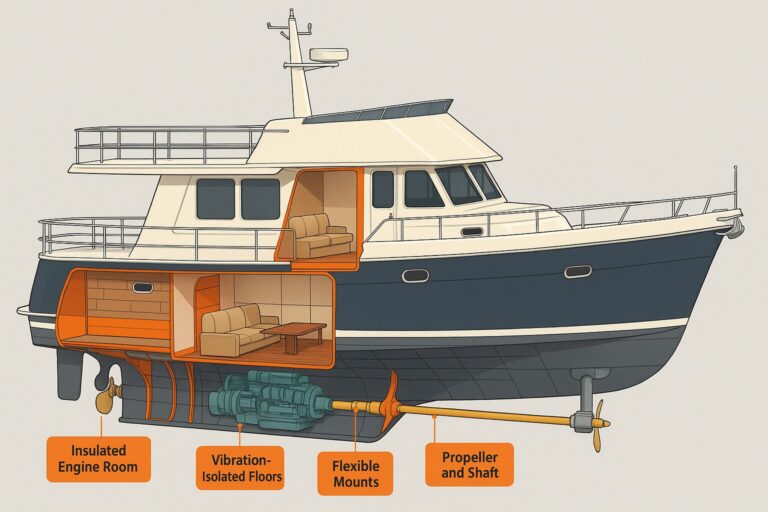
For many boaters, the charm of a trawler or pilothouse yacht comes from the feeling of calm exploration. These vessels are designed for long journeys, overnight passages, and slow cruising where comfort matters just as much as capability. Over the years, builders have focused not only on strength and efficiency, but also on creating interiors that feel quiet, stable, and pleasant even during long days on the water. A major part of that experience comes from noise and vibration control. Modern trawlers are far more comfortable than older generations. Advances in design, construction techniques, and materials have allowed builders to reduce engine noise, soften hull vibration, and minimize the constant hum that used to be expected on long passages. As a result owners can enjoy peaceful cabins, softer conversations, and less fatigue while traveling. This improvement is not an accident. It is the result of years of research, changing expectations, and smarter engineering.
Why Noise and Vibration Matter More Than Most People Think
Noise and vibration may sound like minor issues at first, but they have a big effect on comfort. When you spend hours or days aboard a boat, constant sound can wear you down. Even low level vibrations can cause headaches and make sleeping difficult. On long-range trawlers, comfort is not a luxury. It is part of safe and enjoyable cruising.
Reduced noise leads to less fatigue at the helm. It allows for normal conversation inside the salon even at cruising speeds. A quieter environment means passengers can read, rest, or simply enjoy the surrounding scenery without distraction. For overnight passages, low noise levels can make the difference between arriving refreshed or arriving exhausted. Vibration in particular affects not only comfort but also the longevity of equipment. Excessive vibration can loosen fasteners, increase wear in machinery, and create secondary noise. This is why controlling both noise and vibration has become a major focus for builders who want to deliver solid and dependable vessels.
How Modern Builders Reduce Engine and Machinery Noise
The engine room is the main source of noise on a trawler. Modern builders work hard to isolate that noise so it does not spread throughout the vessel. Several methods are used together to create a quiet experience. One of the most effective improvements has been the use of advanced sound insulation. High density foam, multi layered sound panels, and reflective barriers line the walls and ceiling of the engine room. These materials absorb noise before it escapes into living spaces. They also resist moisture and heat, which makes them suitable for marine use.
Another key improvement is the use of flexible engine mounts. Instead of bolting the engine directly to the hull, builders place it on vibration absorbing mounts. These mounts act like cushions that prevent engine vibrations from transferring into the structure of the boat. Modern mounts are precisely tuned to the weight and natural frequency of the engine, which gives excellent results. The layout of the engine room also plays a big role. Builders often design the room so the engine is placed centrally, with proper spacing around it. This reduces the number of surfaces that might carry vibrations. They also place noisy components such as generators and pumps in isolated positions or inside their own sound shields. Many modern trawlers also include upgraded exhaust systems. Water lift mufflers, larger hoses, and well positioned outlets help reduce exhaust noise both inside the boat and outside at the stern. These details make the cruising experience much more pleasant for everyone aboard.
Structural Techniques that Reduce Vibration
Noise and vibration control goes beyond the engine room. The hull, stringers, and superstructure also affect how vibration travels. Builders use several techniques to keep the boat feeling smooth and quiet even in rough water. One important change is the increase in hull stiffness. A hull that flexes too much will transmit vibrations throughout the interior. Builders now use stronger laminates, improved core materials, and carefully designed support structures to control movement. This creates a solid feeling underfoot and reduces the amount of vibration that reaches the cabins.
Advanced resin infusion and vacuum bagging techniques help builders create hulls that are both lighter and stiffer. This combination reduces vibration while improving fuel efficiency. Another benefit is consistent material quality, which means fewer voids and a more uniform structure. Some builders use floating floors or suspended ceilings inside the yacht. These systems add an extra layer of isolation between interior living spaces and the hull. Even if the hull vibrates slightly while underway, the passengers feel much less of it. This type of design has become more popular in higher end trawlers and is gradually moving into mid-range models.
Propeller and Shaft Improvements
Propulsion noise is another area where modern builders have made great progress. A well-designed propeller and shaft system can drastically reduce underwater noise and vibration. Many builders now use propellers that are computer-designed to match the exact hull shape and engine performance. These propellers reduce turbulence and blade vibration, which leads to smoother running. Some trawlers also use skewed blade propellers, which are shaped to cut through water more quietly.
Shaft alignment is another key factor. Poor alignment can cause loud vibrations that are hard to fix once the boat is built. Modern builders use laser alignment tools that ensure the shaft, engine, and gearbox are perfectly matched. This reduces wear and minimizes vibration at every speed. Some yachts use shaft isolation systems or intermediate bearings that further reduce vibration. Others use enclosed shaft tubes or thrust bearings that separate propeller forces from the engine structure. These technologies all contribute to quieter performance.
The Rise of Quiet Generators and Hybrid Solutions
Generators used to be one of the noisiest parts of any cruising yacht. Today builders offer much quieter options. Sound shields and water cooled exhaust systems help keep generator noise low. Some generators are designed to operate at lower speeds, which further reduces noise.
In recent years hybrid propulsion has also started to influence noise control. On some modern trawlers, electric motors can be used at low speeds or while docking. Electric power is almost silent compared to traditional engines. While not yet standard on all trawlers, hybrid systems are becoming more common and will likely shape the future of quiet cruising. For hotel loads at anchor, many owners now prefer large battery banks paired with inverters. This allows them to turn off the generator for long periods, creating a peaceful environment inside the yacht.
Why These Improvements Matter for Today’s Cruisers
The expectations of trawler owners have changed. People want the ability to travel far while feeling relaxed and comfortable. They want to enjoy quiet evenings at anchor and smooth days underway. Builders have responded by making noise and vibration control a priority in modern designs.
These improvements benefit everyone on board. Families can sleep better during overnight passages. Helm operators face less fatigue. The interior feels more like a floating home instead of a loud machine room. Even guests who have never cruised before are surprised by how peaceful a modern trawler can be. All these changes show that comfort is not just an added feature. It is part of what defines modern yacht building. By focusing on noise and vibration control, builders have made trawlers more enjoyable, safer, and better suited for long adventures
Contact Us
We turn your cruising dreams into reality by developing bespoke trawler and pilothouse yachts built for comfort, safety, and performance. From the initial hull design to the final varnish, our experienced naval architects and craftsmen collaborate with you every step of the way, integrating fuel-efficient engines, ergonomic deck layouts, and beautifully appointed living spaces. With industry-leading warranties and personalized support, we make sure your new yacht feels like home the moment you step on deck. Reach out to us by email at info@northpacificyachts.com for personalized responses to all your inquiries. If you’d prefer a conversation, we invite you to give us a call at 1-877-564-9989.