
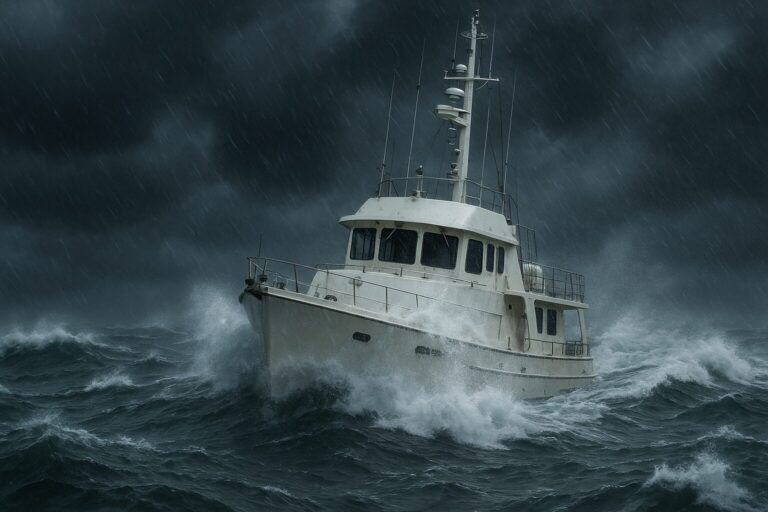
Venturing into the open ocean aboard a purpose-built trawler or pilothouse yacht offers unparalleled freedom and tranquility, yet even the most rugged vessels must contend with the power of wind and swell. When dark clouds gather and seas grow unsettled, having a clear plan, knowing how to ready your boat, steer through mounting waves, and regroup once the worst has passed can mean the difference between a tense ordeal and a secure passage.. Here’s a practical guide to help you handle rough seas with confidence and keep your crew and your yacht secure.
Know Your Yacht
Before casting off, it is essential to develop an intimate understanding of how your trawler or pilothouse yacht behaves under varying sea conditions. Spend time underway in moderate chop to observe how the hull responds when waves strike the bow compared to the stern. Pay attention to the boat’s roll and pitch angles at different speeds, noting whether it tends to slam into waves or ride them more smoothly. Recognize how shifting weight, such as full fuel tanks or water tanks, affects the trim; a stern-heavy vessel may bury its transom when following waves build, increasing the risk of green seas washing across the cockpit. By running through these observations, you’ll gain a clear picture of the vessel’s tendencies, which helps anticipate behavior in heavier weather.
Equally important is verifying that all critical systems are in top working order before departure. Inspect through-hull fittings for leaks, ensure bilge pumps activate automatically when water reaches their float switches, and verify that engine mounts exhibit minimal play. Confirm that navigation electronics, particularly chartplotters and radar overlays, are updated with the most recent charts and software. If your trawler has stabilizing devices, such as trim tabs or a gyroscopic stabilizer, test these systems in gentler seas to become familiar with their operation.
Preparation Is Key
Effective preparation begins days before you leave the dock. Monitor weather forecasts from multiple reputable marine sources, comparing predicted wind speeds, wave heights, and storm tracks. Reviewing tidal currents and local surge patterns is equally important, since strong ebb or flood currents can exacerbate sea conditions in constricted channels or near shallow banks. Plot your intended route to avoid areas where high seas may combine with unfavorable currents, and identify potential lee shores or sheltered harbors where you can seek refuge if conditions worsen. This proactive approach allows you to adjust your schedule or choose an alternative track rather than being caught in deteriorating weather.
In parallel, secure every loose item on board to prevent injuries or equipment damage once the seas build. Stow lines, fenders, and deck gear into well-fastened lockers; ensure cabin tables and movable furniture are properly lashed. Tighten all hatches and seal windows to minimize water intrusion, and verify that companionway boards lock securely. Gather safety equipment—life jackets, harnesses, tethers, and jacklines and brief your crew on their proper use. Conduct a calm, straightforward discussion about expectations, emergency procedures, and individual roles during a storm, including man-overboard and abandon-ship drills.
Riding Out the Storm
When the wind begins to howl and waves steepen, adjusting both speed and heading is critical to maintaining control and comfort. Ideally, steer at an angle of roughly 30–45 degrees off the bow of oncoming seas to reduce the impact of waves and lower the risk of broaching or a green sea breaking over the stern. Maintain enough forward motion to preserve steerage; slowing excessively risks drifting sideways into larger waves, which can slam the hull and lead to structural stress or loss of control. If the conditions escalate, consider deploying a sea anchor or drogue to slow your drift and stabilize the hull’s orientation, particularly if you lack sufficient engine power to hold a steady course against heavy wind and current.
While underway in rough seas, remain vigilant of engine and fuel-system performance. Monitor engine temperatures and oil pressure closely, listening for unusual vibrations or knocking sounds that could indicate a compromised cooling system or cavitation problems. Avoid abrupt course corrections; smooth, deliberate helm movements help the boat track predictably and reduce strain on the rudder and steering hydraulics. Keep a close watch on your gauges, and be prepared to throttle back if the engine begins to overheat.
Staying Safe Above All
Safety on deck becomes paramount when waves are unpredictable and spray or whitecaps threaten to sweep over the cockpit. Every person on board should wear a properly fitted life jacket or buoyant work vest at all times, and rig jacklines so crew members can clip in securely when moving forward. Assign one crew member as a dedicated lookout, tasked with scanning for floating debris, shifting breakers, or sudden wind gusts that could knock someone off balance. Keep your VHF radio turned to a channel monitored by nearby vessels or rescue services, and verify that your Emergency Position Indicating Radio Beacon (EPIRB) and signal flares are readily accessible in case a mayday becomes necessary.
Trusting your instincts is as important as trusting your equipment. If wave heights or wind speeds exceed your comfort threshold, especially if you notice the boat wallowing or taking on water unexpectedly, it is far safer to reduce speed and alter course toward a sheltered area. Never hesitate to change plans or seek refuge if conditions spiral beyond those forecasted.
After the Weather Subsides
Once the sea state begins to calm, don’t assume that everything has returned to normal. Conduct a thorough hull inspection to identify any fresh dents, scrapes, or pressure marks along the hull and keel. On deck, examine all railings, cleats, and hardware fittings for any signs of loosening; heavy seas can torque fasteners and cause metal fatigue. Below decks, look for water stains, moisture around hatches, and evidence of leaks near through-hull fittings or plumbing penetrations. Saltwater is corrosive, so flush your anchor windlass, winches, and steering gear with fresh water to remove salt crystals that can accelerate wear.
Check the engine room for water accumulation in bilges or signs of oil contamination in the sump—if water or debris is present, change the engine oil and filter promptly to prevent long-term damage. Open all lockers and compartments to air out damp areas and discourage mildew growth. Finally, gather your crew for a debriefing: discuss which tactics worked well and where your preparations might be improved.
Why Choose North Pacific Yachts Services
We turn your cruising dreams into reality by developing bespoke trawler and pilothouse yachts built for comfort, safety, and performance. From the initial hull design to the final varnish, our experienced naval architects and craftsmen collaborate with you every step of the way, integrating fuel-efficient engines, ergonomic deck layouts, and beautifully appointed living spaces. With industry-leading warranties and personalized support, we make sure your new yacht feels like home the moment you step on deck. Reach out to us by email at info@northpacificyachts.com for personalized responses to all your inquiries. If you’d prefer a conversation, we invite you to give us a call at 1-877-564-9989.
Before casting off, it is essential to develop an intimate understanding of how your trawler or pilothouse yacht behaves under varying sea conditions