
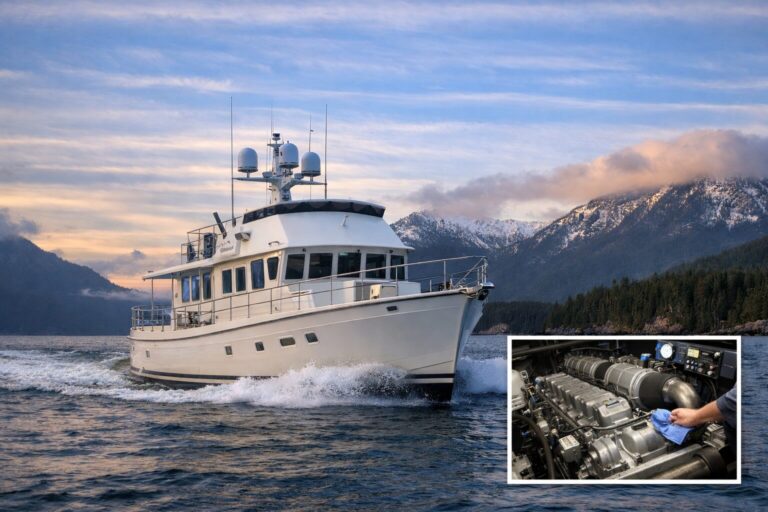
When people shop for a trawler or pilothouse yacht, one of the first things they ask about is engine hours. The moment they hear a number like 8,000 or 10,000 hours, concern usually follows. In the world of cars, that would sound like the end of the road. In the world of trawlers, it often means the opposite. Trawlers are built for long-range cruising, steady operation, and decades of service. The engines that power them are not lightly stressed recreational motors. They are commercial-grade diesel engines designed to run day after day at consistent speeds. When you understand how these engines are built and how they are used, high hours stop being something to fear and start becoming a sign of reliability. In the North Pacific especially, trawlers and pilothouse yachts are used in demanding conditions. Cold water, long distances, and real working schedules shape how these boats are designed and maintained. A well-cared-for engine with 10,000 hours can be a safer and more predictable choice than a low-hour engine that has spent years sitting idle.
Why Trawler Engines Are Built for Long Life
The engines used in trawlers are very different from those found in planing yachts or fast sport boats. Speed is not the priority. Longevity, efficiency, and durability are. These engines are often based on commercial fishing or industrial designs, with heavy blocks, large bearings, and conservative power output. Most trawler engines operate well below their maximum rated horsepower. This means they are not pushed hard. Running at lower stress levels reduces heat, wear, and internal pressure. Over thousands of hours, this makes a major difference in engine health.
Another key factor is operating speed. Trawler engines typically run at steady RPMs for long periods. This is ideal for diesel engines. Frequent starts, stops, and rapid speed changes cause more wear than steady operation. A trawler cruising for days at a consistent pace is giving its engine one of the easiest possible working lives. In commercial marine use, it is common for properly maintained diesel engines to run 20,000 to 30,000 hours before needing major work. From that perspective, 10,000 hours is not the end of life. It is often just the midpoint.
Hours Matter Less Than Maintenance and Usage
Engine hours are just one piece of the story. How those hours were accumulated matters far more. An engine that reached 10,000 hours through regular long-distance cruising is usually in better shape than an engine with 2,000 hours of short trips, long storage periods, and inconsistent care. Regular use keeps seals lubricated, internal parts moving, and corrosion at bay. Engines that sit unused for long periods often develop more issues than engines that are run consistently. Fuel systems degrade, injectors clog, and internal surfaces can suffer from moisture buildup.
Maintenance records tell the real story. Oil changes at proper intervals, cooling system service, valve adjustments, and fuel system care all matter more than the raw hour count. A high-hour engine with complete service history is often a safer investment than a low-hour engine with missing or irregular maintenance. Professional inspections are also critical. Compression tests, oil analysis, and cooling system checks provide a clear picture of an engine’s condition. These tests can reveal whether an engine has many healthy years ahead or needs attention soon, regardless of the number on the hour meter.
Rebuilds, Overhauls, and What 10,000 Hours Really Means
One reason high-hour engines are less intimidating in trawlers is that marine diesel engines are designed to be rebuilt. Unlike many modern automotive engines, these engines are serviceable. Cylinders, bearings, injectors, and turbochargers can all be renewed. Reaching 10,000 hours does not mean an engine is worn out. It often means it may be approaching a scheduled overhaul window depending on the model and how it was run. In many cases, major components may already have been refreshed, extending the engine’s life even further.
An engine that has had a documented top-end rebuild or major service can be an excellent choice. It combines proven reliability with renewed components. In some cases, an engine with higher hours and recent professional work is a better option than a low-hour engine that has never been opened or inspected internally. It is also worth noting that rebuilds are part of normal life cycles for commercial-grade engines. This is not a failure. It is planned longevity. When buyers understand this, the fear around high-hour engines fades quickly.
Real-World Experience in the North Pacific
The North Pacific is not forgiving. Boats that operate here must be dependable. Many trawlers and pilothouse yachts in this region have engines well beyond 10,000 hours and continue to operate safely and efficiently. Long passages, cold waters, and limited repair options at sea mean owners prioritize reliability above all else. Engines that have proven themselves over thousands of hours earn trust. A high-hour engine that has performed consistently in these conditions is often a known quantity, with predictable behavior and well-understood maintenance needs.
Experienced trawler owners often say they would rather cross open water with an engine that has already run for 10,000 solid hours than one that has barely been used. Proven systems inspire confidence, especially when conditions are challenging. This perspective is one reason why high-hour trawlers retain value in serious cruising markets. Buyers who understand these boats know that the number alone does not define the engine’s future.
Choosing the Right Mindset When Evaluating Engine Hours
When looking at a trawler, it is important to shift your mindset away from automotive thinking. Marine diesel engines live in a different world. Hours are expected. Longevity is designed in from the start. Instead of asking whether 10,000 hours is too much, the better questions are how the engine was used, how it was maintained, and what its current condition is. Answers to these questions provide real insight and peace of mind.
A thorough survey by a qualified marine professional is essential. Combined with maintenance records and honest usage history, it gives a clear picture of what lies ahead. Often, buyers are pleasantly surprised to learn that a high-hour engine still has many reliable years left. In trawlers and pilothouse yachts, especially those built for serious cruising in places like the North Pacific, high hours are not a warning sign. They are a sign that the boat was used as intended.
Final Thoughts on Confidence and Capability
High-hour engines can feel intimidating at first, especially for buyers new to trawlers. But once you understand how these engines are built, how they are used, and how long they are meant to last, the fear disappears. Ten thousand hours is not a red flag on a trawler. In many cases, it is proof of a life well lived and a system that has done exactly what it was designed to do. With proper care, documentation, and professional evaluation, high-hour engines can deliver dependable performance for many years to come. For serious cruising, reliability matters more than low numbers. In the world of trawlers, experience often counts more than youth, and an engine with a long, well-documented history can be one of the most reassuring features on board.
We turn your cruising dreams into reality by developing bespoke trawler and pilothouse yachts built for comfort, safety, and performance. From the initial hull design to the final varnish, our experienced naval architects and craftsmen collaborate with you every step of the way, integrating fuel-efficient engines, ergonomic deck layouts, and beautifully appointed living spaces. With industry-leading warranties and personalized support, we make sure your new yacht feels like home the moment you step on deck. Reach out to us by email at info@northpacificyachts.com for personalized responses to all your inquiries. If you’d prefer a conversation, we invite you to give us a call at 1-877-564-9989.