

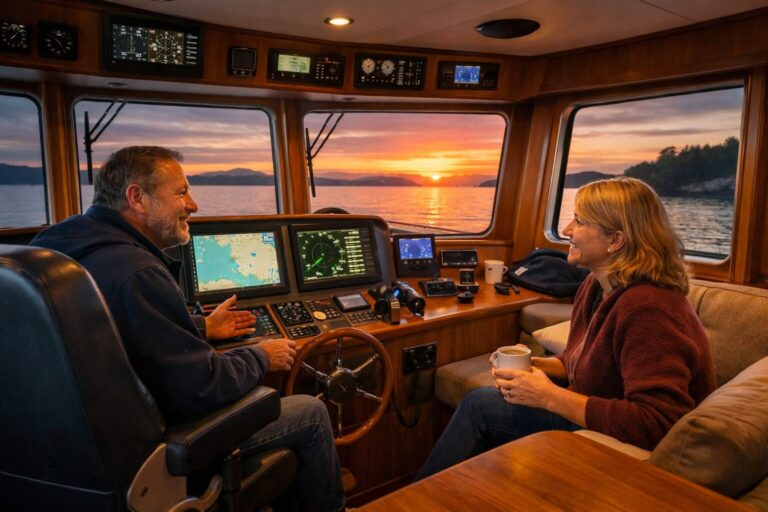
A well-designed pilothouse serves two distinct masters: it is an operational command center while underway and a social observation lounge when the hook is down. Bridging those roles requires an interior layout that allows guests to relax without cluttering working surfaces, crowding helm seats, or distracting the skipper during close-quarters handling.
Evaluating a yacht’s pilothouse means looking beyond aesthetic finishes to examine physical clearances, sound dynamics, and how real crews move through the space across a day on the water.
Gathering at the Helm While at Rest
At anchor or tied up in a marina, the pilothouse naturally functions as an alternate salon. The view and seating may make it an appealing place for morning coffee or a conversation while securely at rest. Try the actual seats rather than assuming an elevated space offers every guest the same view.
-
Sit where each companion would normally gather.
-
Check the view, table use and room to move.
-
Keep controls and needed access points clear even while securely at rest.
Managing Footprint, Personal Gear, and Console Clearances
A pilothouse accommodates groups comfortably only if personal items remain separated from working vessel controls. The number of people who can gather comfortably depends on the actual seating and available space.
Key considerations for managing gear and movement include:
-
Dedicated drop zones: Handheld VHF radios, tablets, sunglasses, cell phones, and binoculars need secure ledges with sea rails or fiddles. If a layout lacks dedicated stowage near the settee, those items inevitably migrate onto the dash brow or console flat surfaces.
-
Clear thoroughfares: Crew members moving from the salon stairs out to the side doors should never have to squeeze past guests seated at the pilothouse table.
-
Seat rotation clearances: Companion and helm chairs should swivel toward the settee to join conversations at rest without striking the table edge or blocking access to the electrical panel.
For operational roles and reports, our separate guide on crew communication addresses how the helm and deck share information. This social-use assessment focuses on where companions can gather without crowding the working space.
Transitioning from Social Lounge to Active Wheelhouse
The line between a casual social space and an active working helm must remain distinct. Whether conversation is appropriate underway depends on the operator’s workload and conditions. Agree that social discussion can pause or move elsewhere whenever the helm needs attention.
When entering a crowded harbor, maneuvering near commercial tug traffic, running a shallow inlet, or handling lines during an approach, the pilothouse must function exclusively as a bridge. Social conversation should naturally pause or migrate elsewhere.
You can gauge how well a boat supports this transition by evaluating its secondary gathering spaces:
-
Salon connectivity: Can off-watch crew step down into the salon without feeling banished, maintaining easy access to cold drinks and comfortable seating?
-
Exterior escapes: Which alternative gathering places can guests reach appropriately in the current conditions without passing through the operator’s working space?
-
Sound separation: Can guests talk at normal conversational volume in the galley or aft deck without their voices carrying directly into the skipper’s primary field of attention?
Setting expectations early ensures everyone aboard understands when the wheelhouse is open for casual socializing and when the helmsperson needs quiet focus to manage the vessel.
Pilothouse Layout Details: The North Pacific 49
Examining physical clearances on a specific platform illustrates how these practical requirements come together. For example, our 49 Pilothouse interior has room for two Stidd or Llebroc helm seats and an L-shaped settee with a table aft of them. It also has two opening doors and three sliding windows.
The documented arrangement is a useful starting point for a visit: sit at the settee, try the table with normal personal items, and observe the available routes. These features do not establish a guaranteed clear corridor or identical sightlines for every occupant.
Evaluating Your Pilothouse Routine
Before finalizing a yacht design or refit, spend time sitting in the pilothouse with the exact group of people you cruise with most frequently.
Ask practical questions about daily life aboard:
-
Can someone step away from the settee to grab a drink from the galley without forcing the helmsperson to adjust their chair?
-
When looking across the console at night, do the cabin lights over the settee spill glare onto the windshield, or can the social area be screened off?
-
Where will daily charging cords, guidebooks, and handheld electronics live during a three-week trip?
If you want to review deck layouts, compare single or dual helm seat spacing, or walk through window and door placements on the water, talk with us to discuss how our pilothouse designs fit the way you and your crew spend time aboard.