

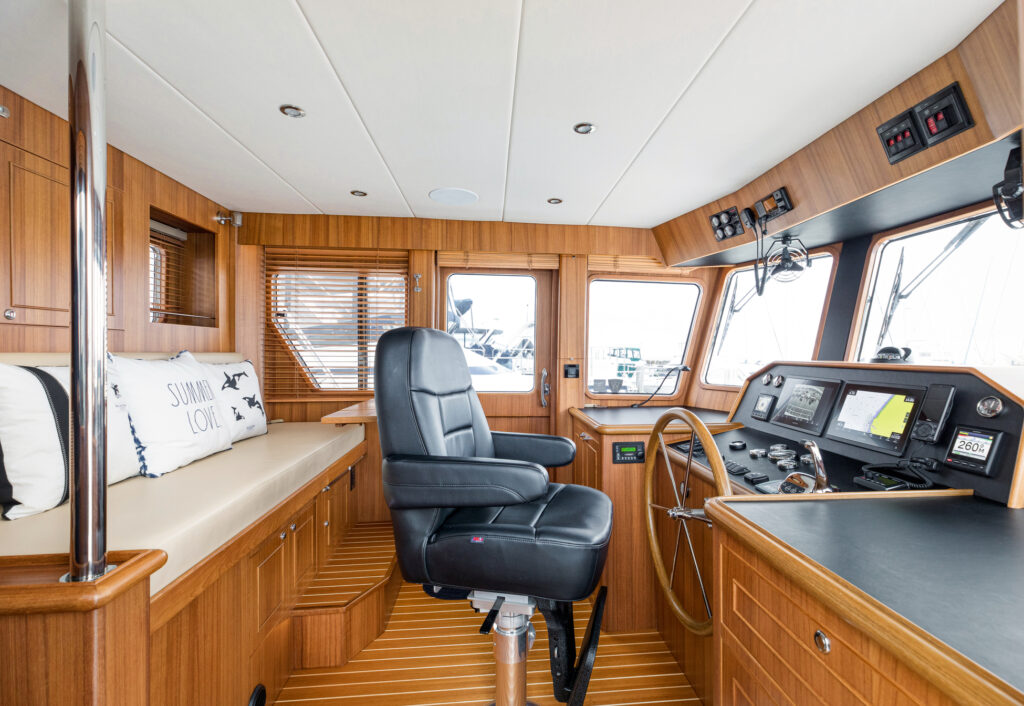
Long-range cruising plans take shape long before lines are cast off, but the reality of living aboard only reveals itself once you spend months away from home port. Marketing brochures highlight equipment lists; actual passages test how physical space, operational visibility, and daily routines function when weather deteriorates or anchorages run thin.
Over the years, our owners have tested these principles across vastly different bodies of water. Looking at their published experiences shows how distinct cruising goals shape boat choice, gear selection, and route timing.
Three Months to Glacier Bay: The Pacific Northwest Shakedown
In the October 2018 issue of PassageMaker, Peter A. Robson reported that Patti and Andrew Atkins had returned from a three-month shakedown cruise aboard their North Pacific 45 Pilothouse, traveling from Seattle to Glacier Bay, Alaska. As described in the Atkins’ 2018 cruising account, they were experienced boaters: they had previously owned a North Pacific 43, spent nearly seven years circumnavigating on a sailboat, and operated a boatyard and marina in Ontario.
Their experience gives the journey useful context. This was one couple’s reported trip aboard one yacht, undertaken with substantial boating experience. For someone considering a similar ambition, it raises questions about preparation, the time available and the experience each person brings to the boat.
From the Great Loop to Maine: Accumulating Atlantic Sea Miles
Rick Ginsburg and Mary Silverstein’s story follows a different progression. In Soundings in 2021, Pim Van Hemmen reported that they bought a North Pacific 49 Pilothouse in 2016 and took it to the Florida Keys, the Bahamas and around the Great Loop. They later took delivery of a North Pacific 49 Euro Pilothouse in December 2020 and headed for Maine in April 2021.
Rick and Mary’s 2021 cruising account describes the couple aboard Exhale in Maine, where they were enjoying the scenery and time with friends. Their history is useful because it shows how one cruising life can include several different destinations and an evolving preference for the boat’s interior. It gives a prospective owner a reason to think beyond the first season: which routines would you want to keep, and which would you want to change after more time aboard?
What These Journeys Can Help You Ask
These are individual historical experiences, rather than a route plan for the next boat. Their useful connection is the relationship between the people, their boating experience and the time they wanted to spend aboard. Start with your own crew and goals, then investigate the particular waters, equipment and support your trip would require.
Questions to Ask Before Finalizing Your Yacht Layout
The spaces you use every day deserve attention when planning extended time aboard. Our North Pacific 45 Pilothouse has a teak-finished interior, a salon, galley, guest stateroom and queen island master berth. Consider how the particular arrangement would work for your crew.
When you evaluate a floor plan for multi-month itineraries, take these practical questions to the layout drawing:
- How does the galley integrate with the helm and salon underway? Meal preparation at sea requires secure bracing and continuous communication with the watchstander. Check the particular galley and helm arrangement, including how people communicate without distracting the watchstander.
- Where does wet gear live? Coming inside from a wet anchor retrieval in Alaska or a rainy line-handling evolution in an Erie Canal lock raises questions about where wet clothing can be stowed and dried. Consider where boots, foul-weather bibs, and life vests dry without dripping through main living spaces.
- What is the real sleeping arrangement off-watch? Centerline queen island berths offer easy access from both sides without climbing over a partner, but berth orientation, mattress support, and engine room sound insulation directly impact sleep quality while at anchor in a roll or when running overnight.
- Does your guest stateroom serve dual purposes? Occasional visitors need privacy, but full-time cruisers spend months with empty guest berths. Look at how easily second cabins convert into dry storage, an office, or workshop space.
These historical accounts capture individual owner choices at a specific point in time; they do not establish current factory specifications or guarantee safety across future voyages. Exact yacht configurations, equipment choices, and weather conditions dictate how any individual vessel performs on passage.
Planning Your Next Season
Every extended cruise is ultimately an exercise in planning around your crew’s limits and your chosen route’s physical constraints. Credited owner accounts offer a starting point for discussing what you want from life aboard.
To review current build options, layouts, and machinery choices across our current models, review our design specs or talk with us directly to discuss your specific cruising itinerary.