
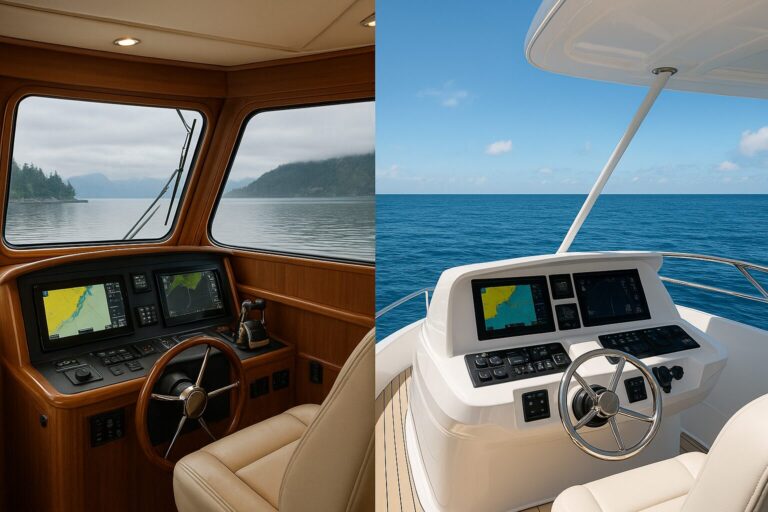
For many boaters, choosing between a pilothouse and an open bridge yacht can be one of the hardest decisions in the buying process. Both styles offer their own kind of freedom and luxury, but they also reflect very different boating lifestyles. The choice often depends on how and where you plan to cruise, what kind of comfort you value most, and how you enjoy spending your time on the water.
Understanding the Basics
A pilothouse yacht is designed with an enclosed helm area, typically elevated above the main deck. It provides excellent visibility and protection from the elements while offering a comfortable interior that can be used year-round. The pilothouse is ideal for extended cruising and colder climates, making it a favorite among long-range cruisers and those who venture through unpredictable waters.
An open bridge, on the other hand, embraces the outdoor experience. Sometimes called a flybridge, it features an upper steering station that is open or semi-enclosed, offering panoramic views and a connection with the environment. Boaters who enjoy sunshine, fresh air, and socializing often gravitate toward open bridge designs.While both styles share the same purpose of control and navigation, the difference in design can completely change your onboard experience.
Comfort and Weather Protection
One of the main considerations in this debate is comfort. In a pilothouse yacht, you are shielded from wind, rain, and cold temperatures. The enclosed space provides a quiet, climate-controlled environment, which is especially valuable when cruising through regions like the Pacific Northwest, where weather conditions can shift rapidly. The pilothouse allows year-round use of the vessel without worrying about exposure to the elements.
An open bridge yacht, in contrast, is all about feeling the sea breeze and soaking up the sun. It creates a social atmosphere where family and guests can relax while the captain navigates. However, it offers little protection from harsh weather, and even with bimini tops or enclosures, conditions can become uncomfortable in rain or strong winds. Open bridges are ideal for warm-weather boating and short coastal trips rather than long, all-season voyages.
Visibility and Navigation
Visibility is critical for safe navigation, and both designs handle it well but in different ways. A pilothouse offers an elevated helm position and wide, wraparound windows that provide a commanding view of the surroundings. The interior layout often integrates advanced navigation equipment, allowing captains to operate the vessel efficiently even in rough seas or at night.
An open bridge provides even greater visibility since there are no walls or window frames to obstruct the view. It gives captains a clear line of sight in every direction, which is especially helpful when docking or maneuvering in tight spaces. However, in rough weather or cold conditions, standing at an exposed helm can be challenging.
Social Space and Lifestyle
Your boating lifestyle plays a big role in this decision. Pilothouse yachts are designed for comfort and extended cruising The enclosed helm is often part of a larger living area, giving you a cozy retreat where you can pilot the boat, dine, or relax in the same environment. It feels more like a home on the water, ideal for families or couples who enjoy long voyages or liveaboard adventures.
An open bridge yacht offers a more social and leisure-oriented layout. The upper deck becomes a gathering point, often equipped with seating, sunpads, or even wet bars. It is perfect for entertaining guests, enjoying sunsets, or spending a relaxed afternoon at anchor. The open-air setting enhances the sense of freedom that many boaters crave.
Safety and Practicality
Safety is another factor that can influence your choice. The enclosed pilothouse design keeps the helm and navigation systems protected from salt spray, moisture, and sun exposure, extending the life of your electronics and instruments. The solid structure also provides a safer operating environment in rough seas, reducing fatigue and improving concentration for the captain.
In open bridge yachts, the exposure to wind and salt requires more maintenance. Equipment and seating may need frequent cleaning or covering, and navigation instruments must be well protected. Access between decks can also be more challenging in heavy seas. While these yachts perform beautifully in calm waters, they may not be as practical for long offshore passages or colder climates.
Performance and Efficiency
Both yacht styles can deliver excellent performance, but the pilothouse design tends to offer better aerodynamics and fuel efficiency due to its enclosed structure. It cuts through the wind with less drag and provides a more stable ride in choppy conditions. The lower center of gravity also enhances stability, making it a good option for long-distance cruising.
Open bridge yachts usually sit higher, which can affect stability in rough weather, though modern designs have improved significantly. Their lighter topside construction can give them a slightly faster feel, but they may require more fuel in windy conditions. The choice between the two depends on whether you prioritize all-weather capability or open-air enjoyment.
Climate and Cruising Grounds
Geography often determines which design suits you best. In the North Pacific, where temperatures are cooler and weather can be unpredictable, pilothouse yachts are extremely popular. The enclosed design allows you to cruise comfortably in rain, fog, or chilly winds without sacrificing visibility or control.
Open bridge yachts shine in tropical or temperate waters where calm seas and sunny skies are the norm. If your cruising lifestyle revolves around short day trips, coastal exploration, or leisurely island hopping, the open bridge provides a perfect balance of comfort and outdoor fun.
Ownership Experience and Maintenance
Owning a pilothouse yacht often means less exposure-related maintenance. The interior helm and navigation equipment are well protected, and the enclosed structure helps preserve finishes and upholstery. However, the pilothouse design can come with higher initial costs due to its complex structure and premium insulation features.
An open bridge yacht may be more affordable initially, but maintenance costs can rise over time because of exposure to salt, sun, and moisture. Upholstery, electronics, and finishes need regular care. On the other hand, it’s easier to customize or refit an open bridge area, allowing owners to tailor it to their personal style.
Making the Right Choice
Ultimately, the choice between a pilothouse and an open bridge yacht comes down to how and where you plan to cruise. If you value protection, long-range capability, and year-round comfort, a pilothouse design offers the security and stability to take on any season. It is the preferred choice for serious cruisers who navigate through variable climates like those found in the North Pacific.
If you see boating as a way to relax, entertain, and enjoy fair-weather adventures, an open bridge yacht captures that spirit beautifully. It invites the outdoors in, offering a sense of connection with the sea that is hard to match. Both designs represent the best of yacht craftsmanship, and with modern innovations, the gap between them continues to narrow. Some builders even offer hybrid designs with enclosed flybridges that deliver both comfort and openness, giving owners the best of both worlds.
Conclusion
Choosing between a pilothouse and an open bridge yacht is not just about design, but about lifestyle. Each reflects a different approach to the sea—one focused on exploration and endurance, the other on leisure and openness. The right choice is the one that matches your cruising goals, climate, and personal sense of comfort.
We turn your cruising dreams into reality by developing bespoke trawler and pilothouse yachts built for comfort, safety, and performance. From the initial hull design to the final varnish, our experienced naval architects and craftsmen collaborate with you every step of the way, integrating fuel-efficient engines, ergonomic deck layouts, and beautifully appointed living spaces. With industry-leading warranties and personalized support, we make sure your new yacht feels like home the moment you step on deck. Reach out to us by email at info@northpacificyachts.com for personalized responses to all your inquiries. If you’d prefer a conversation, we invite you to give us a call at 1-877-564-9989.