
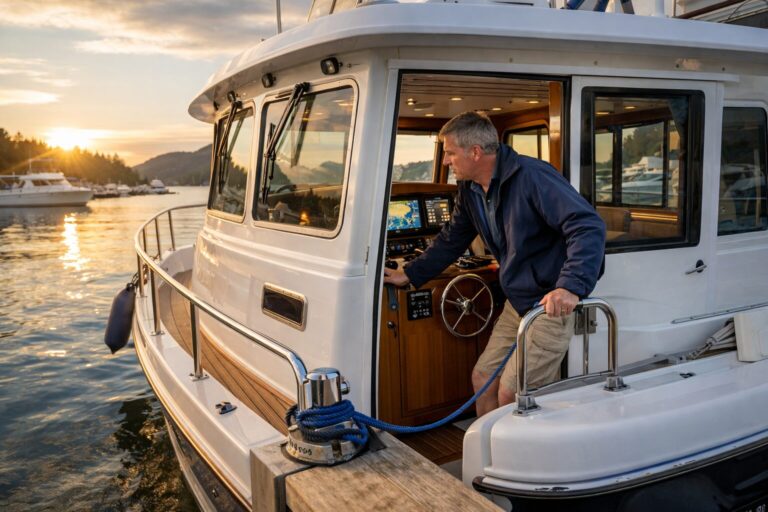
Single-handed docking is one of the most demanding moments for any yacht owner, especially in the North Pacific where wind, current, and changing weather can add pressure in seconds. For owners of trawler and pilothouse yachts, the layout of the pilothouse plays a much bigger role in docking success than many people realize. When you are alone at the helm, every step saved, every sightline improved, and every control placed thoughtfully makes a real difference. A well-designed pilothouse layout is not just about comfort while cruising long distances. It directly affects confidence, safety, and control when maneuvering in tight marinas or approaching a dock without assistance. Understanding how layout decisions impact single-handed docking helps owners choose or customize a yacht that truly supports solo operation.
Clear Visibility and Sightlines Matter More Than Anything
Visibility is the foundation of safe single-handed docking. When you are alone, you do not have crew calling distances or checking blind spots. The pilothouse must allow you to see the dock, pilings, and surrounding boats clearly from the helm position. A raised pilothouse with large forward windows improves sightlines over the bow, especially important on trawlers with fuller hull shapes. Side windows that extend close to the helm position allow the operator to glance sideways without leaving the controls. This is especially helpful when approaching a dock at an angle or compensating for crosswinds.
Window placement also matters. Vertical window mullions should be minimal and positioned so they do not block key docking angles. Sloped or angled glass reduces glare and improves visibility in low sun conditions common in northern latitudes. Overhead visibility can also be useful when approaching covered docks or pilings, making skylights or well-placed upper windows a practical feature rather than a luxury. For single-handed docking, the ability to lean slightly and see both the bow and stern lines of approach without stepping away from the helm adds confidence and reduces rushed movements.
Helm Position and Control Reach Reduce Stress
The helm layout determines how efficiently a solo operator can react during docking. Controls must be within easy reach and logically grouped. Throttle, gear controls, bow and stern thrusters, and steering should all be accessible without stretching or shifting position. On a well-designed pilothouse yacht, the helm seat allows both seated and standing operation. Standing improves visibility during docking, while seated operation reduces fatigue during long passages. Footrests or raised platforms help operators of different heights maintain control without strain.
Side door access near the helm is one of the most valuable features for single-handed docking. Being able to step directly from the helm onto the side deck allows the operator to quickly secure a line without running through the interior. This layout reduces the time the yacht is drifting without control and helps maintain calm during challenging conditions. Joystick controls or integrated docking systems are useful, but even traditional setups benefit from thoughtful spacing and clear labeling. When docking alone, hesitation caused by confusing layouts can lead to mistakes. Simplicity and familiarity are key.
Pilothouse Doors and Deck Access Improve Solo Handling
Direct access from the pilothouse to the side decks dramatically improves single-handed docking efficiency. A sliding or hinged pilothouse door positioned close to the helm allows the operator to maintain visual contact with the dock while stepping outside to manage lines. Wide side decks with secure handholds support safe movement even in rough conditions. Non-slip surfaces and raised bulwarks provide confidence when stepping out quickly to fend off or secure the yacht. For North Pacific cruising, where rain and spray are common, these safety features are essential rather than optional.
Some layouts include doors on both port and starboard sides. This flexibility allows the operator to dock on either side without compromising control. Even when docking on the less preferred side, the ability to step out quickly reduces reliance on spring lines or aggressive thruster use. The relationship between pilothouse door placement and cleat positioning also matters. Cleats should be reachable without overextending, allowing a solo operator to secure the yacht efficiently and safely.
Layout Balance Between Interior Comfort and Docking Function
Pilothouse yachts are often praised for their interior comfort, especially for long-range cruising. However, comfort should not come at the expense of docking practicality. The best layouts strike a balance between livability and control. Excessively large interior furniture near the helm can limit movement and visibility. Thoughtful spacing allows the operator to pivot between helm controls, windows, and doors smoothly. Storage should be placed where it does not obstruct critical docking paths.
Raised settees or navigation desks should not block side windows or doorways. When docking alone, even small obstructions can slow response times. Clear pathways and open sightlines help maintain focus during critical moments. Lighting also plays a role. Adjustable interior lighting that does not reflect harshly on windows improves visibility during night docking. Red or dimmable lights preserve night vision while still allowing control monitoring. A functional pilothouse feels intuitive, where everything seems to be exactly where it should be. This intuitive layout reduces mental workload, which is especially important when managing docking alone in challenging environments.
Why Custom Pilothouse Design Makes a Difference
Custom-built trawler and pilothouse yachts offer a significant advantage for owners who plan to dock single-handed. Every owner has different habits, height, reach, and preferences. A custom layout allows these factors to be addressed during the design phase rather than adapted later. In the North Pacific, conditions vary widely. Strong currents, tight harbors, and unpredictable weather demand layouts that support quick decision-making. Custom pilothouse designs can prioritize larger windows, specific door placements, or helm configurations tailored to solo operation.
Equipment placement can also be customized. Thruster controls, engine displays, and navigation screens can be positioned exactly where the operator naturally looks during docking. This reduces head movement and keeps attention focused outside the vessel. Custom yachts also allow integration of future technologies without compromising layout balance. As docking aids evolve, having a pilothouse designed with adaptability in mind ensures long-term usability. For owners who value independence and confidence at the dock, custom pilothouse design is not just about aesthetics. It is about safety, efficiency, and enjoyment of the entire boating experience.
Final Thoughts on Pilothouse Layout and Solo Docking
Single-handed docking is a skill that improves with practice, but the right pilothouse layout makes that practice safer and more enjoyable. Clear visibility, smart helm placement, direct deck access, and balanced interior design all work together to support the solo operator.
For trawler and pilothouse yachts operating in the North Pacific, these design considerations are especially important. Conditions can change quickly, and the ability to respond calmly depends heavily on how well the yacht supports the person at the helm. A thoughtfully designed pilothouse turns docking from a stressful moment into a controlled, confident maneuver. For owners who value independence, long-range cruising, and hands-on operation, layout decisions are not minor details. They are central to how the yacht performs when it matters most.
We turn your cruising dreams into reality by developing bespoke trawler and pilothouse yachts built for comfort, safety, and performance. From the initial hull design to the final varnish, our experienced naval architects and craftsmen collaborate with you every step of the way, integrating fuel-efficient engines, ergonomic deck layouts, and beautifully appointed living spaces. With industry-leading warranties and personalized support, we make sure your new yacht feels like home the moment you step on deck. Reach out to us by email at info@northpacificyachts.com for personalized responses to all your inquiries. If you’d prefer a conversation, we invite you to give us a call at 1-877-564-9989.
Frequently Asked Questions
1. Why is pilothouse layout important for single-handed docking?
Pilothouse layout directly affects how easily a single operator can see the dock, reach controls, and move between the helm and side decks. A well-designed layout reduces stress by improving visibility, shortening response time, and allowing safer line handling without leaving the yacht unattended for long.
2. What pilothouse features help most when docking alone?
Key features include large windows for clear sightlines, a helm positioned close to a side door, easy-to-reach controls, and wide side decks. These elements allow the operator to maintain control of the vessel while quickly stepping outside to manage lines during docking.
3. Are pilothouse yachts better than flybridge yachts for solo docking?
Pilothouse yachts are often better suited for solo docking because they provide protected visibility, closer access to side decks, and more stable control in rough or windy conditions. This is especially beneficial in colder and more challenging regions like the North Pacific.
4. How does custom pilothouse design improve docking safety?
Custom pilothouse design allows the layout to be tailored to the owner’s height, reach, and docking habits. Controls, windows, and doors can be positioned to match how the owner operates the yacht, which improves confidence and reduces the risk of mistakes during single-handed docking.
5. Is single-handed docking realistic on larger trawler yachts?
Yes, with the right pilothouse layout and equipment, single-handed docking is realistic even on larger trawler yachts. Good visibility, logical control placement, and quick deck access make it possible to dock safely without crew, provided the operator is experienced and the yacht is designed for solo handling.