
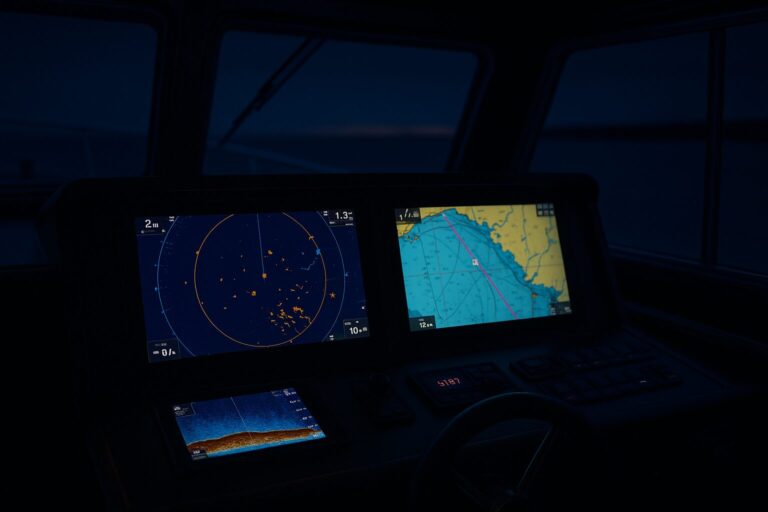
Choosing Helm Electronics for a pilothouse yacht is one of the most important decisions an owner can make. A good electronics package can elevate safety, enhance navigation, simplify operations, and create a much more relaxing cruising experience. The right setup should feel intuitive and dependable in every type of weather. Although today’s technology offers many options, the best system is always the one that matches the way you cruise and the environment in which you operate your vessel. Below is a clear and engaging look at the major components and differences among common helm electronics packages. The goal is to help pilothouse and trawler owners understand what truly matters so they can make confident choices when outfitting their yacht.
Understanding the Core Components
Most helm electronics packages are built around a similar set of essential tools. How advanced these tools need to be depends on the size of the vessel, the typical cruising grounds, and the owner’s personal preferences.
Multifunction Displays
These are the heart of the modern helm. A multifunction display acts as your chartplotter, radar screen, sonar interface, camera monitor, engine data center, and more. Larger yachts often use two displays so the captain can view radar on one screen and navigation charts on the other. The main differences between systems include screen size, processing speed, interface design, and how well they integrate with other onboard equipment.
Radar
Radar is especially valuable for pilothouse owners because these vessels often operate in challenging conditions like fog, rain, or low light. There are two main radar styles. Traditional pulse radar offers strong long range performance while solid state radar provides high clarity, quicker start up time, and lower power consumption. Owners cruising on open coastal routes tend to prefer strong long range capability. Those navigating busy inshore waterways appreciate the crisp short range target separation that solid state radar offers.
Sonar and Depth Sounding
Even slow moving, stable vessels like trawlers need reliable underwater awareness. Basic depth sounders work well for inland or familiar waters. More advanced sonar systems provide contour mapping and fish finding abilities which can be useful for exploring anchorages or fishing during long passages. For many pilothouse yachts, the ideal setup is a mid level sonar that provides depth, bottom structure, and water temperature without unnecessary complexity.
AIS
The Automatic Identification System has become almost standard because it improves situational awareness. AIS transceivers broadcast your vessel’s information to others and display nearby traffic on your chartplotter. This helps with collision avoidance in congested waterways and busy harbors. Choosing between an AIS receiver or a full transceiver depends on how actively you want to participate in vessel tracking.
Autopilot
An autopilot reduces fatigue and improves efficiency. Well tuned autopilot systems can hold course in rough seas and integrate with navigation routes. The most effective units include a fluxgate or solid state compass and a reliable drive unit matched to the vessel’s displacement. Pilothouse operators especially appreciate an autopilot that integrates smoothly with the helm’s steering characteristics.
Key Differences Between Major Brands
Pilothouse owners today often compare electronics from three dominant brands. Each has strengths and differences worth considering.
Garmin
Garmin has earned a strong reputation for user-friendly interfaces. These systems often feel intuitive even for new operators. Garmin’s touchscreen displays are clear, fast, and straightforward. Integration between radar, sonar, and autopilot is seamless. This makes Garmin popular for owners who want a plug-and-play experience without a steep learning curve.
Furuno
Furuno equipment is known for reliability and professional grade performance. Many commercial vessels rely on Furuno radar due to its accuracy and durability. The menus may take a little more time to learn, but experienced captains appreciate the fine control and dependable performance in heavy weather. Furuno is an excellent choice for long range cruisers who prioritize reliability and advanced radar capability.
Raymarine
Raymarine sits in the middle. It offers modern design and smooth touchscreen interfaces with strong integration across components. Raymarine radar performs well at short and medium ranges and its autopilot systems are trusted in the cruising community. These packages work well for owners who enjoy up to date technology with polished displays and good overall balance between ease of use and performance.
Matching a Package to Your Cruising Style
Choosing a package is about more than brand names. It is about understanding your lifestyle on the water.
Coastal Cruisers
If you spend most of your time moving between marinas, exploring bays, and making day trips along the coast, you can focus on ease of use. A clear touchscreen chartplotter, solid state radar, mid level sonar, and a basic AIS transceiver will meet most needs. A Garmin or Raymarine system often fits this type of boating very well.
Offshore Passagemakers
If your yacht makes long passages across exposed water, electronics become even more important. A radar with long range capability, redundant navigation displays, a robust autopilot, and a reliable AIS transceiver are essential. Many offshore pilothouse owners lean toward Furuno for radar performance and overall durability.
Explorers and Anchor Out Cruisers
If you enjoy visiting remote coves and anchorages, you may prefer a package with strong sonar mapping abilities and good integration with onboard cameras for docking and tight maneuvering. Any of the major brands can support this setup but choosing a system with easy integration for cameras and additional sensors is helpful.
The Importance of Integration
Even the best electronics struggle when components do not communicate well. Modern yachts benefit from systems where the radar, chartplotter, sonar, autopilot, and engine management tools share information through a consistent network. A fully integrated system reduces errors and makes the helm easier to operate during stressful moments. Well integrated systems also simplify troubleshooting. When every component speaks the same language, technicians can diagnose problems more quickly. This reduces downtime and helps maintain reliability during long trips.
Considering the Human Element
No matter how advanced your electronics are, the helm should feel natural. Comfortable sight lines, clear screens, and logical positioning of controls matter just as much as the equipment itself. Pilothouse designs often give the captain a protected and elevated navigation area so well placed electronics bring out the best in that advantage. It is also worth remembering that not everyone prefers a fully touchscreen setup. Many captains still like having a mix of physical buttons and dials for use in rough conditions. The ideal helm should match your personal style and feel easy to operate while underway.
Final Thoughts
Selecting a helm electronics package for a pilothouse yacht is a meaningful investment. The right combination of displays, sensors, radar, and autopilot can transform the entire cruising experience. Good electronics offer peace of mind, reduce stress, and help you operate confidently in all types of conditions. There is no single perfect system. Instead, the best choice depends on your cruising goals, your experience level, and the layout of your vessel. Whether you prefer the smooth simplicity of Garmin, the professional precision of Furuno, or the balanced design of Raymarine, focusing on integration, reliability, and ease of use will always lead you in the right direction.
Contact Us
We turn your cruising dreams into reality by developing bespoke trawler and pilothouse yachts built for comfort, safety, and performance. From the initial hull design to the final varnish, our experienced naval architects and craftsmen collaborate with you every step of the way, integrating fuel-efficient engines, ergonomic deck layouts, and beautifully appointed living spaces. With industry-leading warranties and personalized support, we make sure your new yacht feels like home the moment you step on deck. Reach out to us by email at info@northpacificyachts.com for personalized responses to all your inquiries. If you’d prefer a conversation, we invite you to give us a call at 1-877-564-9989.