
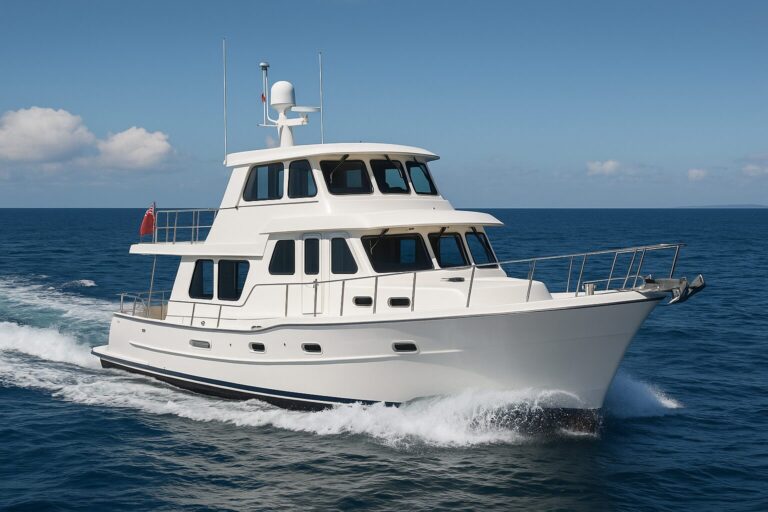
When you picture setting out on a yacht, the type of journey you’re planning makes all the difference. Some boaters enjoy staying near the shoreline, exploring quiet bays, hopping from marina to marina, and soaking in the scenery. Others are drawn to the challenge and freedom of offshore cruising, where long passages, big seas, and self-sufficiency define the experience.
For both types of adventures, pilothouse yachts are a natural choice. Their enclosed helm station, elevated sightlines, and comfortable interiors make them stand out from other designs. But not every pilothouse yacht is built for the same purpose. Some are better suited for coastal exploration, while others are designed to endure the rigors of open-ocean cruising. Choosing the right one depends on understanding your goals, priorities, and the differences between these two styles of boating.
What Makes a Pilothouse Yacht Different?
At its core, a pilothouse yacht puts the helm station in an enclosed, elevated space inside the boat. Unlike an open flybridge, the pilothouse protects the captain and crew from wind, rain, and sun while providing wide views of the water. This makes it easier and more comfortable to navigate in all seasons and weather conditions.
This design is especially valuable in places like the Pacific Northwest or Alaska, where rain, fog, and cool weather are frequent. In those waters, an exposed helm can make long passages uncomfortable, while a pilothouse allows the journey to continue in warmth and safety. Even in sunnier climates, the shade and air-conditioned comfort of a pilothouse create a welcome retreat. Beyond shelter, the pilothouse adds to safety. Elevated visibility means the captain can see over the bow more easily when navigating busy harbors or choppy seas. And because the pilothouse is often connected directly to the saloon or galley, it integrates the captain into the social life of the boat instead of isolating them on deck. For families or couples, this is a major benefit, making cruising more enjoyable for everyone.
Coastal Cruising: Comfort and Accessibility
For many yacht owners, coastal cruising is the dream lifestyle. It means exploring familiar waters, dropping anchor in scenic coves, and tying up at marinas for a night out on shore. The emphasis is on enjoying the journey and the destinations rather than testing the limits of endurance.
Design and Size: Coastal pilothouse yachts are often built in the 35- to 50-foot range. This size is ideal for small crews or families and is large enough to provide comfort while still being manageable to operate. A moderate draft makes it easier to explore shallow harbors or anchor close to the beach, places larger yachts may not be able to reach.
Fuel and Range: For coastal trips, fuel capacity doesn’t need to be extreme. Since marinas and fuel docks are readily available, a moderate tank size is plenty. Many owners value efficiency here, choosing engines that offer good fuel economy while cruising at moderate speeds.
Comfort and Amenities: Lifestyle features are often a top priority. A spacious galley for preparing meals, large windows for enjoying shoreline views, and cozy staterooms for relaxing at anchor are what make coastal pilothouse yachts shine. Many also include entertainment systems, open saloons, and flybridges for sunny-day cruising, giving a balance between indoor protection and outdoor living.
Handling and Maneuverability: Coastal cruising often means docking in busy marinas or anchoring in tight spots. A yacht that responds well at slow speeds, with bow and stern thrusters, makes life easier for captains of all experience levels. The pilothouse provides excellent visibility for these maneuvers, helping reduce stress when conditions are crowded or windy.
In short, coastal pilothouse yachts are about making boating accessible and enjoyable. They combine comfort and convenience with enough range to explore widely, without the heavy-duty systems required for ocean crossings.
Offshore Cruising: Safety and Self-Reliance
Offshore cruising takes boating to another level. When you leave the sight of land behind, you enter an environment that requires preparation, strength, and resilience. Here, a yacht isn’t just a way to travel; it becomes your lifeline. Offshore pilothouse yachts are built with that responsibility in mind.
Hull and Stability: Offshore yachts typically feature full displacement or semi-displacement hulls designed for seaworthiness. A heavier build helps the boat handle large ocean swells, reducing motion and increasing comfort over long passages. Some designs also incorporate stabilizers that reduce rolling in beam seas, which can be critical for maintaining crew comfort.
Fuel and Endurance: Offshore yachts carry large fuel capacities, sometimes thousands of gallons, allowing them to travel hundreds or even thousands of miles between refueling. This endurance is essential for long passages where fuel docks are unavailable. Efficient, low-RPM cruising speeds maximize range without sacrificing safety.
Redundancy and Systems: Offshore voyaging demands self-reliance. That means duplicate navigation systems, backup autopilots, multiple power sources, and watermakers for fresh water supply. Many yachts also include robust communications equipment such as satellite phones or SSB radios to stay connected even far from shore.
Safety and Security: Offshore pilothouse yachts incorporate safety features like watertight bulkheads, storm shutters, and secure handholds throughout the interior. These details protect the crew when the seas get rough and make the yacht more resilient in emergencies. Anchoring systems are often heavier and more redundant as well, ensuring the yacht can hold position in remote or exposed anchorages.
Crew Comfort for the Long Haul: Offshore cruising often involves long days or nights at sea. To keep the crew rested, these yachts are designed with quieter engine rooms, secure berths with lee cloths, and pilothouses that allow for easy watch-keeping around the clock. The goal is to make long passages safe, sustainable, and as comfortable as possible.
Ultimately, offshore pilothouse yachts are built not just for travel, but for survival and endurance. They allow owners to explore remote coastlines, cross oceans, and enjoy the freedom of true long-distance cruising.
Coastal vs. Offshore: How to Decide
So, how do you know which yacht is right for you? It all comes down to your lifestyle, your ambitions, and how you plan to use the boat. If your vision of boating means weekends with family, visiting nearby harbors, and enjoying a mix of relaxation and short passages, then a coastal pilothouse yacht is the better fit. It offers all the comfort and ease you’ll need without the cost or complexity of ocean-crossing systems.
If, on the other hand, you dream of bluewater passages, remote anchorages, or even circumnavigating the globe, then offshore capability is essential. Investing in a yacht built for heavy seas, long range, and self-reliance ensures both safety and peace of mind when land is far behind you. Of course, many owners choose a middle ground, a yacht with offshore capability that is mostly used for coastal cruising. This gives flexibility and confidence, knowing the vessel can handle more demanding conditions if plans ever expand.
Why Pilothouse Yachts Excel in Both Worlds
Regardless of which path you choose, pilothouse designs bring unmatched advantages:
- All-weather capability: The ability to navigate in comfort, rain or shine.
- Visibility and safety: Panoramic views and protected navigation stations.
- Social connection: A helm station integrated with the living space.
- Versatility: Equally at home in a marina, along the coast, or far offshore.
It’s this combination of practicality and comfort that makes pilothouse yachts so popular among serious cruisers.
Final Thoughts
Choosing between a coastal or offshore pilothouse yacht isn’t just about the boat—it’s about your vision for life on the water. See New vs Used Trawler Yachts. Coastal cruising offers accessibility, comfort, and a lifestyle of exploration close to shore. Offshore cruising delivers adventure, independence, and the satisfaction of venturing where few go. Both styles of boating are rewarding in their own way, and both benefit from the thoughtful design of a pilothouse. By understanding the differences and reflecting on your own goals, you’ll be well-prepared to choose a yacht that not only meets your needs today but also supports the adventures you hope to enjoy tomorrow.
Contact Us
We turn your cruising dreams into reality by developing bespoke trawler and pilothouse yachts built for comfort, safety, and performance. From the initial hull design to the final varnish, our experienced naval architects and craftsmen collaborate with you every step of the way, integrating fuel-efficient engines, ergonomic deck layouts, and beautifully appointed living spaces. With industry-leading warranties and personalized support, we make sure your new yacht feels like home the moment you step on deck. Reach out to us by email at info@northpacificyachts.com for personalized responses to all your inquiries. If you’d prefer a conversation, we invite you to give us a call at 1-877-564-9989.