
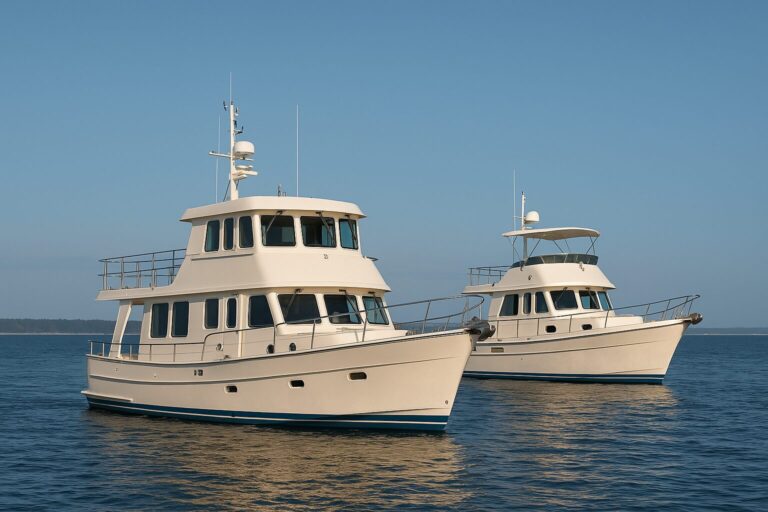
When exploring the world of yacht design, especially for long-distance cruisers like trawlers or pilothouse yachts, buyers are often faced with an important question: Should I choose a pilothouse or a flybridge? Both layouts offer distinctive advantages and create different experiences on the water. The flybridge, with its sweeping views and open-air freedom, is often the centerpiece of social gatherings and warm-weather cruising. Meanwhile, the pilothouse provides protection, control, and all-weather comfort, making it a favorite among serious, year-round navigators. See difference between a pilothouse and wheelhouse. But can one truly replace the other? Is it possible for a pilothouse yacht to offer everything a flybridge does or at least enough of it to make the flybridge unnecessary? To answer that, we need to look deeper into what each design brings to the table and how they match up with real-world cruising needs.
Understanding the Designs
Before comparing the two, it’s important to understand what defines each layout. A flybridge is typically an open or semi-enclosed upper deck positioned above the main saloon. This elevated space includes a secondary helm, seating area, and sometimes lounges, grills, or even a bar. It provides clear panoramic visibility and a sunny social hub that many cruisers love. A pilothouse, on the other hand, is an enclosed command station located within the yacht’s cabin, often slightly raised from the saloon but protected from the elements. It is designed with practical navigation in mind, featuring a central helm, wraparound visibility, and seating for crew or guests. While both serve as helm stations, their differences in layout, exposure, and intended use create very different onboard experiences.
The Appeal of a Pilothouse
The pilothouse has become increasingly popular among long-range and all-season cruisers and for good reason. It caters to boaters who prioritize function, safety, and comfort over the social perks of a flybridge. For starters, pilothouse yachts are built to handle a wider range of conditions. Unlike the flybridge, which is exposed to sun, wind, and spray, the pilothouse provides a climate-controlled environment for the skipper and crew. Whether you’re facing a cold headwind in the Pacific Northwest or navigating through heavy rain in the Great Lakes, the pilothouse allows you to operate the boat comfortably without exposure to the elements.
Another advantage is enhanced safety and ease of navigation. Inside the pilothouse, everything feels more stable and secure. There’s no climbing ladders or moving between decks in bad weather, and less risk of slipping on wet surfaces. With full windshield coverage, windshield wipers, and a dry, quiet helm, it becomes easier to focus on charts, instruments, and navigation even during night passages or rough crossings. Pilothouses also support year-round cruising. Many trawler owners choose pilothouse layouts specifically because they want to extend their cruising seasons. When others have to winterize their boats or avoid shoulder seasons due to cold temperatures, pilothouse yacht owners can keep cruising, knowing they’ll stay warm and protected.
The Drawbacks of a Pilothouse Layout
That said, a pilothouse does come with a few trade-offs, especially when it comes to outdoor enjoyment. One of the biggest differences is the lack of elevated outdoor space. Unlike a flybridge, which gives you a top-deck lounge area with sweeping views and warm breezes, a pilothouse often limits your time outside. Most have aft decks or cockpit areas, but they don’t provide the same elevated, open-air experience that makes a flybridge so appealing in tropical or sunny climates.
Visibility, though good, isn’t quite the same either. A pilothouse typically sits lower than a flybridge helm, and even though the windows provide great sightlines forward, they don’t give quite the same 360-degree perspective or long-distance visibility that a higher position does. When navigating busy marinas or island chains, that difference can matter. Socially, a pilothouse can also feel more isolated. While some layouts include companion seating for guests next to the helm, it’s not the same as having everyone gathered around on an open deck. If you enjoy captaining while surrounded by friends and family, the enclosed pilothouse may feel a bit too quiet or removed.
Why Many Still Love the Flybridge
The flybridge remains the go-to layout for those who cruise primarily in warm climates or who love the outdoor lifestyle. What makes the flybridge so attractive is its ability to bring people together. It acts like a floating patio, perfect for lounging, entertaining, and enjoying the scenery. Whether you’re anchored in a quiet cove or cruising a sunny coastline, the flybridge offers that breezy, elevated space that makes boating feel like a vacation. With features like built-in grills, sun pads, or even a wet bar, it becomes the social heart of the yacht. From a navigation standpoint, the flybridge also provides excellent visibility. Sitting higher above the water, the helm offers better sightlines, especially in tight quarters or shallow areas. For captains who value a commanding view, especially in calm conditions, it’s hard to beat. Flybridge yachts also provide more usable space overall. In addition to the main deck and interior areas, the upper deck serves as another functional zone. It’s often used for storing dinghies or water toys, and it frees up space below for lounging or dining.
So, Can a Pilothouse Replace a Flybridge?
The answer depends on how and where you plan to cruise. If your adventures take you through unpredictable climates, long passages, or regions where weather shifts quickly, a pilothouse is not only a smart choice, it’s often essential. For serious boaters who cruise from spring through fall (or year-round), it can absolutely replace a flybridge and even outperform it in terms of comfort, safety, and usability. However, if your cruising lifestyle centers around fair weather, entertaining guests outdoors, and soaking in the sun, the flybridge’s appeal is hard to match. It offers more freedom, more air, and a stronger sense of outdoor living, something many boaters wouldn’t want to give up.
Final Thoughts: Which Is Right for You?
The good news is, you don’t always have to choose one or the other. Some modern yacht designs offer the best of both worlds with enclosed pilothouses and secondary flybridge helms, giving you all-weather control and open-air enjoyment when conditions allow.
We turn your cruising dreams into reality by developing bespoke trawler and pilothouse yachts built for comfort, safety, and performance. From the initial hull design to the final varnish, our experienced naval architects and craftsmen collaborate with you every step of the way, integrating fuel-efficient engines, ergonomic deck layouts, and beautifully appointed living spaces. With industry-leading warranties and personalized support, we make sure your new yacht feels like home the moment you step on deck. Reach out to us by email at info@northpacificyachts.com for personalized responses to all your inquiries. If you’d prefer a conversation, we invite you to give us a call at 1-877-564-9989.