

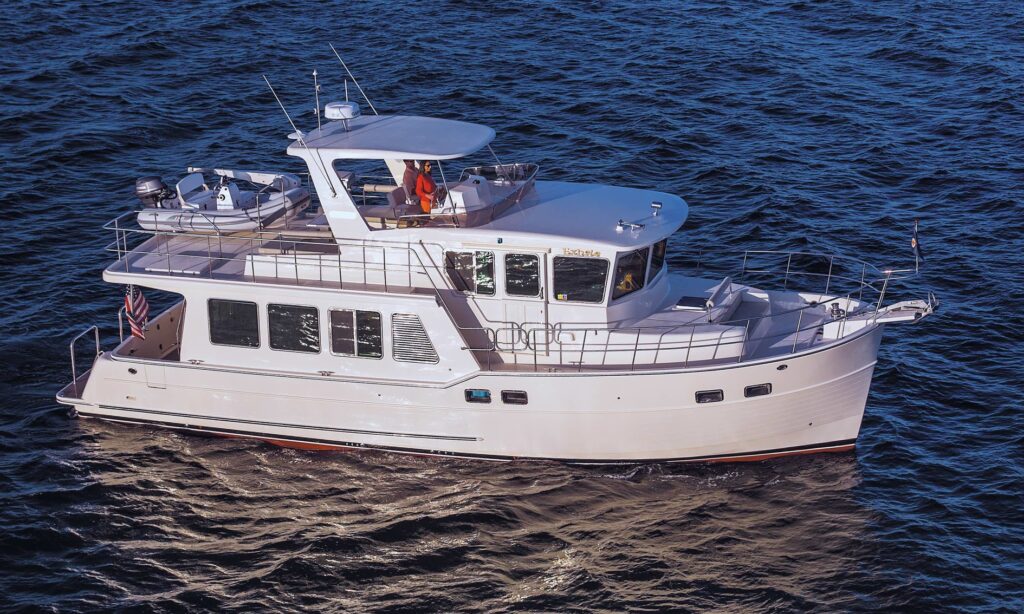
A Puget Sound cruise needs a sanitation plan alongside its fuel, water, and overnight stops. Know where your boat stores sewage, how it reaches a pumpout fitting, and which controls prevent an overboard discharge. Then confirm a pumpout that fits the route and a fallback you can reach before storage becomes a constraint.
The useful preparation is specific to your yacht and itinerary. A remembered valve position, a marina symbol on a chart, or another owner’s tank estimate cannot answer all three questions.
Know the Puget Sound No-Discharge Zone
Washington Ecology no-discharge guidance prohibits releasing treated or untreated vessel sewage within the mapped Puget Sound No Discharge Zone. The zone includes Washington marine waters east of New Dungeness Lighthouse, plus Lake Washington, Lake Union, and their connecting waters. Check the current official map when planning near a boundary; this rule should not be extended to all Pacific Northwest waters.
The rule concerns sewage, often called blackwater. Ecology says the NDZ does not change graywater discharge rules. A toilet connected to a Type III holding tank stores sewage for disposal. If the boat instead has a Type I or Type II treatment device, Ecology describes securing it against discharge or replacing it with a holding-tank arrangement. The appropriate compliance arrangement depends on the actual installation.
This guide plans pumpout use within Washington’s zone. For a route into another jurisdiction, check that jurisdiction’s current requirements separately rather than using the Washington rule as an offshore-discharge permission.
Understand the Boat’s Sanitation Arrangement
Start with your new yacht handover documents and later service records. Identify the toilet connections, holding tank, deck waste fitting, vent, and any alternate discharge path. A Y-valve may direct waste between routes, but its location and function vary. Some boats have a different arrangement or no overboard route.
The vent is part of the system, not an incidental fitting: it allows air movement as the tank fills or is pumped out. Visible damage, leakage, unexplained odor, or uncertainty about a vent or fitting deserves assessment using the installed equipment instructions. Avoid prescribing cleaning products, lubrication, or a plumbing test from a generic description.
A practical record separates what you know from what remains unresolved:
| Component | What to confirm |
|---|---|
| Holding tank | Identity, capacity information, level indication, and relevant manual |
| Deck waste fitting | Correct fitting and operator connection requirements |
| Vent | Documented location and inspection or service instructions |
| Alternate discharge path, if present | Routing, control identity, and approved securing method |
Ask the builder or an appropriate sanitation professional to reconcile missing drawings, changed plumbing, or unclear labels. You can gather records and inspect permitted access points without operating an unidentified control.
Keep the Overboard Route Secured
Washington Ecology Y-valve guidance says a Y-valve should be closed and secured in the NDZ. Its examples include a zip tie, padlock, or handle removal. Those examples explain the compliance objective; the correct component, position, and securing arrangement must be established for your boat.
A closed handle alone should not be mistaken for a verified, secured system. Confirm how the documented arrangement prevents discharge, record the confirmation, and resolve any conflict between the drawing and the labels aboard. Electrical controls and valve controls may involve different equipment; do not pull breakers or modify plumbing to improvise a solution.
Keep the crew aware of the controls that must remain secured. A guest or new crew member should not have to guess what an unfamiliar sanitation switch does.
Confirm a Working Pumpout and a Fallback
Ecology links to Washington pumpout-location resources. Use those listings to find candidates, then contact the operator for the planned arrival date. A listed station does not establish its present availability or suitability for your yacht.
Ask about hours, access, water depth or vessel restrictions, reservations, fees, and the connection or operating instructions the facility requires. Record the answer and when it was confirmed. Recheck after a route change or reported outage.
Select a fallback that fits the route and confirm it separately. A second symbol on a map is not yet a second workable stop. If either option becomes unavailable, move pumpout earlier, select another confirmed service, shorten the itinerary, or delay the leg.
Carry a Compact Departure Record
Keep the boat’s sanitation identification, secured-control confirmation, pumpout contacts, and fallback details together. Include the current tank indication and the basis for your storage margin. Gauges and consumption estimates have limits; neither a universal percentage nor a generic gallons-per-person allowance can set the right diversion point for every yacht.
Your plan for managing fresh water, fuel, and holding capacity on a two-week cruise can supply the wider resource picture. Use actual crew habits and prior observations, then allow room for guests, delays, and a failed service stop. Change plans while confirmed alternatives remain reachable.
Before departure, resolve unidentified fittings, conflicting records, leakage, or uncertain compliant storage. If you need available builder documentation or want to discuss access to the sanitation system aboard your yacht, contact us. The aim is a clear boat-specific arrangement and a pumpout plan the crew can use when the itinerary changes.