High Hour Engines and the Fear Around Big Numbers
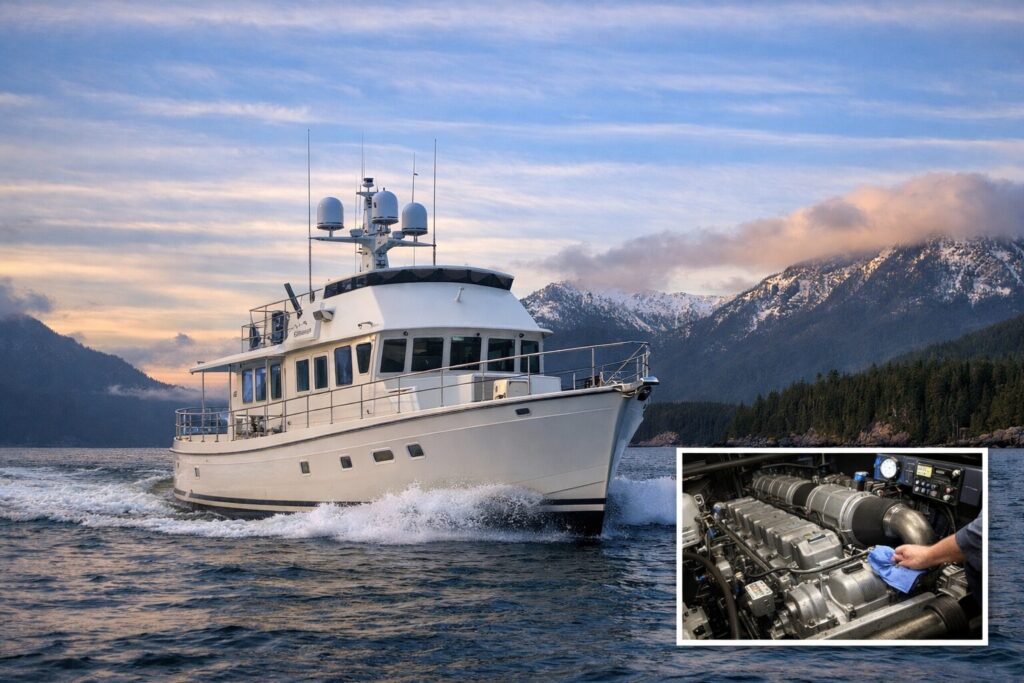
High engine hours often worry buyers, but on a trawler they usually tell a very different story. Built for steady operation and long service life, marine diesel engines are designed to run for decades. Here’s why 10,000 hours on a trawler engine is often a sign of reliability, not risk.
Understanding Battery Banks on Long-Range Trawlers
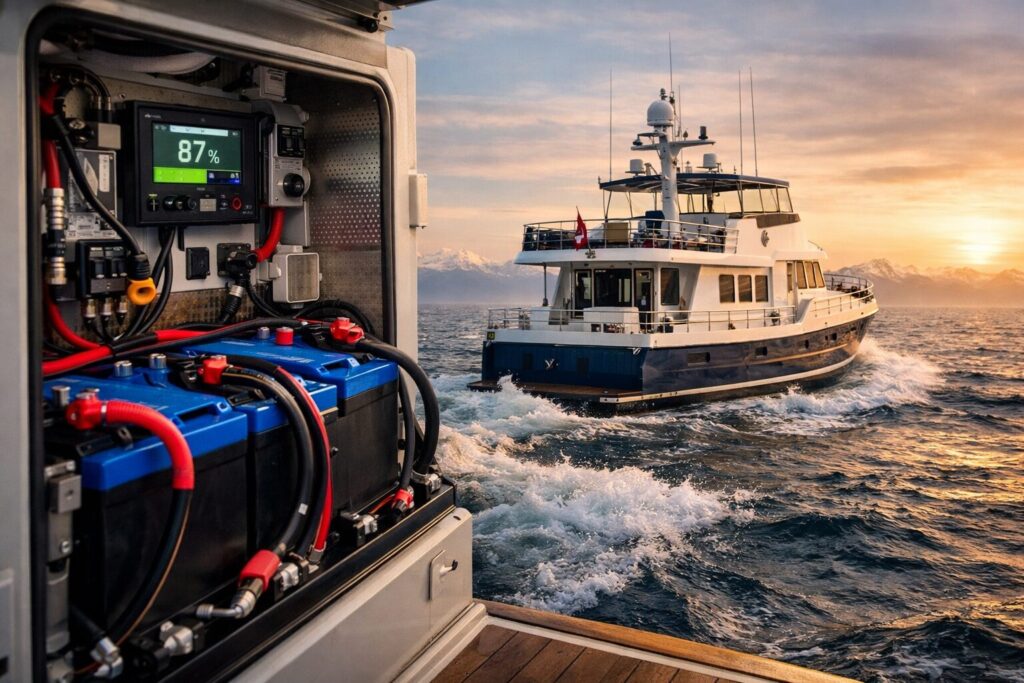
Battery banks are critical to long-range trawlers, but real-world performance often differs from advertised capacity. This guide explains what yacht owners should realistically expect from their battery systems. Understand how loads, charging, and cruising conditions shape true onboard power availability.
Trawler Draft Explained: Why a Deeper Draft Can Mean a Better Yacht

Draft is often misunderstood when choosing a trawler yacht. A deeper draft does not automatically mean limited access or poor handling. This guide explains why depth can improve stability, comfort, and real-world performance.
How Trawlers Handle Heavy Seas Differently Than Planing Yachts
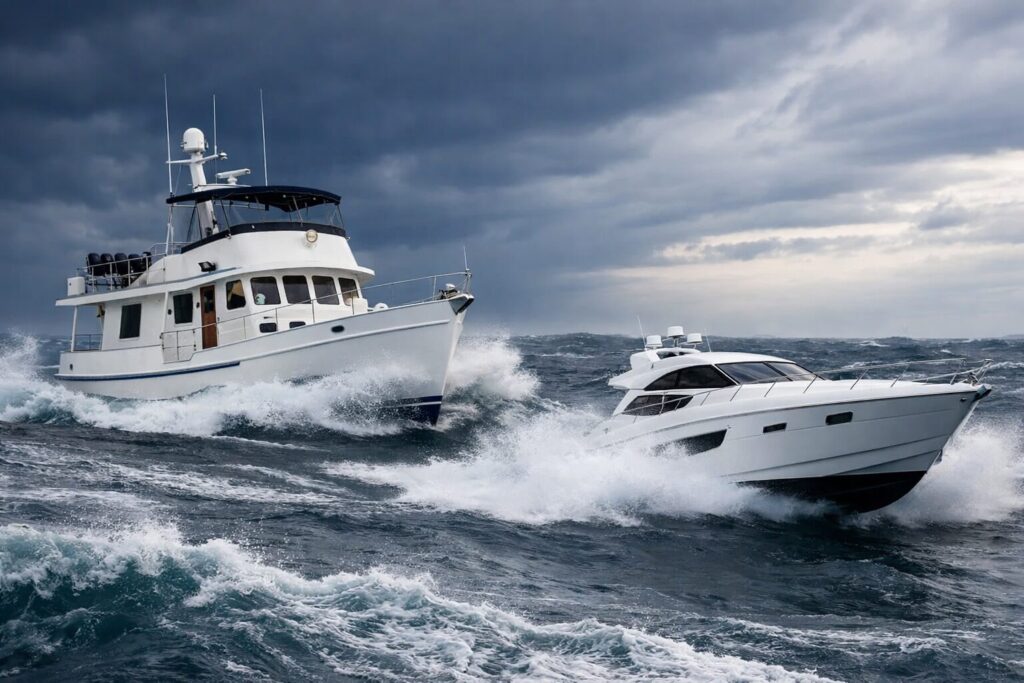
Trawlers and planing yachts behave very differently when the ocean turns rough. Learn how hull design, weight, and speed affect stability in heavy seas. A practical guide for offshore cruising and North Pacific conditions.
How Smart Technology Is Redefining 2026 Trawler Yachts for Long-Range Cruising
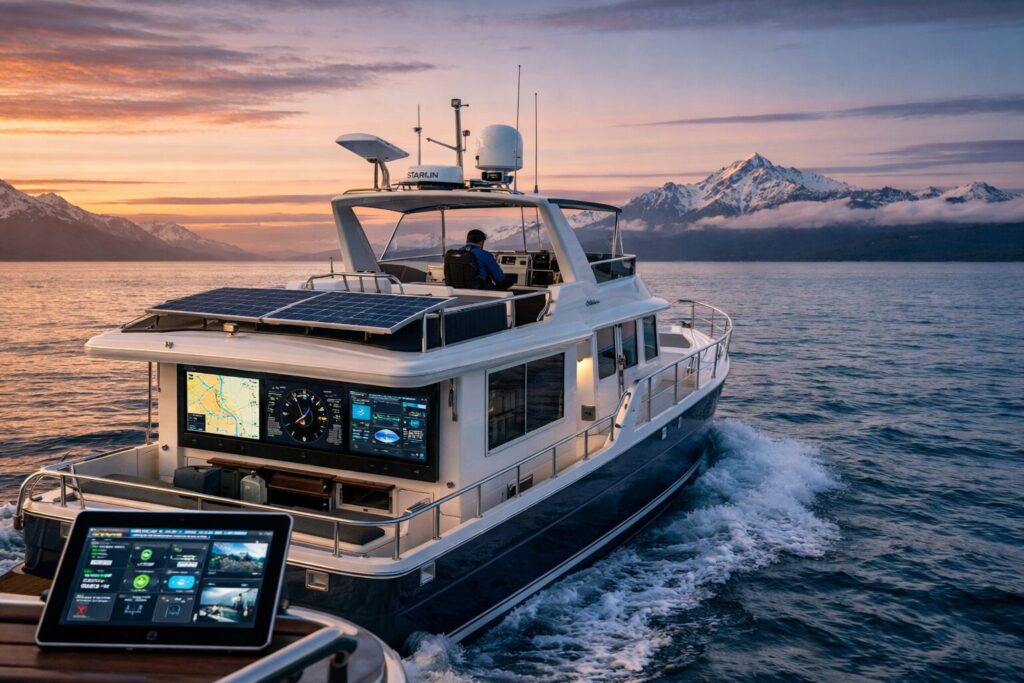
Modern trawler yachts in 2026 are smarter, quieter, and more efficient than ever. From integrated navigation and power management to smart interiors and remote monitoring, technology is transforming long-range cruising.