

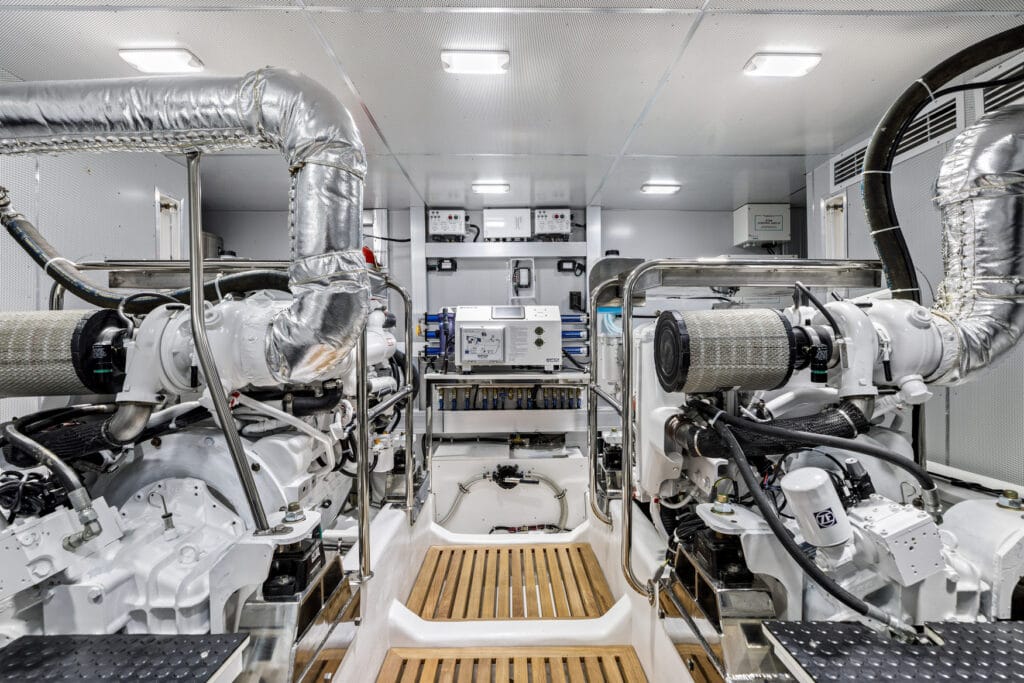
Fire readiness begins with the equipment aboard your yacht and the records that explain its condition. Portable extinguishers and any fixed machinery-space system need separate attention. Knowing where a bottle is mounted does not establish that it is serviceable; seeing a fixed-system indicator does not identify what that indication means.
Before a cruise, reconcile equipment, manuals, and service history, then make locations and the vessel emergency plan familiar to the crew. Your new yacht handover documents provide a starting point, supplemented by later replacement and service records.
Determine the Portable Requirement for This Boat
The USCG fire extinguisher FAQ explains how carriage requirements depend on vessel facts, including length, model year, and a qualifying fixed machinery-space system. Use its current table for the actual yacht rather than copying a generic count or rating from another vessel.
An approved fixed system can affect the portable count required by the applicable table. It does not eliminate the need to establish which portable units count or whether they remain accessible and serviceable. Ratings and substitutions also matter; a bottle’s size or appearance cannot establish its rating.
Build a portable inventory that records location, label, rating, rechargeable or disposable type, and manufacture date where shown. Match the inventory to the equipment aboard and retain the basis for the applicable requirement.
Inspect Accessible Portable Units
USCG guidance gives useful visible condition checks: an operable gauge or indicator, a firmly seated lock pin, an unobstructed nozzle, and no significant visible corrosion or damage. Required equipment must be approved, readily accessible, unexpired, and without signs of prior use.
For covered disposable extinguishers, the FAQ identifies an age limit of more than 12 years from the manufacture date. Rechargeable units follow their applicable inspection and service requirements. If a date, approval, or service basis is unclear, resolve it before counting the unit as ready.
Use the equipment instructions to inspect without discharging or dismantling it. A gauge outside its operable range identifies a problem; it does not tell you the cause. The FAQ distinguishes replacement of a disposable unit from servicing and tagging a rechargeable unit when its gauge is in the red.
Also check access. Stores, luggage, or a changed cabin arrangement can obstruct a unit that was easy to reach at delivery. Crew members should be able to identify its location and understand its mounting arrangement from the applicable instructions.
Review a Fixed System, if Installed
Identify whether the yacht has a fixed system, which space it protects, and its exact manufacturer and model. Keep its matching manual, service records, and authorized support contact together. Do not infer a system or agent from the model name or another boat’s engine-room photograph.
Sea-Fire fixed-system documentation illustrates that suppression equipment can have relationships with engines, ventilation, shutdown controls, and displays. Those relationships are installation-specific. A green light, red light, or alarm has the meaning assigned by the actual system manual, rather than one universal meaning across products.
For the owner review, confirm:
- Equipment identity agrees with the manual and service records.
- Visible indications match the manual’s documented normal state.
- Any required inspection or service has a clear current record.
- Controls and service points remain accessible as intended.
- Open findings, recalls, or manufacturer instructions have been addressed.
Service may require specialist methods, but weighing, recertification, discharge testing, and reset requirements cannot be prescribed universally. Do not activate a system, pull release cables, bypass an interlock, or attempt a reset as a generic readiness check.
When evaluating access aboard a boat, engine-room access as a buying test provides useful questions about labels, service points, and working space. It does not establish the fire system’s condition.
Make Locations and the Emergency Plan Familiar
Walk through the recorded portable-equipment locations with the crew while conditions are normal. Show where the vessel emergency plan and matching manuals are kept. Explain the documented fixed-system indications if a system is installed.
Keep readiness and emergency response distinct. An active fire, smoke, fuel leak, or other hazard requires the vessel emergency plan and appropriate emergency assistance. This article cannot prescribe the correct engine shutdown, release, hold time, or re-entry sequence for every yacht and suppression system.
Include records and equipment reviews in a seasonal maintenance calendar for Pacific Northwest cruising yachts, then revisit readiness after service, replacement, crew changes, or a changed indication.
Close Readiness Gaps Before Departure
Missing, inaccessible, expired, apparently used, damaged, or otherwise unserviceable required portable equipment needs resolution. For a fixed system, uncertain service status, a missing manual, or an indication different from documented normal also needs appropriate support before departure.
Keep the resolution with the inventory: unit replaced or serviced, date, provider, document reference, and any remaining action. A complete record is more useful than a checklist marked ready while a question remains open.
If you need available original equipment records or want to discuss access aboard your yacht, contact us. The departure goal is straightforward: the required portable equipment is accounted for, any fixed system has a verified readiness basis, and the crew knows the locations and emergency plan.