

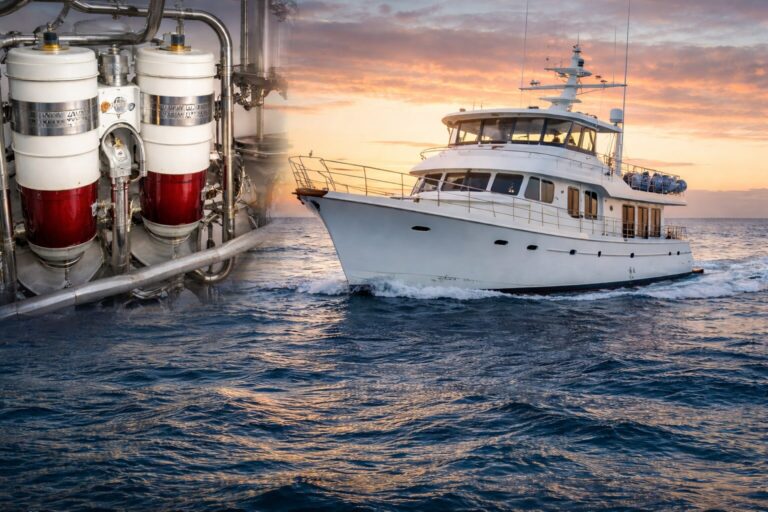
For owners who run long range trawlers and pilothouse yachts in the North Pacific, fuel quality is not a small detail. It directly affects safety, reliability, and peace of mind at sea. Unlike weekend boats that refuel often and return to shore quickly, serious trawlers carry large fuel volumes for extended passages. That fuel may sit onboard for weeks or even months. During that time, it can degrade in ways that are invisible until the engine starts to struggle. This is where a fuel polishing system becomes essential rather than optional.
Fuel polishing systems are designed to continuously clean diesel fuel, removing contaminants that naturally build up over time. On custom made trawlers built for offshore cruising, these systems are a quiet but critical part of the vessel’s reliability strategy. They help ensure that the fuel reaching the engine is clean, stable, and ready to perform when conditions are demanding.
What Happens to Diesel Fuel Over Time
Diesel fuel is not a static substance. Once it is stored in a tank, especially in a marine environment, several problems can begin to develop. Condensation forms as temperatures change, introducing water into the tank. Water then creates the perfect environment for microbial growth, often called diesel bug. These microorganisms feed on the fuel and multiply, creating sludge and acidic byproducts.
At the same time, normal fuel oxidation can occur. As fuel ages, it can darken and form varnish like compounds. Sediment from the tank walls can also mix into the fuel, especially when the boat moves through rough seas and stirs everything up. The result is a mix of water, microbes, and particles that can clog filters and damage engines. On a short coastal run, these issues may never show up. On a multi day passage through remote waters, they can stop an engine at the worst possible moment. Fuel polishing systems are designed to address these risks before they turn into real problems.
How a Fuel Polishing System Works
A fuel polishing system works by circulating fuel from the tank through a series of high quality filters and separators, then returning the cleaned fuel back to the tank. This process can be done while the engine is running or when the boat is at rest, depending on the system design.
The system typically removes water, microbial sludge, and solid particles down to very fine levels. By repeatedly cycling the fuel, it gradually cleans the entire fuel supply, not just the fuel being burned at that moment. Over time, this keeps the tank environment cleaner and more stable. On serious trawlers, fuel polishing systems are often designed as dedicated standalone units. They are not limited by the engine’s fuel flow rate, which means they can polish large volumes efficiently. This is especially important on custom trawlers that carry significant fuel capacity for long range cruising.
Why Long Range Trawlers Rely on Fuel Polishing
Long range trawlers are built for endurance and independence. Owners expect to travel far from major ports, spend extended time at anchor, and rely on their vessel in changing weather conditions. In these scenarios, fuel quality becomes a cornerstone of reliability. A fuel polishing system reduces the risk of sudden filter clogging, which is one of the most common causes of engine shutdowns in diesel powered boats. Clean fuel also improves combustion efficiency, which can lead to smoother engine operation and more predictable performance.
Another key benefit is flexibility in fueling. In remote areas, fuel quality can vary. With a polishing system onboard, owners have an added layer of protection against questionable fuel. The system helps clean and condition the fuel after it enters the tank, rather than relying solely on dockside filtration. For owners who invest in custom made trawlers and pilothouse yachts, this aligns with the broader philosophy of self sufficiency. Fuel polishing is not about convenience. It is about reducing risk and increasing confidence during long passages.
Maintenance Benefits and Long Term Value
Fuel polishing systems also play a major role in reducing maintenance costs over the life of the vessel. By keeping fuel clean, they extend the life of engine mounted fuel filters, injectors, and fuel pumps. Fewer clogged filters mean fewer emergency changes at sea and less stress on the crew. Clean fuel tanks are another long term advantage. Sludge buildup in tanks can be difficult and expensive to remove once it becomes severe. Regular fuel polishing helps prevent this accumulation, keeping tanks cleaner and inspections simpler. From a resale perspective, a trawler equipped with a well designed fuel polishing system is often seen as better prepared for serious cruising. It signals that the vessel was built with offshore reliability in mind, not just comfort at the dock. For many experienced buyers, this is a meaningful indicator of build quality and thoughtful system design.
Why Fuel Polishing Fits the Philosophy of Custom Trawlers
Custom made trawlers and pilothouse yachts are designed around how owners actually use their boats. Every system is chosen with purpose, balancing comfort, safety, and operational independence. Fuel polishing fits naturally into this approach. Rather than reacting to fuel problems after they appear, a polishing system works proactively. It supports long engine hours, extended storage, and unpredictable operating conditions. It also integrates well with other reliability focused systems such as redundant filtration, robust engine room layouts, and easy access for inspection and service. For owners cruising the North Pacific, where distances are long and conditions can change quickly, this level of preparation matters. A fuel polishing system does not draw attention to itself, but when the engine runs smoothly after days at sea, its value is clear.
A Quiet System That Makes a Big Difference
Fuel polishing systems rarely make the top of a yacht’s feature list, yet they are one of the systems that experienced trawler owners appreciate most. They work quietly in the background, protecting the engine, the fuel supply, and the overall reliability of the vessel. For serious trawlers built to travel far and operate confidently in remote waters, fuel polishing is not a luxury. It is a practical tool that supports the core mission of the boat. Clean fuel means dependable power, and dependable power means safer and more enjoyable cruising.
We turn your cruising dreams into reality by developing bespoke trawler and pilothouse yachts built for comfort, safety, and performance. From the initial hull design to the final varnish, our experienced naval architects and craftsmen collaborate with you every step of the way, integrating fuel-efficient engines, ergonomic deck layouts, and beautifully appointed living spaces. With industry-leading warranties and personalized support, we make sure your new yacht feels like home the moment you step on deck. Reach out to us by email at info@northpacificyachts.com for personalized responses to all your inquiries. If you’d prefer a conversation, we invite you to give us a call at 1-844-922-4877.
Frequently Asked Questions About Fuel Polishing Systems
1. What is a fuel polishing system on a trawler yacht?
A fuel polishing system is a dedicated onboard system that cleans diesel fuel by removing water, sludge, microbes, and fine particles. It circulates fuel from the tank through specialized filters and returns the cleaned fuel back to the tank. On trawlers, this helps keep large fuel supplies clean and engine ready for long distance cruising.
2. Do all trawlers need a fuel polishing system?
Not every trawler technically needs one, but serious long range trawlers benefit greatly from fuel polishing systems. Boats that carry large amounts of fuel, travel far from fuel docks, or operate for long periods between refueling are much more likely to experience fuel contamination without one.
3. How often should fuel be polished on a trawler?
Fuel polishing frequency depends on how the boat is used and how long fuel is stored. Many owners polish fuel regularly during long trips and periodically while the vessel is at rest. Some systems are run before major passages, after refueling in remote areas, or as part of routine maintenance.
4. Can fuel polishing prevent engine breakdowns at sea?
Fuel polishing greatly reduces the risk of engine issues caused by contaminated diesel. By removing water and debris before they reach the engine, the system helps prevent clogged filters, injector problems, and unexpected engine shutdowns, which are common fuel related failures on trawlers.
5. Is a fuel polishing system worth it on a custom built trawler?
Yes, for custom built trawlers designed for offshore and long range use, fuel polishing systems add real value. They improve reliability, reduce maintenance issues, protect the fuel system, and support safe cruising in remote waters where fuel quality and service options may be limited.
Custom made trawlers and pilothouse yachts are designed around how owners actually use their boats