

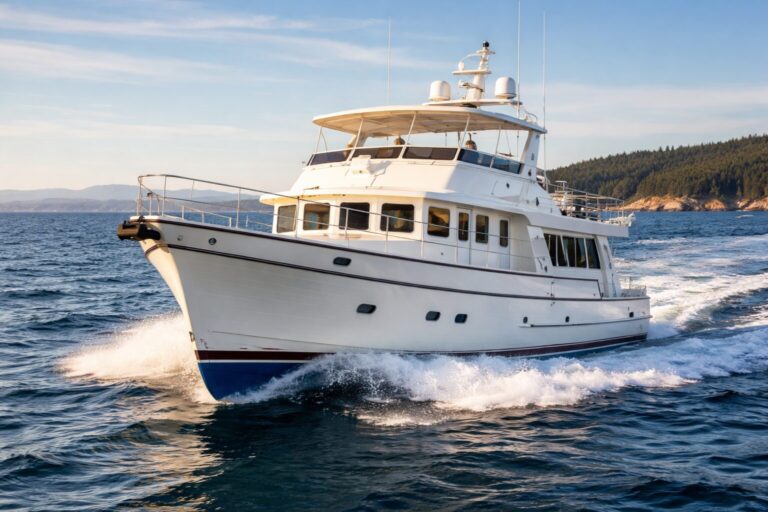
When you look at a trawler or pilothouse yacht from the dock, most of what matters is hidden beneath the waterline. One of the most important of these hidden elements is the keel. For trawlers designed to travel long distances in the North Pacific, the keel plays a critical role in how the vessel handles rough seas, protects vital systems, and maintains steady movement over long passages. Understanding keel design helps owners appreciate why a well designed trawler feels calm, predictable, and safe even when conditions turn challenging. Unlike high speed planing boats, trawlers are built for efficiency, endurance, and comfort, which is key to understanding the pros and cons of trawling. Their keels are not an afterthought but a core part of the hull design. A carefully engineered keel contributes directly to protection, tracking, and stability, which are essential qualities for cruising remote coastlines and open waters.
What Is a Keel and Why It Matters on a Trawler
At its simplest, a keel is a structural extension along the bottom of the hull. In sailing vessels, the keel often provides ballast and resists sideways force from the sails. In trawlers and pilothouse yachts, the keel serves a different but equally important purpose.
Trawler keels are typically full length or modified full keels that run along much of the hull. They are integrated into the hull shape rather than added as a separate fin. This design supports the slow and steady operating profile of trawlers, where predictability and protection are more important than speed. A well designed keel helps the boat track straight, reduces rolling, and shields underwater components like propellers and rudders. In colder and often unpredictable North Pacific waters, these advantages become even more valuable. The keel acts as a foundation that supports the entire cruising experience.
Keel Design as a Protective Feature
One of the most practical roles of a trawler keel is protection. Long range cruising often involves entering unfamiliar harbors, navigating narrow channels, or operating in waters with floating debris, kelp, or submerged hazards. A full or semi full keel forms a natural barrier between these hazards and the most vulnerable parts of the drivetrain. On many custom trawlers, the keel extends slightly below the propeller and rudder. This means that if the vessel touches bottom or encounters debris, the keel absorbs the initial impact. This can prevent serious damage to the propeller shaft, propeller blades, or steering gear.
The keel also adds structural strength to the hull. Because it is built as part of the hull rather than attached later, it helps distribute loads evenly along the bottom of the vessel. This is especially important in rough seas, where repeated wave impacts place constant stress on the hull. Over time, a strong keel contributes to durability and long term reliability, which are essential for owners who plan extended voyages.
Tracking and Directional Control at Sea
Tracking refers to a boat’s ability to hold a straight course with minimal correction. For trawlers that may spend days or weeks underway, good tracking reduces helmsman fatigue and makes autopilot systems more effective. A longer keel increases the underwater surface area aligned with the boat’s direction of travel. This naturally resists sideways movement caused by wind, waves, or currents. As a result, the boat feels more settled and predictable, even in quartering seas or crosswinds.
In the North Pacific, where swell direction and wind can change quickly, strong tracking characteristics improve overall safety. The vessel responds smoothly to helm inputs and does not wander excessively. This makes course keeping easier during night passages or reduced visibility, when steady behavior is especially important. Good tracking also improves fuel efficiency. When the hull moves cleanly through the water without constant correction, the engine operates under more consistent load. Over long distances, this can make a noticeable difference in range and operating costs.
Stability and Comfort in Changing Conditions
Stability is often the first thing owners notice when stepping aboard a well designed trawler. While beam width and hull shape contribute to this, the keel plays a major supporting role. The keel lowers the vessel’s center of lateral resistance and helps dampen rolling motion. This does not mean the boat becomes rigid or uncomfortable, but rather that movements are slower and more controlled. In rolling seas, this gentle motion reduces fatigue and seasickness for those onboard.
At anchor, a full keel also helps the boat sit more calmly in wind and current. The underwater profile resists sudden yawing or swinging, which can otherwise cause uncomfortable motion. This is particularly valuable when anchoring in exposed coves or tidal areas common along Pacific coastlines. From a safety perspective, added stability provides confidence. Crew can move around the deck more securely, and onboard systems experience less shock from abrupt motion. Over time, this contributes to both comfort and longevity of the vessel.
Balancing Keel Design with Performance Needs
While full keels offer many advantages, keel design is always a balance. A very deep or heavy keel can increase draft, limiting access to shallow anchorages or marinas. It can also slightly reduce maneuverability in tight spaces. Custom trawler design allows these factors to be carefully considered. Modified full keels, for example, maintain most of the protection and tracking benefits while improving turning response and reducing draft. The exact shape and depth depend on how the owner plans to use the yacht, the cruising grounds, and the desired balance between offshore capability and coastal access. In pilothouse yachts intended for the North Pacific, designers often prioritize seaworthiness and protection over sharp turning performance. This approach aligns with the realities of long range cruising, where reliability and comfort matter more than quick maneuvers.
Why Keel Design Is Critical for North Pacific Cruising
The North Pacific is known for its long swells, cold water, and rapidly changing weather. Vessels operating in this region must be built with a margin of safety that goes beyond calm water cruising. Keel design is a key part of meeting that challenge. A well designed keel supports the hull in heavy seas, protects vital systems from damage, and helps the boat maintain steady progress over long distances. It contributes quietly but consistently to the confidence of everyone onboard. When conditions deteriorate, this unseen structure becomes one of the most important assets of the vessel.
For owners investing in a custom made trawler or pilothouse yacht, understanding keel design helps explain why certain design choices are made. It also highlights the value of building specifically for the environment in which the boat will operate. A keel designed with protection, tracking, and stability in mind is not just a technical feature. It is a foundation for safe, comfortable, and enjoyable cruising in demanding waters.
We turn your cruising dreams into reality by developing bespoke trawler and pilothouse yachts built for comfort, safety, and performance. From the initial hull design to the final varnish, our experienced naval architects and craftsmen collaborate with you every step of the way, integrating fuel-efficient engines, ergonomic deck layouts, and beautifully appointed living spaces. With industry-leading warranties and personalized support, we make sure your new yacht feels like home the moment you step on deck. Reach out to us by email at info@northpacificyachts.com for personalized responses to all your inquiries. If you’d prefer a conversation, we invite you to give us a call at 1-844-922-4877.
Frequently Asked Questions
1. What type of keel is best for a trawler yacht?
Most trawler yachts use a full keel or a modified full keel. These keel types are ideal for long range cruising because they offer excellent protection for the propeller and rudder, improve directional stability, and provide a smoother ride in rough water. For trawlers operating in the North Pacific, full or modified full keels are often preferred due to their durability and predictable handling.
2. How does a keel improve stability on a trawler?
A keel helps stabilize a trawler by increasing underwater resistance and slowing down rolling motion. Instead of quick, uncomfortable movements, the boat responds in a more controlled and gradual way. This improves onboard comfort and reduces fatigue during long passages, especially in open water and changing sea conditions.
3. Does a full keel affect maneuverability?
A full keel can slightly reduce tight turning ability compared to boats with smaller keels. However, this tradeoff is intentional in trawler design. The benefits include better tracking, improved safety, and increased protection. For cruising yachts, especially those designed for offshore use, these advantages usually outweigh the minor loss in maneuverability.
4. Why is keel protection important for long range trawlers?
Keel protection is critical because long range trawlers often travel in remote or unfamiliar waters. A well designed keel shields the propeller, shaft, and rudder from groundings and floating debris. This reduces the risk of serious mechanical damage and helps ensure the vessel remains operational far from repair facilities.
5. How does keel design affect fuel efficiency in trawlers?
Keel design influences how smoothly a trawler moves through the water. A keel that improves tracking reduces the need for constant steering corrections, allowing the hull to move more efficiently. Over long distances, this can lead to more consistent engine load and better overall fuel efficiency, which is important for extended cruising.