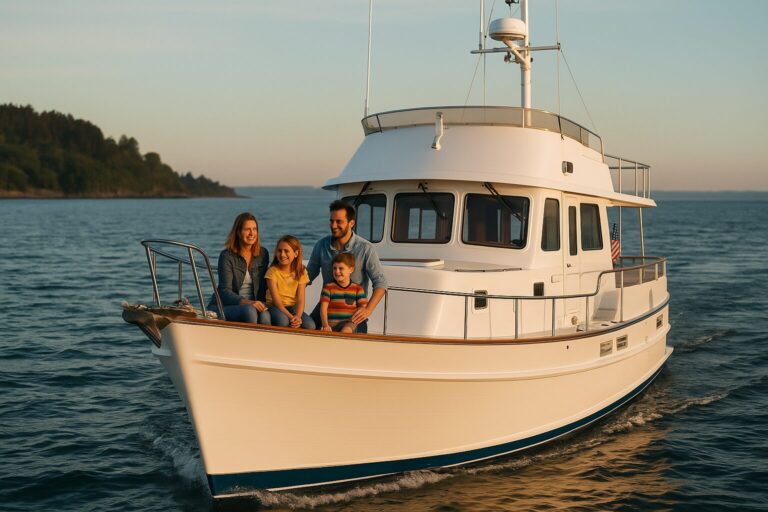
Cruising with children or multigenerational family changes how you measure a successful passage. Distance covered matters far less than crew comfort, predictability, and emotional energy. When a passage is planned around adult endurance alone, younger crew members get restless, routines unravel, and simple docking maneuvers turn tense.
Building a sustainable cruising routine means matching your itinerary to your crew’s actual attention spans, separating piloting duties from child supervision, and creating calm, settled routines on board. The particular boat, crew and daily routine need to work together. Use short trial trips to discover what makes your family comfortable before extending the itinerary.
Choose an Itinerary Built Around Crew Capacity
Keep your initial family trips short enough to leave time for meals, rest and activities. Let actual crew experience guide the time you spend underway rather than adopting a fixed daily mileage or running-time target.
Start with Short Trial Legs
Before planning an ambitious multi-week summer cruise, run an overnight or a weekend trip to a nearby anchorage or marina. A short initial run accomplishes three things:
-
It reveals how everyone handles motion while underway without committing the boat to an irreversible offshore leg.
-
It tests your meal, nap, and sleeping routines in real conditions.
-
It lets you identify physical bottlenecks—like steep ladder access or awkward storage—while you are still close to home port.
If the crew enjoys the weekend, add a second day at anchor. If someone struggles with motion sickness or anxiety, an easy exit route preserves morale and prevents bad associations with being on the water.
Plan Shore Stops and Weather Buffers
Children need daily opportunities to run off physical energy. Incorporate anchorages with dinghy access to a walkable beach, state park trail, or quiet harbor dock where the crew can stretch their legs.
Equally important is leaving flexible days in your schedule. If an unexpected front moves in, do not force a transit to meet an arbitrary calendar date. Integrating official tools like marine forecasts and float plans into your morning briefing keeps everyone grounded in reality: sea state determines your departure, not shore-side commitments.
When foul weather keeps the boat tied to a dock or sitting on the hook, switch to an established bad-weather plan. Stock the salon with card games, offline audiobooks, and easy galley baking projects. A day spent reading and watching rain across the harbor can be a highlight of the trip, provided the skipper isn’t visibly stressed about missing an itinerary deadline.
Divide Operating Roles from Child Supervision
Close-quarters handling, anchoring, and docking require complete concentration. Trying to handle spring lines or align the boat into a tight slip while simultaneously telling a toddler to step back creates unnecessary hazards.
Assign distinct roles between adults before leaving the slip:
-
The Operator: Focuses entirely on the helm, throttle controls, traffic, wind drift, and dock alignment.
-
The Monitor: Assumes sole responsibility for keeping younger children seated, calm, and well clear of working gear during maneuvers.
Before maneuvers, agree on a supervised place for children away from working lines, open gates and moving equipment. Check whether the available adults can manage both boat operation and supervision; if they cannot, change the plan or arrange suitable help. Choose the location for this boat and the conditions rather than assuming the flybridge or salon is always appropriate.
Clear operational boundaries prevent miscommunication. If an adult knows their sole job is managing the kids while the other docks, neither person assumes the other is watching a stray toddler near an open boarding gate.
Build Predictable Routines for Movement, Meals, and Rest
Predictability keeps family members relaxed. When children and older guests know what to expect regarding life jackets, walking around the decks, and daily meal times, tension drops.
Life Jackets and Deck Rules
Agree on a family life-jacket routine before departure, and check the rules for the waters you will use. Choose an appropriate approved jacket for each person; a child needs a size and design that fits their weight and abilities.
Confirming correct life jacket fit requires checking weight ratings and snugging straps so the jacket cannot pull up over the child’s chin or ears. Remember that life jacket wear laws vary by state, and wearing personal flotation never replaces active adult supervision.
Teach simple physical habits for moving aboard:
-
One hand for the boat: Keep one hand free to grip a handrail, whether climbing stairs or walking a side deck.
-
No running anywhere: Teak and nonskid surfaces become slick when wet, and wake from passing vessels can cause sudden shifts.
-
Ask before opening exterior doors: Underway, exterior cabin doors remain latched unless an adult supervises passage to the cockpit.
If you are evaluating how different stateroom layouts, stairs, and galley placements accommodate children or older parents, our guide on Family-Friendly Trawler Yachts: What to Look For covers hull and interior configurations in detail.
Galley Routines and Rest Cycles
Underway is not the time to balance multiple hot pans on a cooktop. Prepare meals ahead of time at the dock—sandwiches, pre-sliced fruit, thermoses of soup, and easy-to-reach snacks that do not require stovetop heating while rolling in open water. Keep hydration bottles in dedicated holders near the salon settee so crew members do not need to hunt through deep lockers while the boat is in motion.
Sleep schedules also require deliberate planning. Engine room sound insulation and quiet generator runs make a major difference in whether young children nap or wake up overtired. Designate quiet zones during off-watch hours, install blackout covers on portlights, and maintain familiar bedtime rituals—like reading a favorite book—to preserve normalcy in unfamiliar anchorages.
Give Young Crew Purposeful, Age-Appropriate Tasks
Children who feel like passive cargo often get bored and disruptive. Giving them authentic responsibilities makes them feel like valued crew, provided you never assign critical watchstanding or heavy line-handling duties that exceed their physical capacity or judgment.
Match tasks to their developmental stage:
-
Young children can keep a wildlife notebook, sketch the shoreline or choose a story for quiet time.
-
Older children may enjoy a trip journal, a simple weather diary or helping organize provisions alongside an adult.
-
Interested teenagers can learn about charts and boat systems during calm teaching time, with an adult retaining operational responsibility.
Choose activities for the individual child and the circumstances. Keep learning separate from safety-critical lookout, navigation and maneuvering duties.
Working alongside an adult builds competence and genuine respect for the boat. These shared activities can build curiosity and confidence without making children responsible for operating the boat.
Review the Cruise and Refine Your Setup
At the end of every trip, hold a fifteen-minute family debrief while the experience is fresh. Avoid focusing purely on what went wrong; discuss what felt smooth and what caused friction.
Ask concrete questions:
-
Did the daily legs feel too long or just right?
-
Did everyone sleep comfortably, or did berth arrangements need adjusting?
-
Were meals easy to manage underway, or was the galley workflow too complex?
-
Did the kids feel involved, or were they bored during long runs?
Use these observations to refine your next itinerary. If four-hour runs led to restless afternoons, scale the next trip back to two-hour legs with two nights at each anchorage. If storage was chaotic, reassign lockers so family gear is easier to access without unearthing mechanical access hatches.
If extended trips have your crew considering a permanent transition to the water, review Can You Live on a Trawler? What to Verify Before Moving Aboard to evaluate storage, privacy, and mechanical demands over months instead of days.
Every family brings a unique dynamic to the water. You can explore our current models to see how different salon, galley, and pilothouse arrangements support living and cruising as a group. When you are ready to match your family’s cruising goals to the right platform, talk with us to discuss your preferred cruising grounds, crew size, and onboard comfort priorities.