

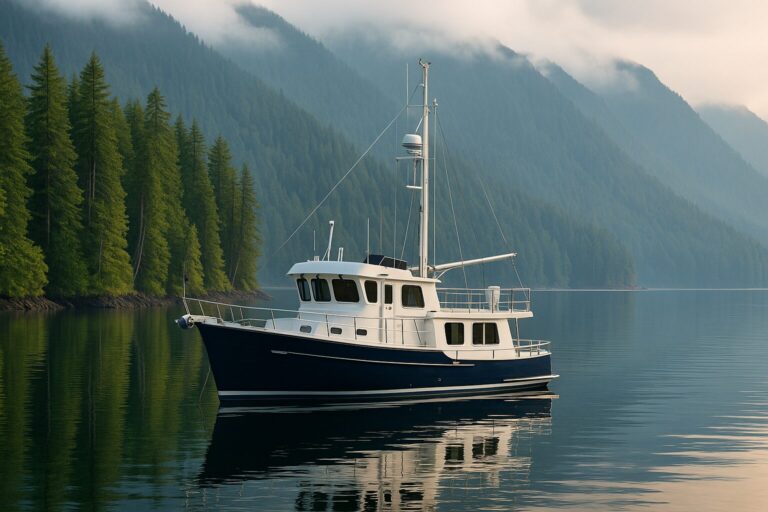
Choosing between an existing brokerage trawler and commissioning a new build often gets derailed by speculation about market shifts, future resale values, or vague estimates of yard work. Those abstractions do not get a boat away from the dock.
To make a sound purchase decision, you need a disciplined comparison between two tangible things: a real, surveyed brokerage vessel with its immediate repair punch list, and a detailed, line-item new-build contract with a defined delivery schedule.
Comparing these two options requires concrete operational evidence, hard quotes, and an honest assessment of your departure timeline.
Establish a Fixed Cruising Brief First
Before evaluating individual listing sheets or build proposals, write down your cruising parameters. If you evaluate brokerage boats against floating criteria, your assessment will drift toward cosmetic preferences rather than functional requirements.
A practical cruising brief must define four nonnegotiable items:
- Intended Waters and Route: Navigating the shallow waterways of the Great Loop imposes strict draft and air-draft limits. Long passages along the Inside Passage or down the Pacific Coast demand heavy-weather stability, substantial fuel range, and mechanical redundancy.
- Crew Profile: Will you run the vessel exclusively as a couple, single-handed, or with extended family aboard? This dictates the required sightlines from the helm, side-deck access, docking controls, and cabin configurations.
- Firm Target Departure Date: A planned departure date gives you an unyielding reference point to weigh against broker-estimated delivery dates or shipyard production schedules.
- Nonnegotiable Systems: Identify mandatory mechanical gear early—such as active fin stabilization, specific bow and stern thruster capabilities, or a specific minimum house battery capacity.
Once this brief is on paper, hold every candidate to it. Do not adjust your mission profile to match a boat simply because its asking price or woodwork looks attractive.
Auditing the Brokerage Listing as an Evidentiary File
A brokerage listing is an advertisement, not a mechanical record. Treat the specification sheet as a collection of claims that must be corroborated with paper records and physical inspections before making an offer.
Start by requesting the vessel’s maintenance history through the listing agent. You want hard records:
- Stamped engine and generator service logs showing regular fluid, filter, and cooling-system changes.
- Service dates for cooling system overhauls, specifically heat exchanger, aftercooler, and oil cooler cleanings.
- Battery bank installation dates, battery chemistry, and charging system configurations.
- Electronics service invoices and software update histories.
- Clear registration, USCG documentation, and proof of a clean chain of title free of marine liens.
If maintenance records are missing, sparse, or based entirely on verbal assurances from the seller, factor that deficit directly into your risk evaluation.
When searching for preowned hulls built by a specific manufacturer, working through dedicated specialists like North Pacific Yacht Brokers can streamline this discovery phase. Ask which original specifications, service records and equipment details the broker can obtain for the particular boat.
Quantifying Survey Results into Yard Reality
Never rely on listing sheets or your own dockside walkthrough to establish a vessel’s seaworthiness. Arrange an independent prepurchase marine survey to assess observable condition and value, then identify any specialist follow-up needed for the particular vessel.
A thorough prepurchase evaluation consists of three distinct phases:
- In-Water Inspection: A full review of installed systems, bilges, electrical panels, tankage, safety equipment, and structural bulkheads.
- Haulout: A detailed bottom inspection checking for laminate blister patterns, hull damage, cutless bearing wear, rudder shaft play, through-hull condition, and anode consumption.
- Sea Trial: A running evaluation agreed with the surveyor and relevant specialists to observe machinery, steering and installed systems under appropriate conditions.
A marine surveyor catalogs systems and evaluates observable condition; they do not disassemble machinery, troubleshoot intermittent electrical faults, or provide performance warranties.
Take the surveyor’s written findings and send them directly to a local boatyard to get written estimates for mandatory repairs. Price the repairs and replacements identified for that specific vessel in dollars and shop hours. Add the agreed work to the purchase and transaction costs to establish the boat’s readiness budget.
Furthermore, confirm current yard backlogs. A boat that requires three weeks of repair work might sit idle for six months waiting for an open service bay, which could derail your scheduled departure date.
Securing a Defined New-Build Proposal
A new-build proposal should provide absolute transparency on systems, equipment, and structural components. Because we work directly with owners rather than through a third-party dealer network, we discuss cruising goals and equipment requirements before construction.
A professional build proposal eliminates guesswork by providing:
- A Complete Equipment Baseline: A full, itemized list of every major component installed standard, including exact brand names, models, and system capacities.
- A Defined Customization Scope: A written schedule of approved structural, cabinetry, and machinery changes tailored to your cruising plan.
- A Change-Order Procedure: A clear mechanism detailing how mid-construction modifications are priced, documented, and integrated without uncontrolled cost creep.
- Factory Acceptance and Sea Trials: Clear contractual terms outlining dockside commissioning, builder sea trials, and owner handover protocols.
Our North Pacific 49′ Pilothouse equipment includes Garmin chartplotters, autopilot, radar, fish finder and VHF radios. The list evolves, so ask us for the current configuration. The boat also has a Victron inverter/charger and AGM battery bank, with lithium battery options available.
Our equipment access arrangements include hatches, removable headliners and wiring chases. When comparing an existing boat with a proposal, check how you will reach the machinery and systems for service. Ask for the commissioning and warranty terms that apply to the actual purchase.
Comparing Total Readiness and Capital Outlay
With hard quotes in hand for the brokerage boat and an exact factory proposal for the new build, lay the two paths side by side:
| Parameter | Surveyed Brokerage Vessel | Direct New-Build Contract |
|---|---|---|
| Initial Financial Outlay | Agreed purchase price + surveyor fees + haulout costs. | Contract build price + specified factory options. |
| Immediate Additional Capital | Written yard estimates for repairs, safety gear replacements, and system upgrades. | Budgeted freight, commissioning, and custom tender selection. |
| Readiness Timeline | Dependent on yard scheduling, part lead times, and punch-list scope. | Governed by an established factory construction and delivery schedule. |
| Equipment Alignment | Requires compromising with a previous owner’s design choices or funding a refit. | Purpose-built around your specific cruising brief and operational needs. |
This comparison clarifies the immediate choices in front of you.
If your brokerage evaluation reveals extensive systems decay, structural compromises, or an obsolete interior that demands full reconstruction, read our breakdown of a refit versus new build to consider whether the existing platform still fits the changes you need.
Similarly, if you need to project how routine servicing, depreciation, and scheduled equipment replacements behave over five to ten years of ownership, refer to our detailed analysis of new-versus-used ownership costs.
Move Forward with Hard Data
Choosing between a preowned yacht and commissioning a new build should never rest on intuition or market guesses. Look directly at the data: verify the brokerage logs, review the independent survey line items, and scrutinize the written shipyard build specification.
If you have a clear cruising brief and want to see how a configured pilothouse trawler fits your route, timing, and operational requirements, discuss your cruising plans with us to review available layouts and detailed equipment options.