

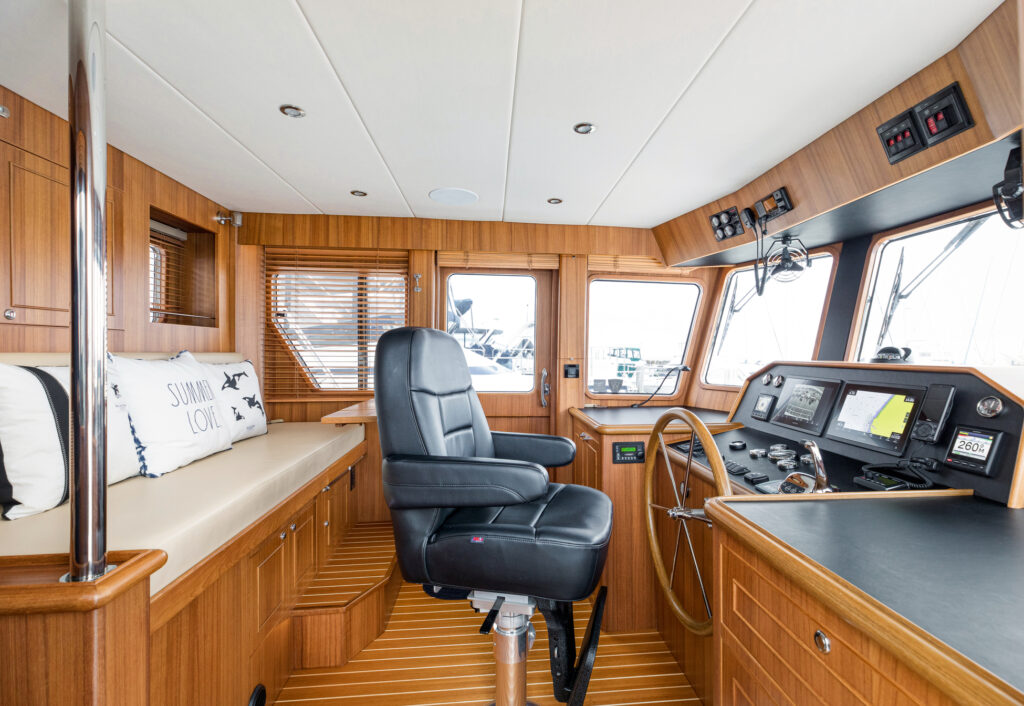
A wheelhouse can change how a cruising day feels. Its appeal comes partly from giving the helm a recognizable working space: a place to attend to the passage while seeing the water and sharing the journey with the people aboard.
Cruising long miles demands sustained attention, but it should not isolate the person at the wheel. The appeal of a traditional wheelhouse lies in balance. It functions as a serious ship-handling station while offering a comfortable perch for off-watch crew, morning coffee, and shared watches.
The Purpose-Built Workspace
A wheelhouse brings the work of running the yacht into focus. Instruments, seating, storage and access all contribute to the experience, although their arrangement differs from boat to boat.
During a visit, consider how the space supports your attention and the crew’s movement. Can conversation happen without distracting the person on watch? Can you adjust lighting appropriately for the conditions? Does the enclosed helm provide the shelter you want while allowing a proper lookout?
The classic feeling comes from that sense of purpose. A sheltered helm can reduce direct exposure to wind and rain, but it does not eliminate fatigue or change the conditions outside.
Materials, Light, and Glare Management
The atmosphere inside a wheelhouse depends on the materials, proportions and changing light. Warm wood, a view through the windows and comfortable seating can make a working space feel inviting. These are personal preferences to experience aboard rather than conclusions that a photograph can settle.
Our 49 Pilothouse has teak paneling, cabinetry and teak-and-holly floors that contribute to that character. Explore our 49 Pilothouse interior to see how those materials work together. The yacht has two opening doors and three sliding windows in the pilothouse. Those openings provide options for ventilation; consider how they work with the actual conditions and installed climate systems.
During a visit, look at reflections on the glass and displays, try the seating positions and notice the light at different angles. The particular finishes and window arrangement matter more than a general claim that one material removes glare or noise.
Companionship Around the Wheel
The romantic notion of long-range voyaging is rarely about solitary shifts at the wheel. It is about sharing the passage. A well-designed wheelhouse allows crew and guests to sit together without interfering with the work of running the boat.
To make this work, the geometry of the seating must be deliberate:
- Dual Helm Seating: Cruising partners often prefer to run the boat together. The 49 provides room for two dedicated helm seats, allowing the skipper and navigator to review radar plots, paper charts, and electronic waypoints side by side.
- Aft Settee Placement: Aft of the helm seats, an L-shaped settee wraps around a dining table. The settee gives crew a forward view. They share the same perspective as the helmsman without crowding the console.
- Working Clearance: Check the passage between seating and doors with your own crew. Consider how people would move without blocking the person at the helm.
Compare the particular seating and access arrangement with other models, including the North Pacific 45 Pilothouse. Ask where each person would sit, rest or work during the cruising day.
What to Test During an Onboard Visit
Showroom walk-throughs can obscure how a bridge actually performs underway. If you are stepping aboard a pilothouse trawler at a boat show or during a private tour, take time to try the space practically. An alongside visit and a sea trial answer different questions:
-
Check the sightlines from every seat. Sit in the helm chair, adjust it to your height, and verify your field of view over the bow. Then move to the aft settee. Can guests see the horizon, or are they staring directly into the back of your headrest?
-
Operate the deck access doors. Open both side doors. Do they slide or swing open cleanly? How does access work for your crew, clothing and mobility?
-
Assess the ventilation. Slide the side windows open and stand at the helm. Ask how ventilation, heating and cooling work in the actual installation, including condensation management and protection of equipment.
-
Look for glare traps. Notice where daylight falls on the dash. Is the console topped with dark, non-reflective surfaces, or does bright trim cast reflections upward onto the forward glass?
-
Evaluate chart and gear storage. Look for dedicated flat space near the helm seat. Is there room to lay out a folded paper chart, set down binoculars, or stash a pair of handheld radios where they won’t slide across the sole in a beam sea?
A wheelhouse that suits you should feel functional and inviting as you spend time in it. When you are ready to evaluate a pilothouse layout in person, talk with us about stepping aboard to see how these design choices work on the water.